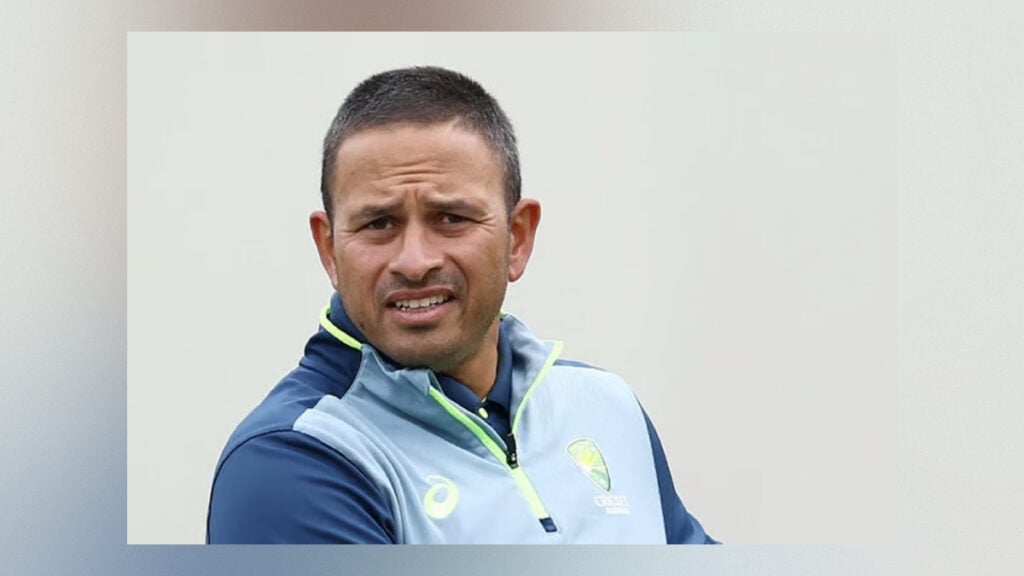
Australian batter Usman Khawaja has revealed how rheumatoid arthritis once left him struggling to walk even 10 metres, years before he established himself as one of Australia’s dependable Test cricketers.
Khawaja, who scored 6,229 runs and 16 centuries in 88 Test appearances, kept his condition largely private for 17 years. The left-handed batter, now 39, disclosed the details of his struggle in an interview with the Australian television programme Australian Story, explaining how a serious health challenge threatened to derail his cricketing ambitions when he was just 22.
Rheumatoid arthritis is a chronic autoimmune disease in which the immune system mistakenly attacks the body’s own tissues, particularly the lining of the joints. It can cause pain, swelling and inflammation, sometimes making ordinary movements extremely difficult. In Khawaja’s case, the condition affected his left knee and became so debilitating that walking short distances was a major challenge.
Recalling the frightening experience, Khawaja said: “I genuinely thought I was going to die.”
For a young cricketer accustomed to running around the field and spending hours batting in the nets, the sudden loss of mobility was devastating. At a stage when he was working towards a place in the Australian national team, his future in professional cricket became uncertain.
A diagnosis that changed everything
The illness emerged in 2009, when Khawaja was playing for New South Wales. During a break in the season, he was preparing to advance his career and pursue his ambition of representing Australia. Instead, he found himself confronting a condition that threatened not only his sporting prospects but also his ability to lead a normal life.
Doctors and relevant cricket administrators knew about his diagnosis, but Khawaja chose not to tell his team-mates. He feared that revealing his illness might change the way others perceived him. Some might treat him differently or offer special consideration, while opponents could potentially regard his condition as a weakness.
He therefore kept the struggle to himself. Even close colleagues and former team-mates, including David Warner and Michael Hussey, were unaware of the condition.
For years, Khawaja shared dressing rooms, trained alongside his colleagues and competed at the highest level without disclosing the physical battle he was facing. His silence reflected his determination to be judged on his performances rather than his medical condition.
Yet the challenge could not be overcome through determination alone. Regular medication and injections became essential parts of his treatment. With medical support, his condition gradually improved, allowing him to return to the cricket field approximately six months after the diagnosis.
Khawaja has since acknowledged just how crucial that treatment was to his recovery.
“Without that medication, I would never have been able to play cricket again. I would not even have been able to return to a normal life,” he said.
His experience highlights the importance of appropriate medical care in managing chronic autoimmune conditions. Although the severity of rheumatoid arthritis varies from person to person, persistent inflammation and joint pain can significantly affect mobility and everyday activities.
From uncertainty to the Australian Test team
Khawaja’s return to cricket marked the beginning of another demanding chapter. He made his Test debut against England at the Sydney Cricket Ground in January 2011, fulfilling a long-held ambition by representing Australia at the highest level.
However, securing a place in the national side did not guarantee a smooth career. He was dropped from the team on several occasions and had to work his way back into contention. Inconsistency, competition for places and criticism presented further obstacles.
Despite those setbacks, Khawaja continued to pursue his ambitions. His career became a story of repeated setbacks and comebacks, demonstrating the resilience required to remain competitive in international cricket.
One of the most memorable moments came during the 2021–22 Ashes series. Playing against England at the Sydney Cricket Ground, Khawaja scored centuries in both innings of the Test. The achievement underlined his ability to return to the highest level after difficult periods and reaffirmed his value to the Australian batting line-up.
The Sydney ground also provided the setting for the final chapter of his international career. In January 2026, Khawaja played his last international match in the fifth Ashes Test against England, bringing an eventful journey to a close.
His final Test record stood at 88 appearances, 6,229 runs and 16 centuries. Those figures capture his contribution to Australian cricket, but they reveal little about the uncertainty, medical treatment and personal difficulties that accompanied his progress.
An autobiography shaped by patience
Following his retirement, Khawaja has begun sharing experiences that remained private throughout much of his playing career. His forthcoming autobiography, Sabr, is expected to offer further insight into his life and cricketing journey.
The title is an Arabic word meaning patience, a concept that closely reflects the challenges he faced. From struggling to walk in his early twenties to establishing himself as an international batter, his career required perseverance through circumstances that many team-mates and supporters did not know about.
By speaking publicly about his illness, Khawaja also hopes to encourage people living with autoimmune diseases and other long-term health conditions. His message is that a diagnosis need not automatically end a person’s ambitions, although individual experiences and treatment outcomes can vary considerably.
“If someone can play professional cricket at the highest level with rheumatoid arthritis, I think it shows that many other people can achieve a great deal as well,” Khawaja said.
His words carry significance beyond the sporting world. Professional athletes are often assessed through statistics, records and match-winning performances. Their physical strength and competitive achievements can create the impression that they are largely protected from the difficulties faced by others.
Khawaja’s experience offers a different perspective. Behind the runs and centuries was a man managing a serious condition while trying to establish himself in one of the most demanding environments in professional sport.
His story also illustrates why medical conditions should not be treated as measures of a person’s ability or potential. With appropriate treatment and support, many people with chronic illnesses can continue to pursue meaningful personal and professional goals.
Khawaja’s 16 Test centuries will remain part of his cricketing record. Yet his most significant personal achievement may be harder to quantify. At 22, when walking even a short distance had become a struggle, he faced the possibility that his ambitions might never be realised.
He went on to represent Australia, score thousands of Test runs and build a distinguished international career.
His opponent was not a fast bowler, a masterful spinner or a prolonged loss of form. It was rheumatoid arthritis — an unseen adversary that threatened to take away both his mobility and his future in cricket.
By confronting that challenge and continuing his career, Khawaja has revealed a story of perseverance that extends far beyond the boundary rope.