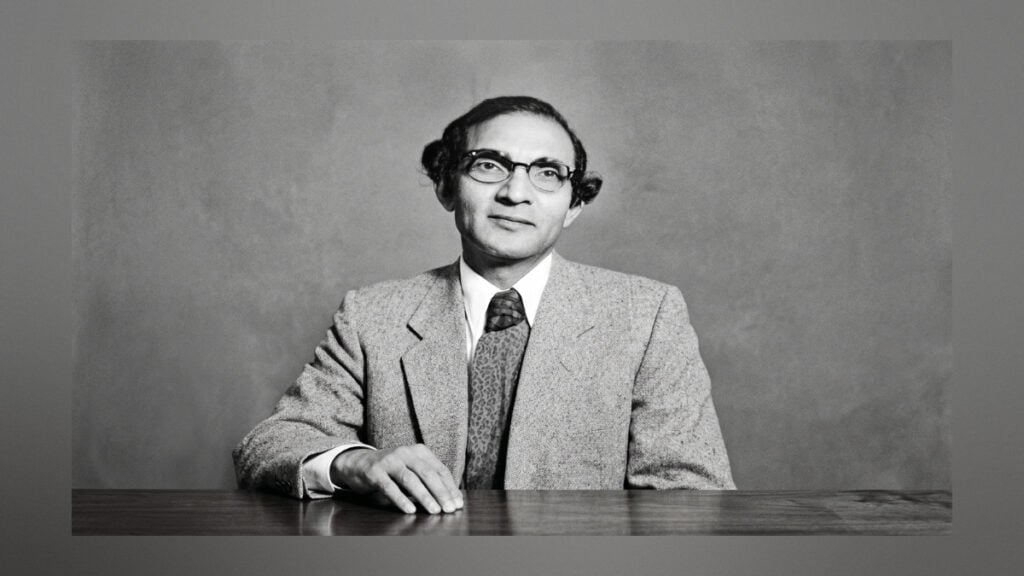
“Oki Garial Bhai, Koto Rob Ami Panther Pane Chaiya Re” — the haunting appeal of a heart waiting for a loved one remains one of the most enduring expressions of longing in Bengali folk music. Through this timeless song and many others, Abbasuddin Ahmed brought the sounds, emotions and everyday experiences of northern Bengal to a much wider audience. Revered as the Emperor of Bhawaiya, he occupies a distinguished place in the history of Bengali music.
In his voice, Bhawaiya became far more than a regional musical tradition. It emerged as a living expression of love, separation, hope, hardship and the intimate relationship between people and their surroundings. The songs carried the rhythms of rural life, the journeys of bullock-cart drivers, the melancholy of distant roads and the yearning of those waiting for someone to return. Decades after his death, the emotional power of his performances continues to resonate with listeners across generations.
Early Life and Education
Abbasuddin Ahmed was born on 27 October 1901 in Balarampur village, in the Tufanganj subdivision of the former Cooch Behar State, then part of British India. The village is now situated in Cooch Behar district in the Indian state of West Bengal. His father, Zafar Ali Ahmed, was a lawyer practising at the Tufanganj court.
Growing up amid the rivers, open fields and rural communities of northern Bengal, Abbasuddin became familiar with the folk melodies that formed an integral part of everyday life. The experiences of ordinary villagers, the movements of travellers and the sorrow of separation would later find powerful expression in his singing.
He passed his matriculation examination from Tufanganj School in 1919 and completed his Intermediate of Arts at Cooch Behar College in 1921. Although he did not complete his undergraduate studies, his interest in music continued to grow. The songs he heard at cultural gatherings, theatrical performances and traditional folk entertainments gradually shaped his artistic ambitions.
His musical education was largely self-directed. Rather than following a conventional path of formal training, he developed his singing through practice, observation and a close engagement with the musical traditions of his homeland. He later received a brief period of classical music training under Ustad Zamiruddin Khan in Calcutta, which helped broaden his musical understanding.
Yet it was in the folk traditions of Bengal, particularly Bhawaiya and Chatka, that his distinctive artistic identity took shape.
The Rise of a Remarkable Folk Singer
Abbasuddin’s rise as a singer reflected a combination of natural ability, dedication and an exceptional understanding of the emotions behind folk music. He possessed a voice that could convey longing and sorrow without excessive ornamentation. His performances were marked by sincerity and an expressive quality that made even simple lyrics deeply affecting.
His repertoire extended well beyond Bhawaiya. He performed Kshiron, Chatka, Jari, Sari, Bhatiali, Murshidi, Bichchhedi, Dehatattwa, Marsiya and Palagaan, demonstrating an impressive command of different Bengali musical traditions. He also sang modern songs, patriotic compositions and Islamic devotional music.
This versatility distinguished him from artists whose reputations rested on a single genre. Abbasuddin could move between different musical forms while preserving the emotional directness that characterised his singing. Whether interpreting a song of separation or a devotional composition, he sought to communicate the feeling at its heart.
His performances connected with audiences because they reflected experiences familiar to ordinary people. The language was accessible, the emotions recognisable and the melodies rooted in a shared cultural landscape.
Bhawaiya and the Soul of Northern Bengal
Bhawaiya is one of the most distinctive folk music traditions of northern Bengal, particularly associated with areas of present-day Bangladesh and the Indian state of West Bengal. Its songs often portray love, separation, longing, domestic difficulties and the emotional burdens of rural life.
The genre draws much of its imagery from the landscape and occupations of the region. Bullock-cart drivers travelling long distances, mahouts working with elephants and travellers separated from their families frequently appear in its lyrical world. The open countryside, winding roads and distances between villages become symbols of emotional separation.
“Oki Garial Bhai, Koto Rob Ami Panther Pane Chaiya Re” captures this atmosphere with remarkable simplicity. The speaker’s plea to the cart driver expresses the pain of waiting and the uncertainty of a journey whose end cannot come soon enough. Its emotional appeal lies not in elaborate language but in the universality of the feeling it conveys.
Abbasuddin’s interpretation helped carry such songs beyond their original geographical setting. His voice gave the genre wider recognition among Bengali-speaking audiences and established him as one of its most influential exponents.
His contribution was not simply a matter of popularising existing melodies. Through his expressive delivery, he helped preserve the emotional character of the tradition and demonstrated its capacity to speak to listeners unfamiliar with the specific circumstances of northern Bengal.
Gramophone Records and a Wider Audience
The growth of the gramophone industry created new opportunities for singers to reach audiences far beyond the places where they performed. Abbasuddin made effective use of this emerging medium, recording songs that brought Bengali folk music into homes across the subcontinent.
At a time when access to recorded music was transforming the relationship between performers and listeners, his recordings helped preserve musical traditions that had largely circulated through oral transmission and live performances. Songs that were once heard in village courtyards, at riverbanks or along rural roads could now be played repeatedly by people living in distant towns and cities.
He was among the early Muslim singers in the subcontinent to achieve recognition through gramophone recordings under his own name, at a time when some Muslim performers used pseudonyms. His success represented an important development in the public visibility of Muslim artists in the recording industry.
The commercial circulation of his records also helped establish folk music as a significant part of the wider Bengali musical repertoire. His work demonstrated that regional songs rooted in rural experience could attract a broad audience without losing their distinctive character.
Collaboration with Kazi Nazrul Islam
Another important chapter in Abbasuddin’s career was his association with the songs of poet and composer Kazi Nazrul Islam. He performed numerous compositions by Nazrul, helping bring them to a wider listening public. Songs written by poet Jasimuddin and Golam Mostofa also gained popularity through his voice.
Among his most enduring performances is Nazrul’s celebrated Islamic song, “O Mon Ramzaner Oi Rojar Sheshe Elo Khushir Eid”. The song evokes the joy of Eid-ul-Fitr after a month of fasting and spiritual reflection during Ramadan.
Over time, it became deeply embedded in the cultural celebrations of Eid in Bangladesh. Its familiar melody continues to accompany the festival, connecting generations through a shared musical experience. Abbasuddin’s rendition played a major role in establishing its lasting popularity.
His work in Islamic music was significant not only because of the popularity of individual songs but also because it helped expand the reach of Bengali-language devotional music. Through his recordings and performances, he demonstrated how religious themes could be expressed through melodies and language that were accessible to a broad Bengali-speaking audience.
Professional Career and Cultural Contributions
Between 1931 and 1947, Abbasuddin lived in Calcutta, where he combined government employment with his musical activities. He initially worked in a temporary position at the Directorate of Public Instruction in Writers’ Buildings before obtaining a permanent post in the Agriculture Department.
During the ministry of A. K. Fazlul Huq, he also had opportunities to become involved in recording-related work. These professional experiences placed him within the developing institutional and commercial networks of the contemporary music industry.
His career unfolded during a period of profound political change in Bengal. Some of his songs in the 1940s were associated with efforts to mobilise Muslim public opinion in support of the Pakistan movement. This aspect of his work reflects the political environment of the time, when cultural expression, religious identity and competing visions of the region’s future frequently intersected.
Following the Partition of British India in 1947, Abbasuddin moved to Dhaka, which had become part of East Bengal, later known as East Pakistan. He joined the government’s publicity department as an Additional Song Organiser.
His responsibilities did not diminish his commitment to music. He continued performing and contributing to the promotion of Bengali songs, carrying his experience from Calcutta into the changing cultural landscape of Dhaka.
His international engagements further broadened his professional horizons. In 1955, he attended a Southeast Asian music conference in Manila. The following year, he participated in an international folk music conference in Germany, and in 1957 he represented Pakistan at the expatriate Bengali literary conference in Rangoon, now Yangon.
These appearances placed him within wider cultural exchanges and helped introduce Bengali musical traditions to audiences beyond the subcontinent.
Appearances in Bengali Cinema
Although music remained his principal occupation, Abbasuddin also appeared in Bengali films. His film credits include Bishnumaya, Mahanisha, Ekti Katha and Thikadar.
In Thikadar, he reportedly played the role of a labourer. He also performed songs in connection with his film appearances, bringing his musical talents into another area of popular entertainment.
At a time when opportunities for Muslim artists in the film industry were comparatively limited, his participation represented another dimension of his career. His work across music and cinema reflected the increasingly interconnected nature of South Asian popular culture during the first half of the twentieth century.
Autobiography and Recognition
Abbasuddin documented his experiences and professional journey in his autobiographical work, Amar Shilpi Jiboner Katha (The Story of My Life as an Artist). The book provides a valuable account of his musical career and the cultural environment in which he worked.
His recollections are particularly significant for understanding the development of Bengali music during a period when gramophone recordings, radio broadcasting, theatrical performances and cinema were changing the ways music reached the public.
His contribution received formal recognition through several honours, including the following:
- Pride of Performance — 1960
- Bangladesh Shilpakala Academy Award — 1979
- Independence Award — 1981
These distinctions reflected the lasting importance of his work in Bengali music. His legacy extends beyond any single award, however, because his recordings continue to serve as an important reference point for performers, researchers and admirers of folk music.
A Musical Legacy Across Generations
Abbasuddin’s influence also continued through his family. His daughter, Ferdousi Rahman, became one of Bangladesh’s best-known singers, establishing a distinguished career of her own. His son, Mustafa Zaman Abbasi, gained recognition as a singer, writer and researcher of folk music.
Another son, Justice Mustafa Kamal, went on to serve as Chief Justice of Bangladesh. The family’s contributions to music, literature, research and public life reflect a wider engagement with the country’s cultural and intellectual heritage.
Ferdousi Rahman and Mustafa Zaman Abbasi, in particular, helped maintain public interest in the musical traditions to which their father had devoted his life. Their work also contributed to the continuing discussion of Bengali folk music as an important part of the region’s cultural identity.
The Voice That Time Could Not Silence
Abbasuddin Ahmed died on 30 December 1959, aged 58. His life was relatively short, but the musical legacy he left behind has endured for generations.
His songs remain closely associated with the emotional world of rural Bengal. When the plaintive call of a cart driver returns through a Bhawaiya melody, or when a familiar Eid song fills a household with festive anticipation, his influence becomes apparent once again.
His significance lies in more than his vocal ability. He helped demonstrate that folk music could preserve the history, experiences and collective memory of ordinary people. The songs he performed carried the language of rural communities into a wider cultural sphere, giving their joys and sorrows a lasting place in Bengali musical history.
Bhawaiya, in particular, found in Abbasuddin an interpreter whose voice could communicate both the intimacy of personal grief and the broader identity of a region. His performances helped establish the genre as an enduring part of Bengali heritage, connecting listeners across geographical and generational boundaries.
He was an artist deeply rooted in the soil of his homeland, yet his music reached far beyond it. Through his recordings, performances and dedication to folk traditions, Abbasuddin Ahmed became one of the defining figures of Bengali music.
His voice may belong to the recordings of another era, but its emotional force remains undiminished. The songs continue to speak of waiting, separation, devotion and the resilience of ordinary people.
On the occasion of his birth anniversary, heartfelt tribute is paid to Abbasuddin Ahmed, the Emperor of Bhawaiya, whose remarkable voice helped make the folk music of northern Bengal an enduring treasure of Bengali culture.