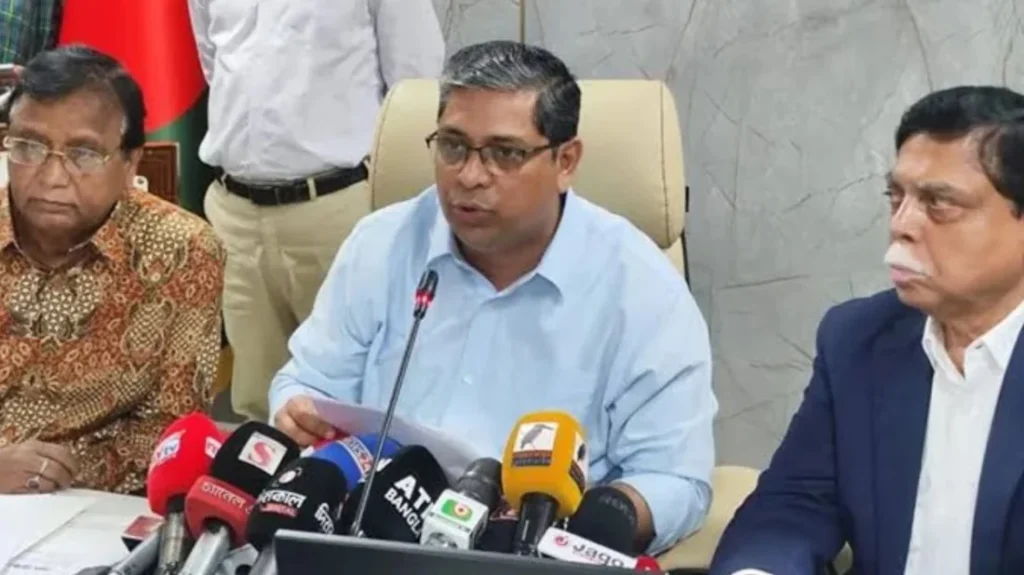
A key organizational figure within the Kurigram district unit of the National Citizen Party (NCP) has formally severed ties with the organization, leveling serious allegations of authoritarian practices and ideological compromise against its central leadership. Md Nuran Nabi Sarkar, who served as the district unit’s organizational secretary, announced his complete departure from the party during a press conference convened at the Kurigram Press Club on Sunday morning.
Reading from a prepared statement, Sarkar confirmed that he had tendered his resignation from all organizational responsibilities, alongside relinquishing his primary membership. He stated that his decision had already been officially communicated to the party’s central executive committee.
Reflecting on his tenure, Sarkar emphasized his dedicated service in consolidating the party’s grassroots footprint across the northern district. However, he expressed deep disillusionment with the party’s trajectory in recent months, asserting that the political entity had strayed significantly from its founding principles. According to Sarkar, the central command’s increasingly dictatorial decision-making process has alienated general activists and broken faith with supporters who had envisioned a progressive platform.
He remarked that remaining within the hierarchy was no longer compatible with his personal integrity or political ideals. While addressing local journalists, Sarkar extended his gratitude to the party workers, sympathizers, and residents of Kurigram who had assisted him during his tenure.
The local leadership, however, has dismissed the allegations as unfounded. Responding to the development, Mukul Miah, the Convener of NCP’s Kurigram district unit, suggested that Sarkar’s departure was largely driven by personal matters. Miah noted that the outgoing secretary had been organizational inactive for some time due to pressing domestic issues. He characterized the claims of high-handedness and ideological deviation as entirely fabricated, though he conceded that the decision to resign ultimately remained an individual prerogative.
This sudden breach in Kurigram highlights mounting internal friction within regional tiers of newer political platforms, where grassroots organizers frequently find themselves at odds with central directives and administrative styles.