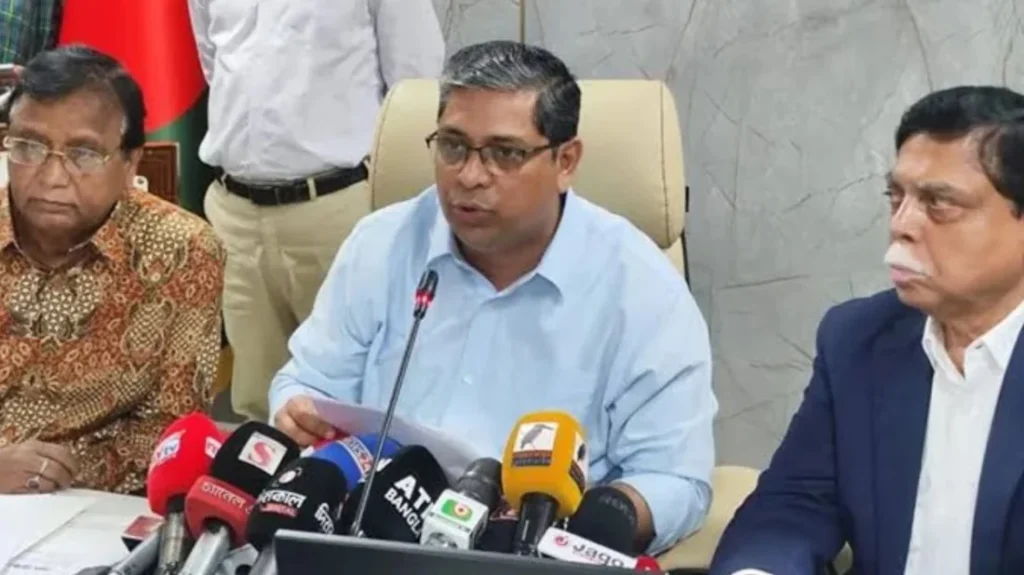
Efforts to bring battery-powered three-wheelers into a structured regulatory framework will officially begin on Monday, as 13 city corporations across the country commence the registration of electric rickshaws. Announcing the policy shift at the Secretariat on Sunday, Minister of State for Local Government, Rural Development and Co-operatives, Mir Shahe Alam, reassured operators that existing rickshaws will not be summarily removed from urban thoroughfares during the transition.
Addressing journalists during an interactive session, the Minister outlined the government’s newly formulated guidelines aimed at restoring order to urban transport networks. Under the new policy, individuals will be permitted to register a maximum of five electric rickshaws against a single National Identity Card (NID), with registration rights spanning across one or multiple city corporation jurisdictions. The initiative will be rolled out in phases to ensure systematic coverage across all urban centres.
To enhance road safety and curb reckless driving, mechanical standards have been mandated. Every authorised electric rickshaw must be fitted with a functioning speedometer, and speed limits will be strictly capped at 25 kilometres per hour. Vehicles lacking official registration will be barred from operating on roads within city corporation limits once the phase-in period concludes.
Addressing concerns regarding potential livelihoods disruptions, Mir Shahe Alam clarified that existing rickshaws—whether currently classified as legal or informal—will remain operational for the time being. The measure aims to prevent panic among drivers and fleet owners while the formal licensing system takes shape.
However, strict controls have been introduced to combat power theft and environmental degradation linked to battery management. Electric rickshaws must exclusively use designated and authorised charging stations. The government warned that severe legal action will be taken against anyone utilising illegal electrical connections or stolen grid power. Furthermore, the dismantling or recycling of used batteries will be strictly prohibited without prior clearance from the Department of Environment to prevent chemical pollution.
The Ministry has established a dual fee structure based on vehicle passenger capacity. Two-seater electric rickshaws will incur an initial registration fee of 8,000 BDT alongside an annual renewal fee of 4,000 BDT. Larger four-seater units will be subject to a one-time registration charge of 10,000 BDT, with an annual renewal fee set at 5,000 BDT.
To further alleviate chronic traffic congestion, municipal authorities are preparing to introduce zone-based operational boundaries, designated transit routes, and distinct colour-coding systems for electric rickshaws operating within their respective jurisdictions.