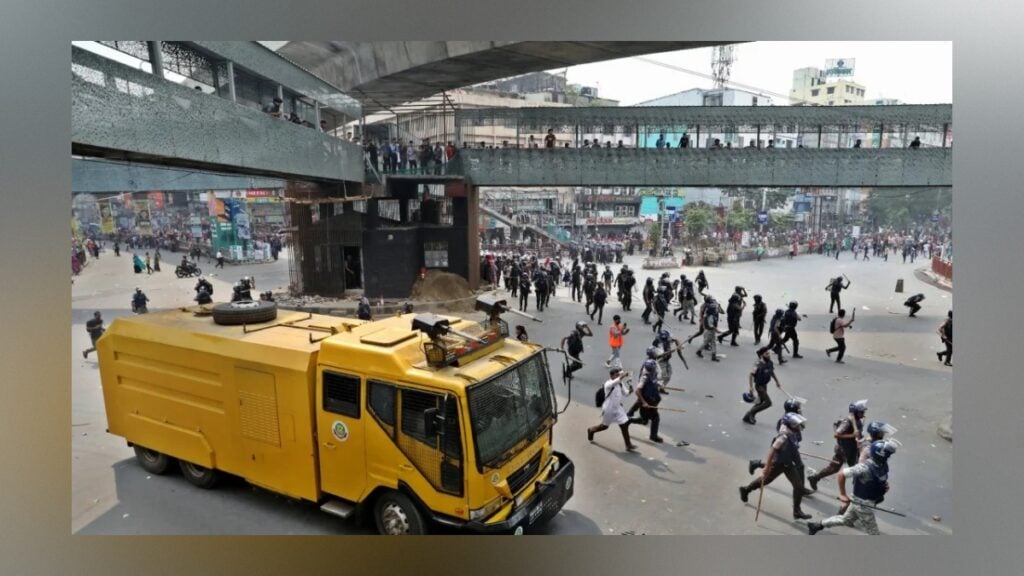
The demonstration took place in Gazipur, a major industrial area and an important gateway to Dhaka. The blockade brought traffic to a standstill on a key transport route, leaving passengers stranded and causing considerable inconvenience to ordinary commuters.
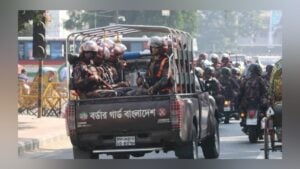
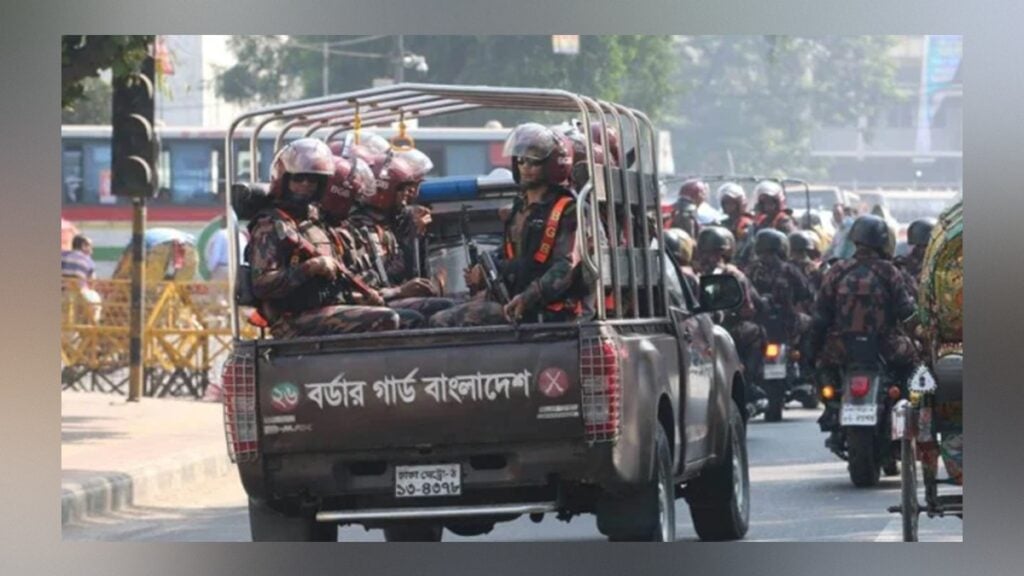
In response to the growing tension, additional police personnel and 10 platoons of Border Guard Bangladesh (BGB) were deployed at the scene to maintain order and prevent any deterioration in the law and order situation.
The protesting workers have announced that they will continue their demonstrations until their wage demands are addressed. They are calling for higher pay, reflecting their concerns over earnings and the cost of living. However, the workers have yet to withdraw from the highway.
Meanwhile, the administration has begun discussions with the demonstrators in an effort to ease tensions and restore normal traffic movement. Officials are seeking to persuade the workers to end the blockade and resolve the dispute through dialogue.
The latest demonstration comes amid growing unrest among garment workers in several industrial areas around Dhaka. On Sunday (1 November), protests and labour dissatisfaction were reported in Ashulia, Savar, and Mirpur in the capital.
In Ashulia, the authorities of at least 50 garment factories announced general holidays in response to the workers’ protests. The decision was taken as unrest among employees disrupted the normal working environment and raised concerns about the continuation of factory operations.
In Mirpur, garment workers blocked roads from the morning, particularly around Mirpur-10, Mirpur-11 and Mirpur-12, as well as neighbouring areas. The demonstrations disrupted traffic movement, leaving commuters facing difficulties and bringing transport services in parts of the area to a halt.
The protests were not limited to Sunday. On Saturday (31 October), workers in different parts of Mirpur also staged demonstrations and blocked roads over similar wage-related demands, indicating that dissatisfaction had been building across several garment industry locations.
The repeated protests have raised concerns about the potential impact on industrial production, transport and the wider economy. Bangladesh’s ready-made garment sector is one of the country’s principal sources of export earnings and provides employment to millions of people. Any prolonged disruption in major manufacturing centres could affect factory operations, production schedules and the movement of goods.
Against this backdrop, the authorities are also monitoring the security implications of the demonstrations.
Dhaka Metropolitan Police (DMP) Joint Commissioner Mahidul Islam expressed concern that groups opposed to the government or the state might attempt to exploit the workers’ protests to create instability and undermine public order.
He said a wage board had already been formed to determine workers’ pay and that the relevant process would now proceed through the board. According to him, the authorities had tried to explain this arrangement to the protesting workers, but they had refused to leave the roads.
Mahidul Islam also suggested that the police suspected the possible involvement of groups seeking to exploit the demonstrations for purposes beyond the workers’ wage demands. However, he did not provide specific details of any such involvement.
The formation of the wage board is expected to provide an institutional framework for addressing the issue of workers’ remuneration. Its proceedings will be closely watched by employees and factory owners, particularly as wage-related dissatisfaction continues to surface in key industrial areas.
For now, the immediate priority remains restoring normal traffic on the Dhaka-Tangail Highway and preventing further escalation. The outcome of discussions between the administration and the workers could prove crucial in determining whether the protests subside or spread to other garment manufacturing centres.