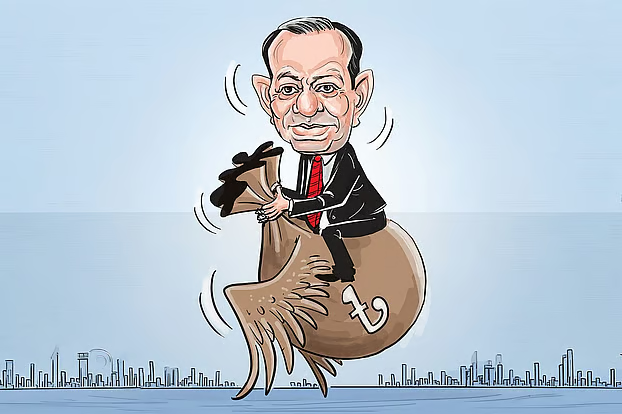
LONDON — Sheikh Abdul Hye, widely known as Abdul Hye Bachchu, the disgraced former chairman of Bangladesh Small Industries and Commerce (BASIC) Bank PLC, has described himself as a simple “scapegoat” amidst long-standing allegations surrounding the total collapse of the state-owned lender. Speak from self-imposed exile in Canada, Bachchu firmly denied primary culpability for one of the most devastating banking scandals in the history of Bangladesh, instead shifting responsibility onto senior politicians within the former Awami League administration.
Historically regarded as one of Bangladesh’s most stable and reliable financial institutions, BASIC Bank was established in 1989 specifically to foster small and medium enterprises (SMEs). For two decades, the bank operated under the strict stewardship of senior civil servants, maintaining non-performing loans (NPLs) below four per cent while building a reputation as a benchmark state lender. However, the trajectory of the institution changed drastically following Bachchu’s appointment as chairman in September 2009 by the newly elected Awami League government.
The Downfall of an Exemplary Lender
During Bachchu’s five-year tenure, which ended in July 2014, systemic governance failures and widespread irregularities severely compromised the lender’s financial health. Forensic investigations conducted by Bangladesh Bank revealed that approximately 45 billion Bangladeshi Taka (approx. £300 million) was illicitly siphoned off through fraudulent, unverified, and high-risk loans. To keep the institution afloat, the state was eventually forced to inject more than 35 billion Taka of taxpayers’ money—a capital injection that ultimately failed to restore the bank’s operational vitality.
Internal investigative records highlight that the initial signs of mismanagement surfaced within three months of Bachchu taking office. In December 2009, the board initiated plans to construct a dedicated corporate headquarters in Motijheel, Dhaka’s financial hub. By April 2010, the bank had signed an unregistered—and legally unenforceable—agreement worth 810 million Taka to purchase a building from Business Resources Limited, a developer owned by a private vendor named Sinku Akramuzzaman.
Despite ongoing ownership disputes and the property being classified as abandoned land under active litigation, the bank disbursed 40 million Taka on the very day the contract was drawn up, followed by subsequent payments bringing the total outlay to 760 million Taka. The senior executive who facilitated the initial payment was subsequently promoted, whilst the bank never secured full legal title or complete physical possession of the asset.
Systemic Loan Distortions and Executive Pressure
As the bank’s core focus pivoted away from original prudential frameworks, loan disbursements expanded exponentially, doubling between 2010 and 2012 to exceed 46 billion Taka. However, profitability collapsed sharply: net profits plummeted from 970 million Taka in 2011 to a modest 30 million Taka in 2012, before the institution plunged into structural losses from 2013 onwards.
Former Managing Director A.K.M. Sajedur Rahman, who served from July 2008 until his resignation in December 2010, recounted severe internal distress during Bachchu’s directorship. Speaking on condition of anonymity, former board members and executive directors stated that credit compliance was regularly bypassed, and institutional warnings were routinely ignored due to Bachchu’s high-level political backing. When senior officials attempted to seek assistance from central bank authorities, institutional constraints prevented external intervention, allowing board-level directives to proceed without challenge.
Following escalating pressure from central banking regulators and a series of investigative findings, the government disbanded the board, and Bachchu tendered his resignation in July 2014. Despite being named in at least 66 separate corruption charges filed by Bangladesh’s Anti-Corruption Commission (ACC), Bachchu quietly departed the country in 2023, relocating his family to Canada well ahead of the political upheaval in August 2024 that ended the reign of the former government.
Responding to accusations over phone calls from across the Atlantic, Bachchu insisted that credit decisions were collective porsudatory actions involving upper-tier political figures. “Do not frame me alone,” he stated, maintaining that his role has been disproportionately magnified to shield others. The legacy of the management era, however, remains a persistent strain on the country’s public finances and banking regulatory framework.