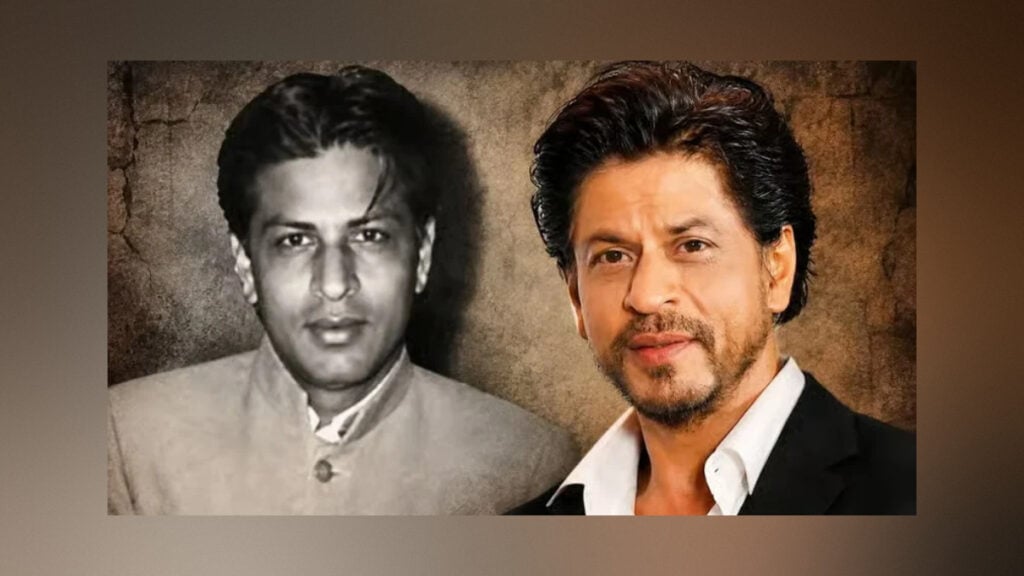
Today, thousands of fans flock to cinemas to watch Shah Rukh Khan on the big screen. Yet, during his childhood, the Bollywood superstar once found himself unable to enter a cinema despite going there with his father. The reason was simple: his father did not have enough money to buy the tickets. Rather than allowing his young son to feel disappointed, however, he found another way to make the day special. Decades later, Shah Rukh still remembers that small but meaningful gesture.
As the actor celebrates his birthday on 2 November, the story offers a glimpse into a more personal chapter of his life, long before fame, fortune and stardom became part of his identity.
Shah Rukh shared the childhood memory while speaking at an event in 2012. He recalled accompanying his father, Taj Mohammed Khan, to watch a film near Delhi’s Kamani Auditorium. The young boy was looking forward to the experience, but when they arrived, they discovered that his father did not have enough money to purchase cinema tickets. Their plan to watch the film had to be abandoned.
Taj Mohammed Khan, however, did not want his son to return home disappointed. Sitting outside the auditorium, he turned the situation into an unexpected moment of happiness. He pointed towards the road and told the young Shah Rukh, ‘Look how beautifully the cars are moving along the road!’
Instead of watching a film, father and son spent hours observing the passing vehicles. What could have become a disappointing afternoon turned into a cherished childhood memory. For Shah Rukh, the experience was not defined by the film he missed, but by the time he spent with his father.
Years later, the memory returned when Shah Rukh went to a cinema with his own son, Aryan Khan. The experience brought an emotional contrast between his childhood and adult life. As a boy, he had been unable to enter a cinema because his father could not afford the tickets. Now, as a successful actor and father himself, he could take his child to enjoy the very experience that had once remained out of reach.
The recollection also reflects the profound place his parents occupied in his life. Shah Rukh was just 15 when his father died of cancer. He suffered another major loss in 1990, when his mother also passed away. Losing both parents at a relatively young age was a defining experience for the actor, who subsequently had to navigate the challenges of life without their support.
Before becoming one of the most recognised faces in Indian cinema, Shah Rukh experienced financial difficulties and several personal hardships. His journey to stardom was far from straightforward. Nevertheless, the memories of his parents, particularly the affection and encouragement he received from his father, have remained an important part of his personal story.
On one occasion, speaking about his father, Shah Rukh offered a striking description: ‘My father was the most successful failure in the world, and I am proud of him.’
The remark conveys the admiration he continues to feel for Taj Mohammed Khan, despite the difficulties his father may have faced during his lifetime. It also offers an insight into how Shah Rukh measures success—not simply through professional achievements or material wealth, but through character, values and the lasting influence a person has on others.
Today, Shah Rukh Khan is among Bollywood’s most influential stars, with a career spanning decades and an enormous following across the world. His films regularly attract widespread attention, and his presence has become synonymous with the scale and appeal of mainstream Hindi cinema.
Yet, behind the celebrated actor is a son who has never forgotten a simple afternoon spent outside a cinema in Delhi. His father could not afford a ticket that day, but he gave his son something that money could not buy: a happy memory built on love and companionship.
For Shah Rukh, that childhood experience remains a reminder that some of life’s most meaningful moments do not necessarily happen on the big screen. Sometimes, they are created through the simplest gestures of a parent who only wants to see his child smile.