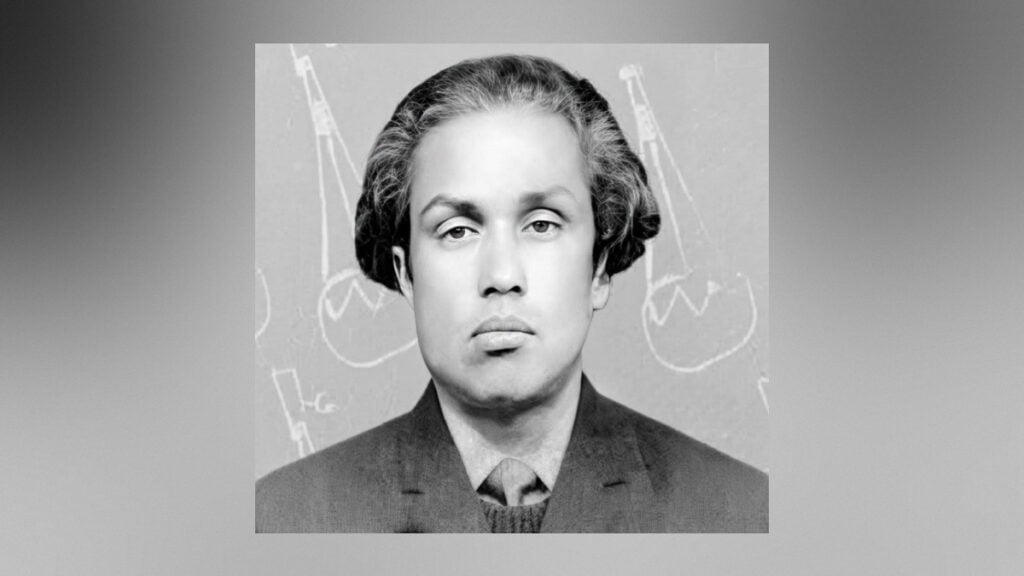
In the rich tradition of Bengali folk music, certain composers and spiritual practitioners have left behind works that extend far beyond entertainment. Their songs explore the deepest dimensions of human existence, weaving together love, longing, humanity, spirituality and the eternal search for the Creator. Among these remarkable figures was Durbin Shah, an influential Baul practitioner, mystic poet and one of the finest interpreters of Bengali folk literature.
His songs were more than expressions of emotion. They were reflections on the human soul, the mysteries of life and death, the nature of divine love and the relationship between the Creator and creation. Through simple yet profoundly meaningful language, he transformed complex spiritual ideas into compositions that ordinary people could understand and relate to.
Born on 2 November 1920, Durbin Shah remains an important figure in the history of Bengali mystic music. His contribution continues to resonate with generations of listeners, researchers and admirers of folk culture.
Birth and Family Background
Durbin Shah was born on 2 November 1920, corresponding to 15 Kartik 1327 in the Bengali calendar, at Taramoni Tila in Noarai village, on the northern bank of the Surma River. The village was then part of Chhatak police station in the Sunamganj subdivision of the undivided Sylhet district. The hill where he was born later became known as Durbin Tila, taking its name from the celebrated folk poet.
His full name is recorded as Makhdumzada Shah Syed Kalim Ahmed Durbin Shah.
He was born into a family deeply connected with spiritual practice. His father, Safat Ali Shah, was a Sufi practitioner, while his mother, Hasina Banu, was a female spiritual guide, traditionally known as a Pirani. Growing up in an environment shaped by Sufism, religious contemplation and spiritual traditions had a lasting influence on his outlook and creative development.
Durbin Shah lost his father when he was only seven years old. Despite this early personal tragedy, the spiritual heritage of his family continued to shape his thoughts and artistic journey. The values and practices he encountered during childhood would eventually become central to his musical compositions.
In 1946, he married Surfa Begum, marking another important chapter in his personal life.
A Multifaceted World of Music and Spiritual Practice
The defining characteristic of Durbin Shah’s music was its profound connection with Sufism, mysticism and spiritual philosophy. Yet his creative world was by no means confined to religious or devotional compositions. His songs explored an extraordinary range of human experiences, including love, separation, relationships, social realities, folk traditions and the mysteries of existence.
His compositions encompassed numerous genres and themes within Bengali folk music. These included Baul songs, songs of separation, regional folk compositions, mass songs, Maljora, Jari, Sari, Bhatiyali, devotional songs, Radha-Krishna narratives and various forms of spiritual and religious music.
He also wrote Hamd and Naat compositions, songs remembering prophets, saints and spiritual mentors, as well as works inspired by the teachings of Sufi masters. His philosophical compositions explored subjects such as the human body, the mind, the soul, desire, self-realisation, spiritual enlightenment and the relationship between human existence and the ultimate reality.
One of the most distinctive aspects of his writing was his ability to communicate profound philosophical ideas through familiar, everyday language. Rather than relying on complicated expressions, he used ordinary words, rural imagery and accessible metaphors to explore questions that have occupied philosophers and spiritual thinkers for centuries.
His songs frequently encouraged listeners to look within themselves and question their identities, desires and understanding of life. The human body, in his compositions, often became a metaphorical dwelling place for the soul, while the search for the Creator was presented as an inward journey.
This combination of simplicity and philosophical depth gave his music a distinctive character. His compositions could appeal to ordinary rural listeners while also offering considerable material for literary and spiritual interpretation.
Among his best-known songs are:
- ‘Nirjon Jamunar Kule Boshiya Kadambatale’
- ‘Amar Ontoray Amar Kolijay’
- ‘Bondhu Jodi Hoito Nodir Jol’
- ‘Ochena Ek Jongla Pakhi Thake Matir Pinjiray’
- ‘Amay Ami Chinte Gele Baje Boro Gondogol’
- ‘Ki Ghor Banailare Malik O Mistri’
Each composition carries its own emotional and philosophical significance. While some explore the pain of separation and the longing for a beloved, others raise questions about self-knowledge, the human condition and the mysteries of creation.
His famous song about an unfamiliar wild bird living inside an earthly cage, for instance, reflects the symbolic language frequently found in mystic folk traditions. The image of a bird confined within a cage can be understood as a representation of the soul residing within the human body, reflecting the enduring search for spiritual freedom and self-realisation.
Literary Works and Preservation of His Songs
Durbin Shah’s contribution was not limited to composing and performing songs. He also made a significant effort to preserve his compositions through printed collections.
His most notable publication series was Premsagar Palligeeti, which appeared in several volumes over a period of more than two decades. The published works included:
- Premsagar Palligeeti, Volume I (1950).
- Premsagar Palligeeti, Volume II (1950).
- Premsagar Palligeeti, Volume III (1968).
- Premsagar Palligeeti, Volume IV (1968).
- Pak Bangla Bhagya Niyantran Geeti (1970).
- Premsagar Palligeeti, Volume V (1973).
These publications played an important role in documenting his creative output and making his songs accessible to a wider audience. They also provide valuable material for researchers interested in Bengali folk literature, mystic poetry and the musical traditions of the Sylhet region.
A significant milestone in the preservation of his work came in 2010, when folk literature researcher Sumankumar Das edited and published Durbin Shah Samagra, a comprehensive collection of his compositions.
A second edition appeared in 2014, incorporating additional previously unpublished and uncollected songs. With these additions, the total number of compositions included in the collection reached 355.
The publication was particularly important because much of the traditional folk repertoire had historically circulated through oral transmission. Such songs could easily be altered, forgotten or lost across generations. Collecting and publishing them helped preserve an important part of Bangladesh’s musical and literary heritage.
Recognition Beyond Bangladesh
Durbin Shah’s musical reputation extended beyond the geographical boundaries of Bangladesh. In 1967, he travelled to England at the invitation of expatriate Bengalis. Another legendary Baul practitioner, Shah Abdul Karim, accompanied him on this journey.
The visit introduced overseas Bengali audiences to the distinctive character of his music and spiritual philosophy. His deeply expressive singing, thoughtful lyrics and remarkable understanding of mystic traditions made a lasting impression on listeners.
His compositions reflected a rare combination of musical creativity, spiritual insight and knowledge of folk traditions. Audiences were particularly drawn to the emotional sincerity of his performances and the philosophical ideas embedded in his songs.
In recognition of his extensive knowledge and profound understanding of music and spirituality, he was honoured with the title ‘Gyaner Sagar’, meaning ‘Ocean of Knowledge’.
The title represented more than an acknowledgement of his intellectual abilities. It reflected the depth of his engagement with folk wisdom, spiritual traditions and the philosophical foundations of mystic music.
His journey to England also demonstrated how Bengali folk music could connect communities across geographical boundaries. For expatriate Bengalis, such performances offered an opportunity to reconnect with the cultural and spiritual traditions of their homeland.
Death and Enduring Legacy
Durbin Shah died at his residence on 15 February 1977, corresponding to 3 Falgun 1383 in the Bengali calendar. He was 56 years old.
Although his life was relatively short, his creative legacy was extensive. He left behind a remarkable collection of songs that explored almost every dimension of human emotion and spiritual experience.
His contribution to Bengali folk music cannot be measured solely by the number of compositions he produced. His ability to interpret complex philosophical ideas through the language of ordinary people established him as a distinctive voice in the country’s cultural history.
He was not simply a Baul poet or mystic songwriter. He was an interpreter of rural life, Sufi philosophy and the spiritual consciousness deeply rooted in Bengali folk traditions. His compositions brought together religious reflection, human relationships, love, longing and questions about the meaning of existence.
His work also represents an important part of the cultural heritage of the Sylhet region, whose rich folk traditions have produced numerous influential singers, poets and spiritual practitioners. Through his music, Durbin Shah helped preserve and enrich this tradition, giving it a distinctive philosophical and literary dimension.
His songs continue to offer opportunities for reflection, particularly for those interested in the relationship between music, spirituality and human existence. Their appeal lies in their ability to communicate timeless questions without losing the warmth and familiarity of folk expression.
Generations may change, musical tastes may evolve and new forms of entertainment may emerge, but the creations of genuine cultural figures often retain their relevance. Durbin Shah’s songs remain a testament to that enduring quality.
Like the mysterious bird confined within the earthly cage in one of his celebrated compositions, the human soul’s search for its true identity runs through much of his musical philosophy. He gave that timeless quest a distinctive language and melody, allowing listeners to explore the mysteries of their own existence.
On the occasion of his birth anniversary, heartfelt respect and tribute are paid to Durbin Shah, the immortal mystic poet whose songs continue to enrich the heritage of Bengali folk music.