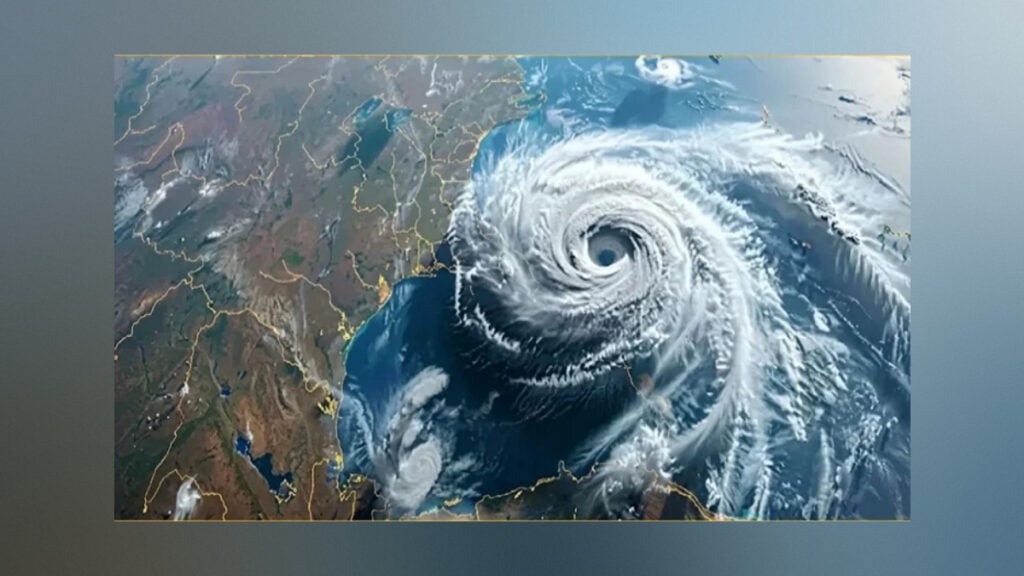
A severe cyclonic storm named ‘Murasu’, which formed in the Bay of Bengal, is steadily advancing north-westwards towards the coast of Andhra Pradesh, India. Meteorologists have warned that the system is expected to make landfall between midnight on Monday and early Tuesday morning. Although the primary impact zone is concentrated along the eastern coast of India, the peripheral atmospheric changes are likely to influence weather patterns across Bangladesh, prompting national meteorological agencies to institute early precautionary measures.
To mitigate operational risks across maritime zones, the Storm Warning Centre of the Bangladesh Meteorological Department (BMD) issued Special Bulletin No. 9 on Monday evening. The advisory directed four major maritime facilities—the ports of Chattogram, Cox’s Bazar, Mongla, and Payra—to hoist Distant Warning Signal No. 2. Harbour authorities and coastal administrations have heightened monitoring procedures to ensure swift responses should maritime weather conditions deteriorate over the coming hours.
Technical data logged at noon on Monday placed the core of Cyclone Murasu over the west-central Bay of Bengal and adjacent maritime areas. Geographically, the storm’s centre was positioned at latitude 14.5° North and longitude 81.0° East. At that junction, the cyclone was located approximately 1,475 kilometres south-west of Chattogram port, 1,440 kilometres south-west of Cox’s Bazar, 1,300 kilometres south-west of Mongla, and 1,325 kilometres south-west of Payra port.
The structural intensity of the system remains substantial. Within 64 kilometres of the cyclone’s centre, sustained wind speeds are averaging 89 kilometres per hour, with violent gusts and squalls peaking at 117 kilometres per hour. Sea conditions surrounding the core are turbulent, generating dangerous swell activity that poses significant hazards to navigation.
In light of these conditions, the Bangladesh Meteorological Department has issued strict instructions to all fishing boats and trawlers operating in the North Bay and deep-sea channels. Small craft have been advised to remain near the coastline and proceed with extreme caution until further updates are published. Operators are urged to avoid venturing into deeper waters, ensuring they can retreat to shore safely if local sea conditions worsen.