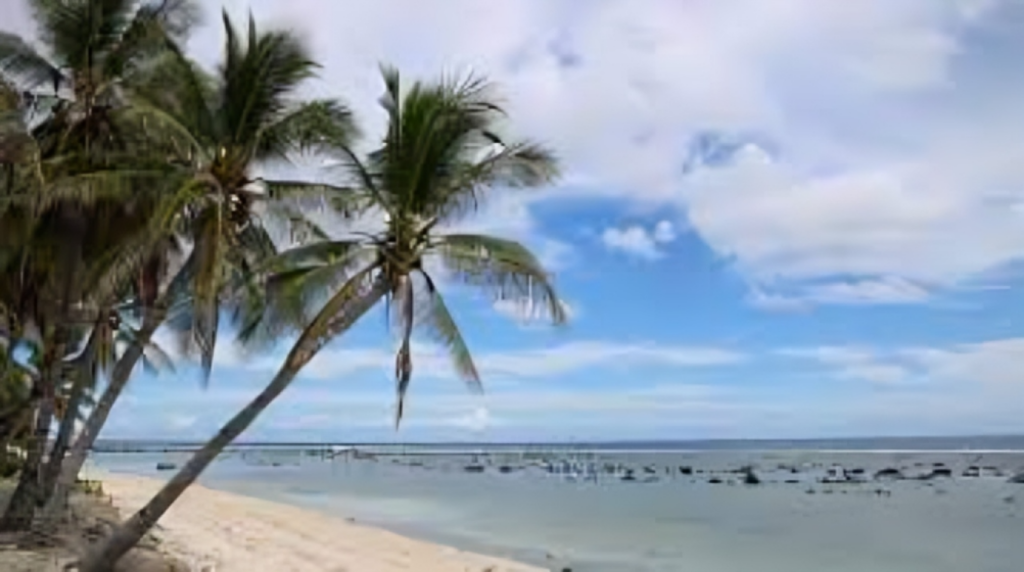
A remote Pacific nation has begun selling passports as a novel means to finance its climate resilience efforts. However, the initiative is facing challenges in attracting new citizens to the low-lying, largely barren island.
Nauru’s “Climate Resilience Citizenship” Programme
The Pacific microstate of Nauru, one of the world’s smallest countries, has launched an innovative scheme to combat climate change by selling so-called “golden passports.”
| Details | Information |
| Price per Passport | US$105,000 |
| Target Revenue in First Year | Over US$5 million |
| Passports Approved (6 months in) | 6 (two families and four individuals) |
| First-Year Target | 66 passports |
| Potential Revenue (Long-term) | US$43 million |
| Percentage of Govt Revenue | Almost 20% |
Since the programme’s launch in February, only six applications have been approved, including two families and four individuals. Despite this slow uptake, President David Adeang expressed optimism, stating:
“We welcome our new citizens whose investment will assist Nauru to secure a sustainable and prosperous future for generations to come.
Potential and Challenges
Nauru envisages that the passport scheme could eventually yield approximately US$43 million by securing around 500 successful applicants. This revenue would constitute nearly 20 per cent of the government’s total income.
However, concerns linger over the potential for exploitation of the scheme. Edward Clark, who manages Nauru’s climate passport programme, disclosed that one application had been withdrawn following adverse findings during background checks.
“The application would have been rejected had it not been withdrawn,” Clark told AFP.
A Troubled Past with Passport Sales
Nauru’s previous attempt to sell citizenship ended disastrously. In 2003, officials granted citizenship to members of Al-Qaeda who were later apprehended in Asia, casting a long shadow over such initiatives.
Among the first approved climate passports was that of an unnamed German family of four residing in Dubai. Clark heralded this approval as a “major milestone,” noting:
“They were looking for a second citizenship to provide them with a Plan B given the current global political volatility.”
Passport Benefits and Global Context
The Nauru passport offers visa-free access to 89 countries, including the United Kingdom, Ireland, the United Arab Emirates, and Hong Kong.
According to research by Australia’s Lowy Institute, over 60 countries offer migration programmes linked to investment.
Pacific nations such as Vanuatu, Samoa, and Tonga have also experimented with selling passports as a source of revenue.
Geographic and Environmental Context
Nauru is an island republic situated on a small plateau of phosphate rock in the sparsely populated South Pacific.
| Geographic and Environmental Facts | Details |
| Total Landmass | 21 square kilometres (8 square miles) |
| Former Wealth Source | Unusually pure phosphate deposits |
| Current Land Condition | 80% rendered uninhabitable due to mining |
| Climate Threat | Sea levels rising 1.5 times faster than global average |
Historically, the island’s exceptionally pure phosphate deposits—essential for fertiliser production—once made Nauru one of the wealthiest countries per capita. However, these deposits have long been exhausted. Researchers estimate that mining activities have left 80 per cent of the island uninhabitable.
Rising Seas and Relocation Plans
The remaining land area faces the growing threat of rising tides. Scientific measurements indicate sea levels are increasing at 1.5 times the global average.
Nauru is expected to relocate 90 per cent of its population as coastal erosion advances. The first phase of this large-scale relocation is projected to cost more than US$60 million.
The passport sales scheme represents a crucial lifeline for Nauru, a nation confronting profound environmental and economic challenges. Its success or failure will have significant implications for the island’s future resilience and survival