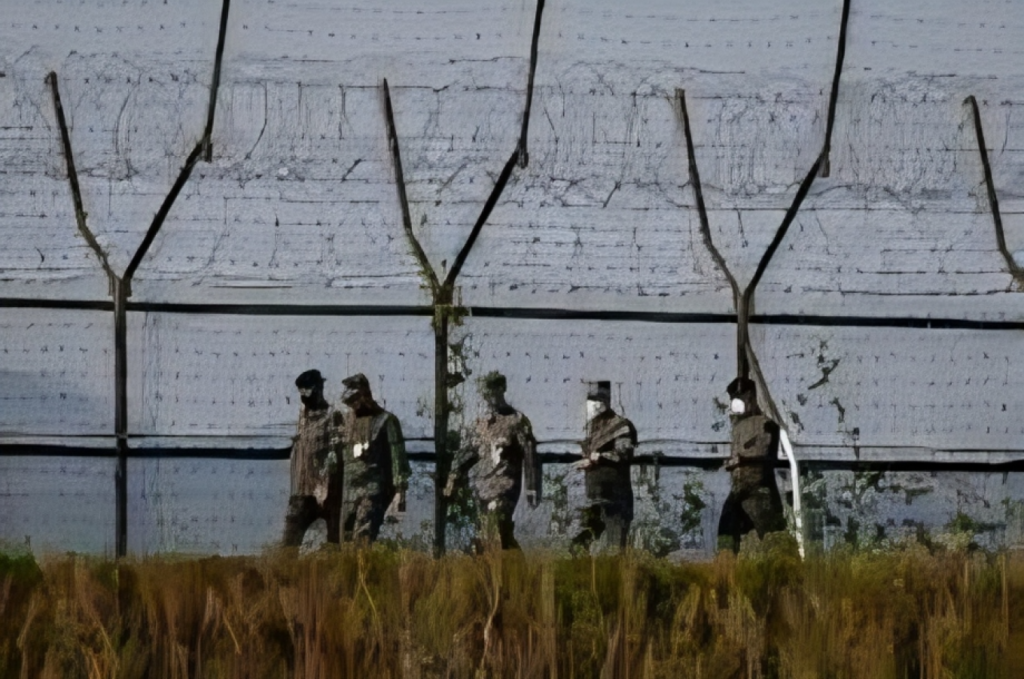
A North Korean defector has been rescued and taken into custody after swimming across a maritime border into South Korea, reportedly using floating plastic as a buoyancy aid, South Korean authorities confirmed on Thursday.
The incident occurred during the night of 30 July, when the individual swam across the Northern Limit Line (NLL)—a de facto maritime border that separates North and South Korea off the peninsula’s western coast
Details of the Crossing and Rescue Operation
According to South Korea’s Joint Chiefs of Staff, the swimmer was detected near the northern section of the mid-river boundary by military surveillance systems.
“The military identified the individual near the north of the mid-river boundary,” stated a military official.
Local media reports indicate the defector was tied to pieces of Styrofoam to aid in buoyancy during the crossing. Upon being spotted, the individual waved for help and expressed a desire to defect when approached by a South Korean naval officer.
The operation to secure and rescue the individual took approximately 10 hours, culminating at around 4:00 a.m. (KST) on 31 July (19:00 GMT on 30 July).
Details of the Incident
| Aspect | Details |
| Date of Crossing | Night of 30 July 2025 |
| Location | Off the western coast, near Ganghwa Island |
| Method | Swimming with flotation aid (Styrofoam/plastic) |
| Rescue Time | 4:00 a.m. on 31 July (KST) |
| Duration of Operation | Approximately 10 hours |
| Stated Intention | Defection to South Korea |
| Current Status | In custody; transferred to intelligence authorities |
Geopolitical Context and Escape Routes
Ganghwa Island, situated to the northwest of Seoul, is one of South Korea’s territories closest to the North. In certain areas, the sea separating the island from North Korea is as little as 10 kilometres (6 miles) wide, making it a rare but not unprecedented route for maritime defections.
Since the Korean Peninsula was divided by war in the 1950s, tens of thousands of North Koreans have escaped to the South. However, most typically flee overland via China, often making their way through a third country such as Thailand before ultimately reaching South Korea.
| Typical Escape Routes from North Korea | Description |
| Land Route via China | Most common; involves crossing into China, then travelling through a third country (e.g. Thailand) before reaching South Korea |
| Maritime Route (e.g., to Ganghwa Island) | Rare; risky due to surveillance and sea conditions |
| Direct Crossing via Demilitarised Zone | Extremely rare; heavily fortified and mined |
Defections via direct land or sea routes are uncommon due to the intense militarisation, minefields, and constant surveillance at the inter-Korean border
Shifting Trends and Pandemic Impact
Defections have seen a marked decline since 2020, after North Korea imposed strict border controls amid the Covid-19 pandemic. Reports suggest shoot-on-sight orders were issued along the frontier with China to curb the spread of the virus, severely limiting opportunities for escape.
Nevertheless, such daring attempts still occur. In fact, another North Korean defector reportedly crossed the Military Demarcation Line last month, marking two rare defections in a short span of time.
Post-Defection Protocol
Upon arrival in South Korea, defectors are generally handed over to the National Intelligence Service (NIS) for extensive screening and debriefing. This process includes verifying the authenticity of their identity and motives, as well as collecting intelligence regarding the regime in Pyongyang.
The latest defector remains in official custody, and has reiterated their intention to seek asylum in the South.