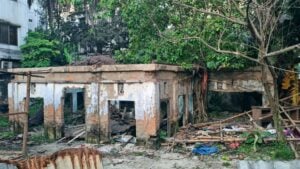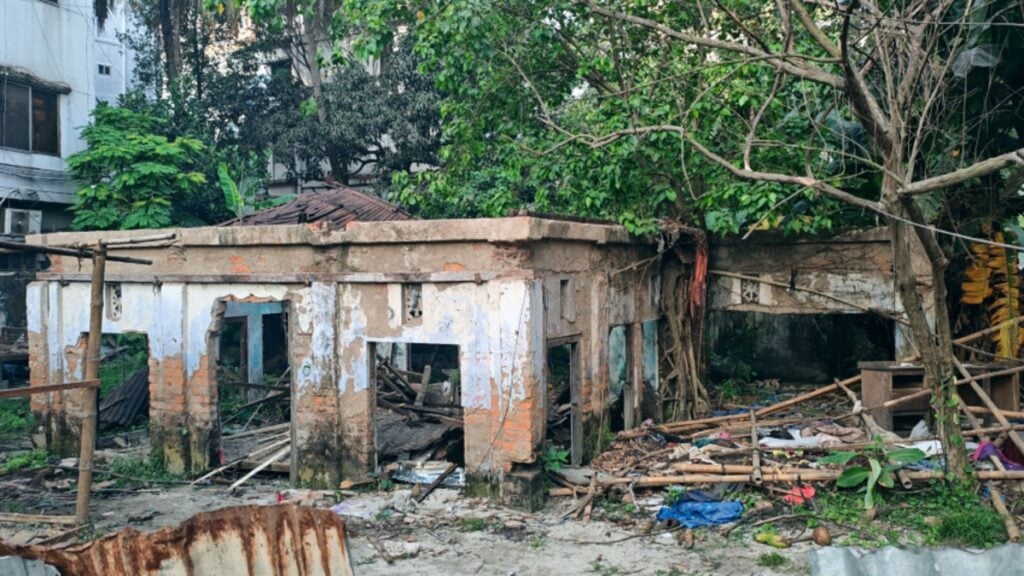
The National Citizen Party (NCP) has called for the preservation of the historic residence of language movement pioneer and martyred Liberation War hero Dhirendranath Datta in Cumilla, with a proposal to establish a memorial museum there.
The demand came after leaders and activists of the party’s Cumilla metropolitan unit gathered in front of the house on Friday night and demolished a signboard installed on its premises. They alleged that attempts were being made to sell the historically significant property, which is closely associated with Bangladesh’s Language Movement.
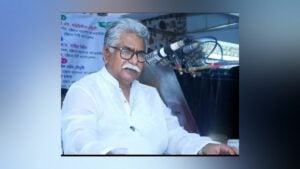
Several videos of the incident have since circulated on social media, drawing public attention. However, the action has sparked strong criticism from Arma Dutta, Datta’s granddaughter and a two-time former Member of Parliament representing a reserved seat for women.
On Saturday morning, the signboard was seen hanging again on the northern wall of the property.
Speaking to The Daily Star, Arma Dutta said the house was her family’s ancestral property and that decisions about its future rested with the family.
She questioned the state’s role in preserving her grandfather’s legacy over the past five decades, asking what steps the authorities had taken during that period to protect his memory.
Arma Dutta also alleged that an organised group was attempting to take control of the property. According to her, those involved had failed to achieve their objectives independently and were now using the NCP to advance their interests.
She reiterated that the people of Cumilla were well aware of the family’s ownership of the property. Whether to retain, develop or sell the land was a matter for the family to decide, she said. She described the demolition of a legally installed signboard under cover of darkness as deeply regrettable.
Local residents said demands to renovate and preserve the historic residence and turn it into a memorial museum had been raised several times in the past. However, no such initiative had materialised.
Recently, Arma Dutta installed a signboard at the property asserting her ownership through inheritance. She is the daughter of Sanjib Datta, the only son of Dhirendranath Datta.
NCP leaders said they removed the signboard out of concern that the historic property might be sold. They also claimed that the original structure of the house had already been demolished, raising further concerns about the preservation of the site.
In a statement issued on Friday night and signed by Masumul Bari Kawsar, member secretary of the NCP’s Cumilla metropolitan committee, the party said the residence was far more than an ordinary building. It described the property as an important part of Bangladesh’s national history, particularly its Language Movement and Liberation War.
The party called on the government to take immediate steps to protect the property and preserve its historical significance. It also announced plans to submit a written application to the relevant government departments and authorities seeking official intervention.
Responding to the allegations, Kawsar told The Daily Star that the signboard had been demolished solely to protect the historic residence and that the party had no other intention.
He said the NCP expected cooperation from both the government and Arma Dutta, as the property’s heir, in efforts to preserve the site.
Kawsar also warned that if anyone attempted to sell the land or construct a multi-storey building there, the party would mobilise local residents to resist the move.
The incident has brought renewed attention to the longstanding debate over the preservation of historically significant properties in Bangladesh, particularly those held under private ownership. While the NCP argues that the residence should be protected as part of the country’s collective heritage, Arma Dutta maintains that her family’s ownership rights must be respected.
Dhirendranath Datta holds a significant place in the political and linguistic history of the region. In 1948, as a member of Pakistan’s Constituent Assembly, he raised a historic demand for Bengali to be recognised as one of the official languages of Pakistan. His proposal challenged the exclusion of Bengali from the assembly’s official proceedings and became an important moment in the struggle for linguistic rights.
During the Liberation War in 1971, Datta was arrested by Pakistani forces along with his son, Dilip Kumar Datta. Neither was ever seen again, and both are believed to have been killed.
His contribution to the Language Movement and his sacrifice during the Liberation War have made his name an enduring part of Bangladesh’s national history.
The dispute over his former residence has therefore raised questions about how the country should protect buildings associated with prominent historical figures while respecting the legal rights of their private owners.
The challenge now is to find a solution that safeguards the historical significance of the property without disregarding questions of ownership and the rights of its heirs.
Contacted about the incident, Towhidul Anwar, officer-in-charge of Kotwali Model Police Station, said the police would investigate the matter if a formal complaint was lodged.