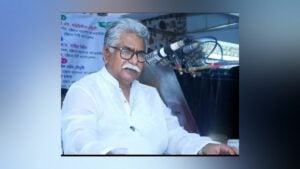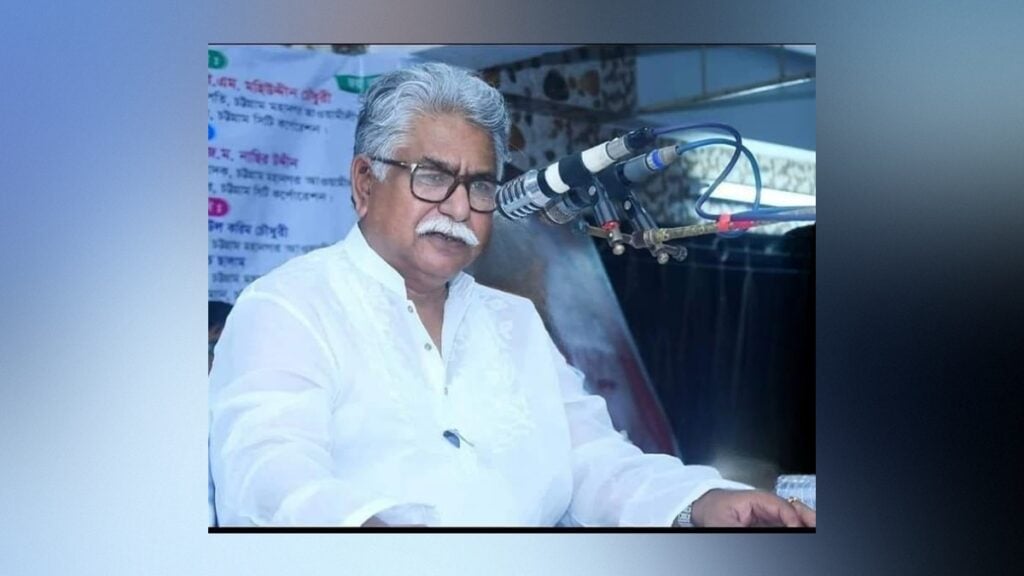
Bangladesh’s political history has been shaped by individuals whose contributions extend far beyond party positions and parliamentary titles. Their identities are defined by political struggles, courage during the Liberation War, unwavering ideological commitment and the ability to speak firmly on matters of national importance. Bir Muktijoddha Moinuddin Khan Badal was one such distinctive figure.
A prominent leader of the Jatiya Samajtantrik Dal (Jasod), Badal was known for his active involvement in street politics and his outspoken opposition to injustice, corruption and authoritarianism. Throughout his political career, he faced numerous challenges, including imprisonment and periods of political uncertainty. Yet he remained committed to his beliefs. His political identity was built around courage, straightforwardness and a willingness to stand by his convictions, even when doing so was difficult.
Born on 21 February 1952 in Sarowatali village of Boalkhali upazila in Chattogram district, Moinuddin Khan Badal entered the world on a date closely associated with one of the most significant events in Bangladesh’s history. His birth coincided with the anniversary of the Language Movement of 1952, which became a defining chapter in the struggle for Bengali linguistic and cultural rights. His parents were Ahmad Ullah Khan and Jatuma Khatun.
Badal developed an interest in politics during his student years. In the 1960s, he became involved in Chhatra League and joined the broader movement for the political and economic rights of the Bengali people. He was also associated with the organisation known as the Chhatra League Nucleus, which played a role in preparing the ground for the independence movement.
During that period, political awareness among Bengali students and young activists was growing in response to discrimination and repression under Pakistani rule. Badal became part of this emerging political movement, which eventually contributed to the struggle for an independent Bangladesh.
When the Liberation War began in 1971, he joined the fight for independence. He travelled to India to receive military training before actively participating in the war. His contribution to the resistance in the Chattogram region was particularly noteworthy.
One of the most significant episodes associated with his wartime activities was the resistance against the unloading of weapons from the Pakistani arms-carrying vessel Swat at Chattogram Port. Badal was among the organisers and leaders involved in efforts to prevent the weapons from being unloaded. The incident became an important part of the early resistance against Pakistani military operations in the region.
The port resistance demonstrated the determination of local people to obstruct the movement of military supplies intended for Pakistani forces. Badal’s involvement in this effort remained an important part of his identity as a freedom fighter and political activist.
Following independence, he turned towards socialist politics and became involved with the Jatiya Samajtantrik Dal. Through his political activities, he advocated democracy, socialism, secularism and the establishment of a society free from exploitation. He was also associated with the Bangladesh Samajtantrik Dal (Basad) at a later stage.
His political journey was marked by continued resistance to authoritarian rule. During the regime of military ruler Hussain Muhammad Ershad, Badal took part in political movements demanding democratic rights and an end to autocratic governance. His involvement in these activities resulted in imprisonment.
Such experiences strengthened his position as an experienced political organiser. Over time, he developed a reputation as an articulate speaker, a determined activist and a parliamentarian capable of presenting complex political arguments with clarity.
His entry into Parliament marked another significant phase of his political career. In the ninth parliamentary election of 2008, he was elected Member of Parliament from the Chattogram-7 constituency. He subsequently won the Chattogram-8 seat in the 10th parliamentary election, held on 5 January 2014.
In the 11th parliamentary election in 2018, he was re-elected from Chattogram-8, securing his third consecutive term in Parliament. His electoral success reflected his continued presence in national politics and his role in representing his constituency.
Badal’s parliamentary career was distinguished by his forceful speeches and independent approach to political debate. He frequently drew upon historical knowledge, factual information and political experience when discussing national issues. His ability to express complicated arguments in a direct and engaging manner made him a recognisable figure in parliamentary proceedings.
He was particularly vocal on corruption, shortcomings in governance, democratic challenges and other important national concerns. Rather than limiting himself to conventional party positions, he often expressed his own views on matters of public interest.
One of the most distinctive aspects of his political personality was his willingness to criticise government decisions, even when his political party was part of the governing alliance. He did not always hesitate to raise questions about the administration’s performance or point out shortcomings in governance. This independent approach earned him recognition as a politician who valued the right to express dissent.
His role in the formation and political coordination of the Awami League-led 14-Party Alliance was also noteworthy. He was involved in efforts to maintain political cooperation among different parties within the alliance. His experience in organisational politics and his understanding of national political developments made him an important participant in coalition politics.
Throughout his career, Badal remained connected to several defining periods in Bangladesh’s political history. His involvement in the movement for Bengali self-determination during the 1960s, participation in the Liberation War, engagement in post-independence socialist politics and opposition to military authoritarianism reflected the breadth of his political experience.
He also left a distinct mark on parliamentary politics through his speeches and interventions. At a time when political debate often revolves around party positions, his readiness to raise uncomfortable questions and offer independent assessments became an important feature of his public identity.
Moinuddin Khan Badal died on 7 November 2019 at the age of 67 while receiving treatment at Narayana Institute of Cardiac Sciences in Bengaluru, India. His death marked the end of a long political journey spanning the Liberation War, decades of political activism and three consecutive terms as a Member of Parliament.
His passing was a significant loss to Bangladesh’s political landscape. The country lost an experienced parliamentarian, a freedom fighter and a politician whose public life had been closely associated with political struggle and ideological commitment.
Badal was more than a leader of a particular political party. He represented a generation shaped by the struggle against Pakistani rule, the sacrifices of the Liberation War and the difficult political developments that followed independence. His involvement in democratic movements, secular politics and parliamentary debates formed an important part of his legacy.
His political life also offers an example of the importance of independent thinking in public service. Democracy requires political representatives who can question decisions, challenge wrongdoing and raise issues that matter to ordinary citizens. Badal’s outspoken parliamentary interventions reflected his belief in the importance of such accountability.
His legacy will continue to be assessed through his political contributions, his role in the independence struggle and his activities in national politics. Whatever the differences in political opinion surrounding his career, his courage as a freedom fighter and his distinctive presence in Parliament remain significant aspects of his public life.
People eventually pass away, but their actions, convictions and contributions remain part of history. Moinuddin Khan Badal’s journey from the political movements of the 1960s to the parliamentary arena stands as a reminder of a life shaped by courage, protest and ideological determination.
With deep respect and affection, we remember Bir Muktijoddha Moinuddin Khan Badal, a fearless freedom fighter, outspoken politician and distinguished parliamentarian whose contributions will remain part of Bangladesh’s political history.
A heartfelt tribute to his memory.