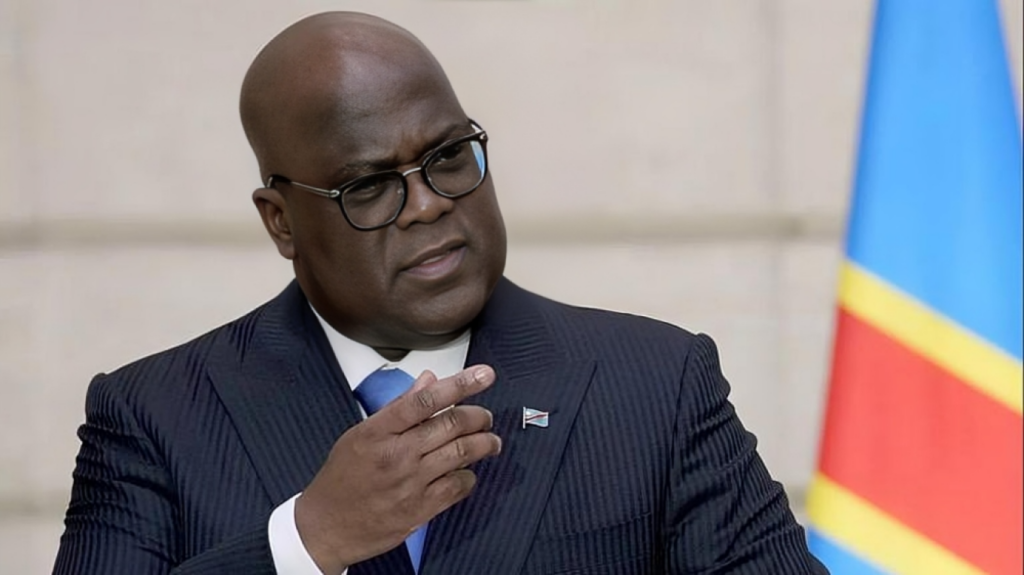
President Félix Tshisekedi has reshuffled the cabinet of the Democratic Republic of Congo (DRC), appointing at least two figures from the opposition, according to official decrees broadcast on state television Friday. The move is seen as a significant political gesture amid ongoing security crises and efforts at national cohesion.
Key Changes in the New Cabinet
The newly formed cabinet retains Prime Minister Judith Suminwa Tuluka as head of government and now consists of 53 members, down from 54 in the previous lineup.
| New Cabinet Overview | Details |
| Prime Minister | Judith Suminwa Tuluka |
| Total Cabinet Members | 53 |
| Opposition Figures Appointed | 2+ |
| Date of Announcement | Friday (via state television) |
Among the most prominent appointments:
| Appointee | New Position | Affiliation |
| Adolphe Muzito | Deputy Prime Minister and Minister of Budget | Opposition leader, ex-PM |
| Floribert Anzuluni | Minister of Regional Integration | Leader of small opposition party |
Both Muzito and Anzuluni contested the 2023 presidential election as opposition candidates. Muzito received around 1% of the vote, while Anzuluni garnered less than 0.1%.
Background: Political Context and Conflict
This reshuffle comes following political consultations held earlier in the year, which were set against the backdrop of intensifying violence in eastern DRC. The region, rich in resources such as gold and coltan, has endured three decades of conflict, driven by:
- Rival armed groups
- Cross-border interference, particularly from Rwanda
- Competition over mineral wealth
Recent Developments in Eastern DRC:
| Event | Details |
| Territorial Gains by M23 | Captured Goma and Bukavu, aided by Rwandan troops |
| Declaration of Principle (Ceasefire) | Signed on 19 June 2025 |
| Civilian Casualties (July) | At least 319 killed, per UN Human Rights Chief Volker Türk |
| Humanitarian Impact | Thousands dead; hundreds of thousands displaced |
Despite the ceasefire agreement between DRC and M23, violence has persisted, severely affecting civilian populations and exacerbating humanitarian needs.
President Tshisekedi’s Position and Electoral Strength
Félix Tshisekedi, in office since 2019, was re-elected in December 2023 with over 73% of the vote. His ruling coalition also secured approximately 90% of seats in the legislative elections held simultaneously.
| Election Summary (Dec 2023) | Figures |
| Presidential Election – Tshisekedi | 73%+ of vote |
| Legislative Seats – Tshisekedi Coalition | Approx. 90% |
| Opposition Candidates (Muzito, Anzuluni) | ~1% and <0.1% of the vote, respectively |
Looking Ahead
The incorporation of opposition figures into government suggests a move toward broader political inclusion—possibly aimed at national unity during a time of extreme volatility, particularly in the east.
However, with continued attacks on civilians, unresolved regional tensions, and widespread displacement, the new cabinet faces significant challenges, including:
- Restoring peace and stability in eastern provinces
- Addressing the humanitarian crisis
- Ensuring implementation of the ceasefire with M23
- Managing public finances and regional cooperation
As the reshuffled government takes shape, observers will watch closely to see whether these appointments lead to greater political dialogue, or if they remain symbolic amid entrenched instability.