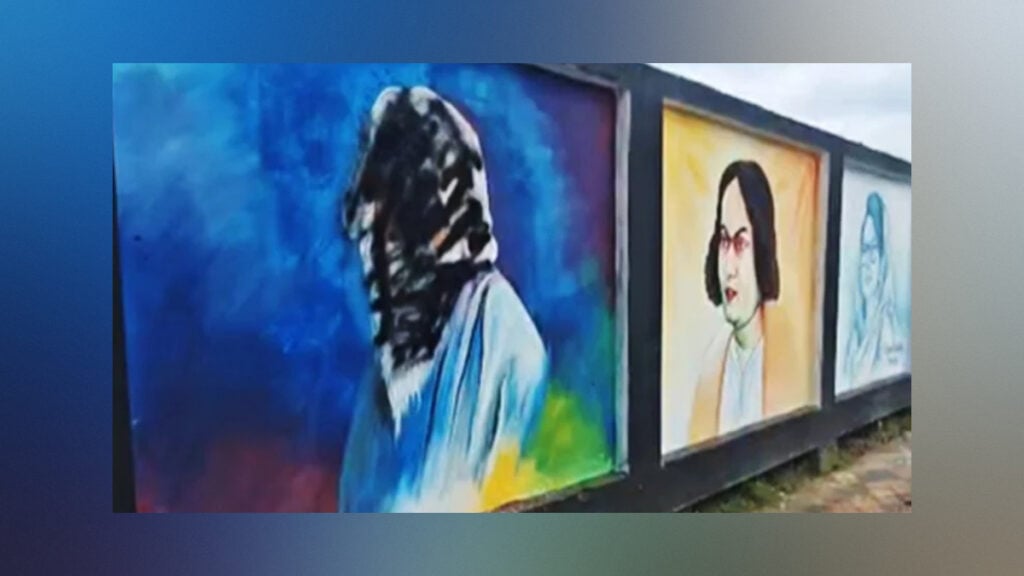
A mural depicting Nobel laureate Rabindranath Tagore on a wall beside Khulna Railway Station has been defaced with black paint for the second time in less than three weeks, prompting renewed anger among local residents.
The incident came to light on Sunday morning, 22 November. Police suspect that the vandalism took place at some point between midnight on Saturday and the early hours of Sunday.
The murals were commissioned by Khulna City Corporation (KCC) ahead of Prime Minister Tarique Rahman’s visit to the city. The wall features illustrations celebrating Bangladesh’s history, heritage and cultural identity, including scenes from the July uprising, the Sundarbans, the historic Sixty Dome Mosque and the region’s traditional jute industry.
Portraits of prominent figures who have made significant contributions to the country’s art, literature and cultural life were also included. Among them were Rabindranath Tagore and national poet Kazi Nazrul Islam.
However, Tagore’s portrait has repeatedly been singled out for vandalism. On 5 November, the same mural was covered with black paint, prompting condemnation and frustration among local residents. In response, KCC Administrator Nazrul Islam Manju instructed the authorities to restore the artwork. The mural was repainted on the afternoon of 6 November.
Just 16 days later, it was targeted again. The latest incident has raised fresh concerns about the repeated defacement of cultural artwork in a public space.
A visit to the site revealed that the wall, situated beside the Old Jessore Road, displays portraits of several prominent personalities. These include folk mystic Fakir Lalon Shah, painter SM Sultan, Rabindranath Tagore, Kazi Nazrul Islam, former Prime Minister Khaleda Zia, former President Ziaur Rahman and poet Michael Madhusudan Dutt.
Of all the portraits on the wall, only Tagore’s had been covered with black paint.
Officer-in-Charge of Khulna Sadar Police Station Lokman Hossain said the incident was believed to have occurred during a period of reduced public activity caused by rain.
“Because of the rain, there were fewer people on the roads and the shops were closed. The perpetrators took advantage of the situation. Police are working to identify those responsible,” he said.
KCC Administrator Nazrul Islam Manju expressed strong disapproval of the incident, saying that destroying an image could not erase the person or their contribution to society.
“There is no way to deny a person by simply erasing their portrait. People have looked upon those responsible with contempt. We urge them to refrain from such activities,” he said.
Manju also reaffirmed the city corporation’s commitment to restoring the artwork, regardless of how many times it was damaged.
“We will repaint the mural as soon as the rain subsides. However many times they erase it, we will paint it again,” he said.
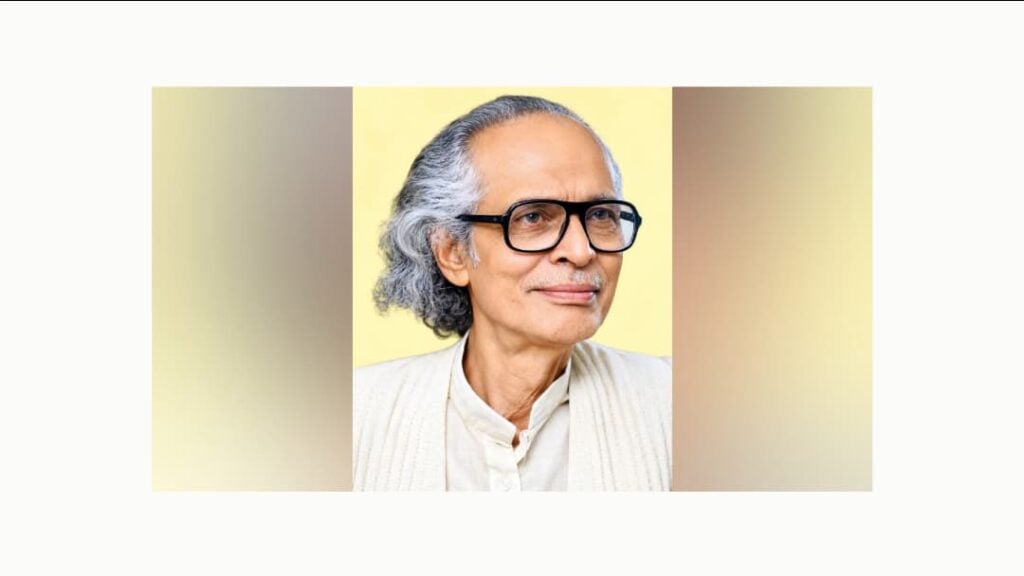
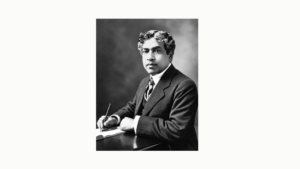
Rabindranath Tagore remains one of the most influential figures in Bengali literature and culture. A poet, novelist, playwright, songwriter and essayist, he became the first Asian to receive the Nobel Prize in Literature in 1913 for his collection of poems, Gitanjali. His literary and musical contributions continue to hold a significant place in the cultural identity of both Bangladesh and India. His song ‘Amar Sonar Bangla’ is the national anthem of Bangladesh.
The repeated targeting of his portrait has therefore drawn attention beyond the physical damage to a public mural. It has also raised questions about respect for cultural heritage, artistic expression and the protection of public artworks.
The city corporation has pledged to restore the portrait once the weather improves, while police continue their efforts to identify those responsible. Whether the authorities will introduce measures to prevent further vandalism remains to be seen. For now, the KCC administration has made its position clear: the mural will be restored every time it is defaced.