Among the constants of Donald Trump’s turbulent career have been his flair for drama and a firm belief in his deal-making abilities. By inviting Vladimir Putin to a summit, Trump will encounter plenty of the former and put the latter to the ultimate test.
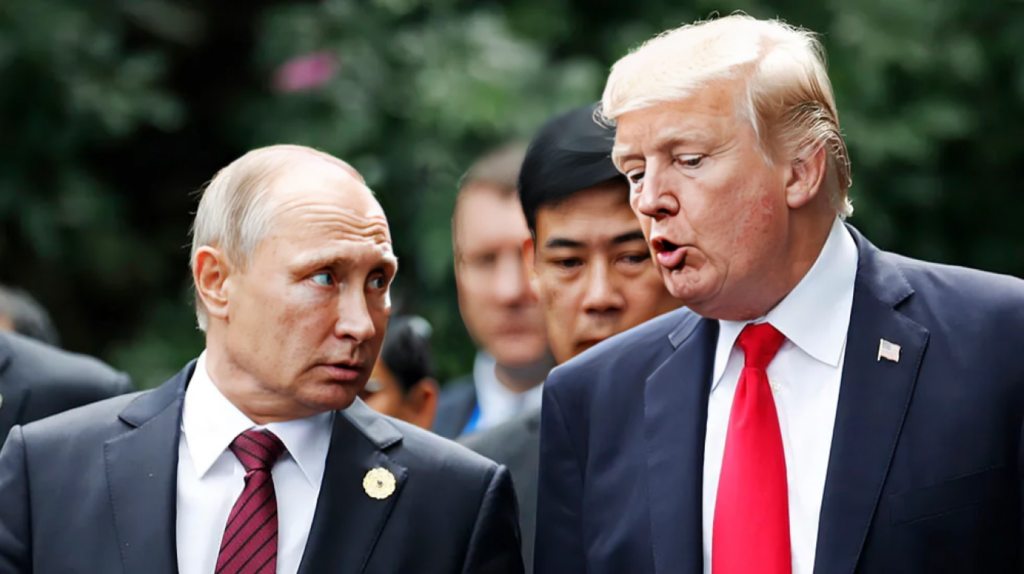
On Friday in Alaska, Trump is set to meet his Russian counterpart to discuss the Ukraine war. This will be their first standalone summit since the 2018 Helsinki meeting, which left Trump’s perceived submissive posture lingering in public memory.
US officials have confirmed that the meeting was initiated by Putin, and Trump accepted the invitation despite publicly expressing frustration over the Russian leader’s refusal to consider any ceasefire proposals.
The invitation to Putin, who remains indicted by the International Criminal Court, effectively ends the West’s diplomatic shunning of the Russian president since the February 2022 invasion of Ukraine. Ukrainian President Volodymyr Zelensky has called the Alaska summit a “personal victory” for Putin.
Trump and his aides have sought to downplay the significance of the summit.
- Secretary of State Marco Rubio stated in a radio interview that the meeting “is not a concession,” explaining that Trump wants to “look at this guy across the table” to gauge whether he is serious.
- Trump himself described the summit as a “feel-out meeting”, emphasising that it would not directly produce a deal on Ukraine.
- He also confirmed he would speak immediately after the summit with Zelensky and European leaders, all of whom insist that Ukraine not be excluded from negotiations concerning its own territory.
“European leaders, in the past, had the experience that whoever talks to Donald Trump last makes the most important impressions,” said Liana Fix, a fellow at the Council on Foreign Relations.
“There is a very strong urge in Donald Trump to be the one who brings peace to Ukraine — even for a fleeting moment, to have the picture of him agreeing with Vladimir Putin to a ceasefire,” she added.
Trump’s Shifting Strategy
Trump had previously vowed to end the war within 24 hours of returning to the White House. Yet, he has struggled to chart a clear path, and his tactics have shifted dramatically.
- Trump berated Zelensky during a public White House meeting, with Vice President JD Vance accusing Ukraine of ingratitude for US support. Trump briefly intervened to calm tensions.
- Ukraine eventually agreed to his ceasefire proposal, while Putin initially refused.
- Trump then threatened sanctions on Russia before agreeing to the Alaska meeting.
“The mere fact of holding such a summit will be a victory for Putin,” said Konstantin Kalachev, Russian political analyst.
“Putin has not offered Trump anything significant, and Trump is already inviting him to Alaska.” He also described the absence of new US sanctions as an “unconditional victory” for Russia.
Trump has rejected criticism that he is being soft on Russia, citing his imposition of tariffs on India, a major buyer of Russian oil. However, he has also pushed for concessions from Zelensky, who refuses to cede any territory seized by Russia.
Possible Diplomatic Outcomes
George Beebe, former CIA director of Russia analysis and now director of grand strategy at the Quincy Institute, said Trump could begin outlining a framework for ending the war.
- Russia could potentially accept future EU membership for Ukraine if the country remains outside NATO, according to Beebe.
- Such a relationship would be limited to political and economic ties, without military commitments — something Russia might tolerate.
| Potential Diplomatic Proposal | Details |
| Ukraine in EU | Possible future membership if it remains outside NATO |
| Russia’s role | Accepts EU membership but retains strategic influence |
| NATO involvement | Ukraine remains outside the transatlantic military alliance |
| Limitation | Focus on political and economic cooperation rather than military commitments |
Beebe cautioned, however, that a short-notice summit at the presidential level raises public expectations that may not be met:
“Trump is tackling an issue that is fraught with political danger, and there’s absolutely no guarantee that this is going to be a success,” he said.