The Cambridge Dictionary has added 6,000 new entries to its online edition over the past year, including words popularised by Gen Z and Gen Alpha such as “skibidi”, “delulu”, and “tradwife”, Cambridge University Press announced on Monday.
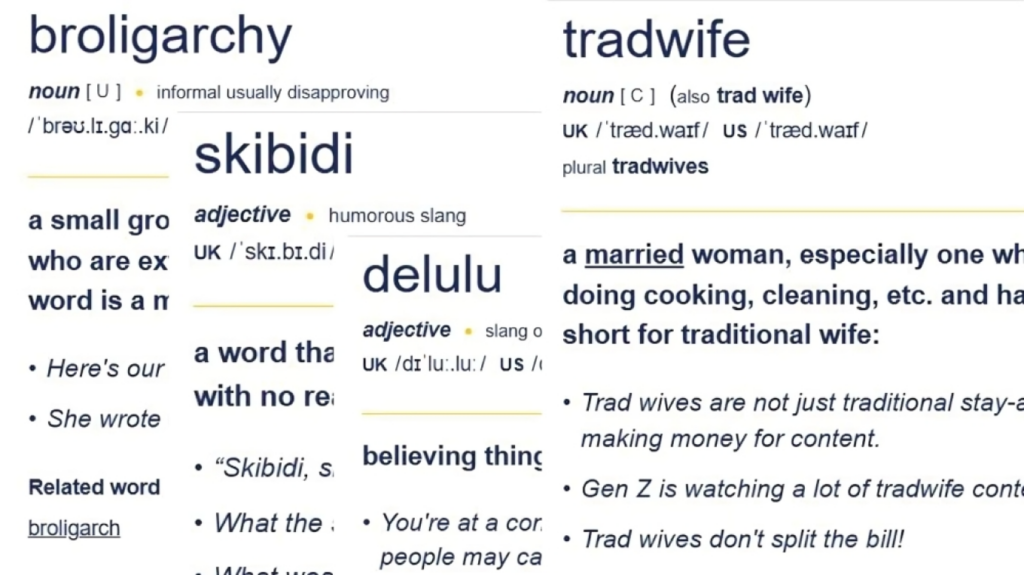
Tradwife, a portmanteau of traditional wife, reflects “a growing, controversial Instagram and TikTok trend that embraces traditional gender roles,” according to the dictionary.
Meanwhile, skibidi, popularised in online memes, was described as a word with “different meanings such as cool or bad, or can be used with no real meaning.” The gibberish term spread via a YouTube channel called Skibidi Toilet and is associated with the mindless, “brain rot” content consumed by Gen Alpha in their digital-first lifestyle.
Delulu, derived from delusional, is defined as “believing things that are not real or true, usually because you choose to.” The dictionary cited an example from a 2025 parliamentary speech where Australian Prime Minister Anthony Albanese used the phrase “delulu with no solulu”.
“It’s not every day you get to see words like skibidi and delulu make their way into the Cambridge Dictionary,” said Colin McIntosh, Lexical Programme Manager at Cambridge Dictionary.
“We only add words where we think they’ll have staying power. Internet culture is changing the English language and the effect is fascinating to observe and capture in the Dictionary.”
The latest update also included:
| Word | Meaning / Context |
| Lewk | Describes a unique fashion look; popularised by RuPaul’s Drag Race |
| Inspo | Short for inspiration |
| Mouse jiggler | Device or method to appear active at work when actually idle, reflecting work-from-home culture |
| Forever chemical | Man-made chemicals that persist in the environment for years, raising concerns over climate change and human health |
These entries highlight the evolving influence of internet culture, fashion trends, and environmental awareness on the English language. The Cambridge Dictionary continues to track the ways in which digital lifestyles and social issues shape modern vocabulary.