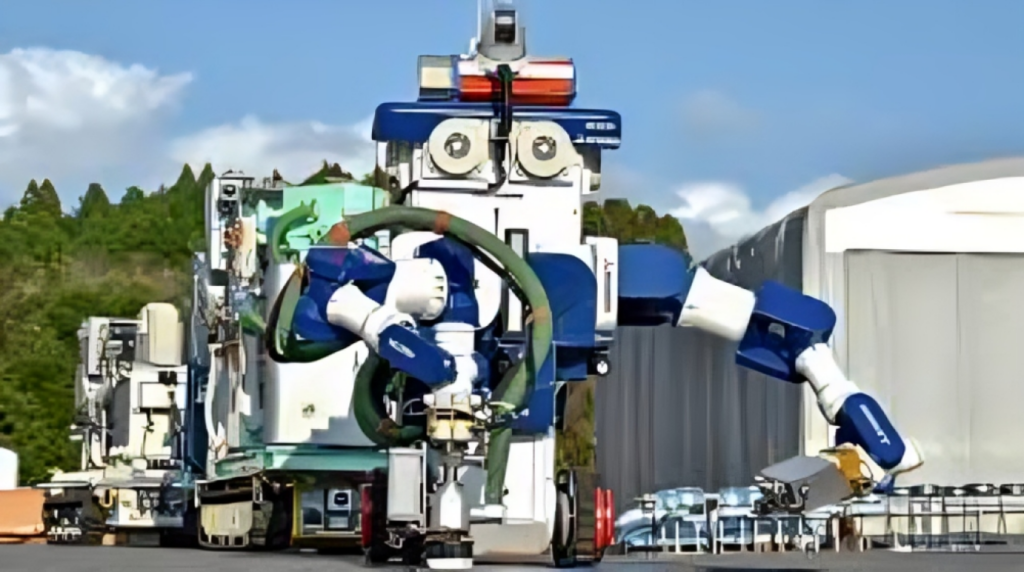
Japanese technicians at the Fukushima Daiichi nuclear power plant have deployed remote-controlled robots inside one of the damaged reactor buildings as part of preparations to remove radioactive debris.
The task of removing melted fuel and other radioactive material remains the most formidable challenge in the decades-long decommissioning project, due to dangerously high radiation levels.
Scale of the Challenge
| Aspect | Details |
| Hazardous Material Remaining | Approximately 880 tonnes |
| Incident Background | Struck by a massive tsunami in 2011, triggered by a 9.0-magnitude earthquake |
| Significance | One of the world’s worst nuclear accidents |
| Robots Deployed | “Spot” and “Packbot” |
| Purpose | Measure radiation levels and survey debris for future removal |
| Equipment Features | Dosimeters on both robots; “Spot” has a camera and dog-like mobility |
| Survey Duration | Approximately one month |
A TEPCO spokesperson told AFP that the robots were deployed on Tuesday to assess radiation levels inside a reactor building.
- Spot, which resembles a small dog, is equipped with a camera for visual inspection.
- Packbot is designed for inspection and radiation measurement in confined spaces.
- Both are fitted with dosimeters to accurately record radiation exposure.
TEPCO said the survey’s findings would guide the design of a full-scale fuel debris retrieval method.
NHK and other Japanese media reported that the survey is expected to continue for around one month.
Tiny samples of radioactive material have previously been collected twice under a trial programme using specialised tools, but full-scale debris extraction has not yet occurred. The collected samples have been sent to research laboratories for analysis.
In July, TEPCO announced that the large-scale debris removal operation would now be delayed until at least 2037, a setback from earlier plans to begin in the early 2030s.
This revised schedule casts doubt on TEPCO and government goals to declare Fukushima fully decommissioned by 2051.
Despite these delays, TEPCO stated last month that the 2051 deadline remains achievable, although it acknowledged that completing the project will be “tough”.