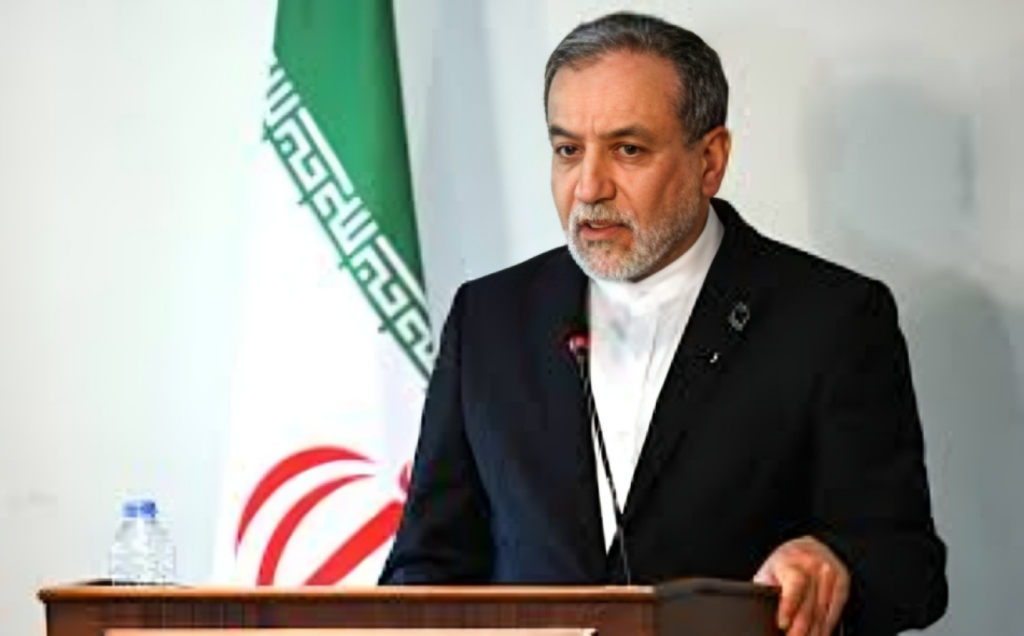
Iran’s Foreign Minister Abbas Araghchi declared on Wednesday that European powers have no right to trigger snapback sanctions under the stalled 2015 nuclear deal, nor to extend the October deadline for doing so.
His comments followed diplomatic meetings in July between Iranian officials and their counterparts from Germany, France, and Britain, marking the first talks since Israel’s attack on Iran the previous month.
The 12-day conflict between the two regional rivals derailed Tehran’s nuclear negotiations with the United States and led Iran to suspend cooperation with the UN nuclear watchdog.
The European trio had warned they might trigger the so-called “snapback mechanism” by the end of August. This action would reimpose sweeping UN sanctions lifted under the 2015 accord unless Iran agreed to curb uranium enrichment and restore cooperation with inspectors.
According to the Financial Times, European parties also offered to extend the October snapback deadline if Iran resumed nuclear talks with Washington and re-engaged with the International Atomic Energy Agency (IAEA). However, the report noted that the offer “remained unanswered by Iran.”
On Wednesday, Araghchi dismissed the European powers’ authority to offer an extension.
“When we believe that they do not have the right to implement snapback, it is natural that they do not have the right to extend its deadline either,” he told the state news agency IRNA.
“We have not yet reached a basis for negotiations with the Europeans,” he added.
Iran has consistently described any attempt to reimpose sanctions as “illegal”, warning of consequences should Europe activate the mechanism.
Araghchi clarified that Iran “cannot completely cut cooperation” with the IAEA, but said the return of inspectors depends on the country’s top security body, the Supreme National Security Council.
In July, Iran suspended IAEA cooperation following its war with Israel, citing the agency’s failure to condemn Israeli and US strikes on Iranian nuclear facilities. The inspectors subsequently left Iran, with Tehran announcing that cooperation would take “a new form.”
Earlier this month, the IAEA’s deputy head visited Tehran for talks. Deputy Foreign Minister Kazem Gharibabadi said Iran and the agency had agreed to “continue consultations.”
Israel’s unprecedented mid-June attacks targeted Iranian nuclear and military sites, as well as residential areas, killing over 1,000 people, including senior commanders and nuclear scientists.
Iran responded with missile and drone attacks that killed dozens in Israel. The United States briefly joined the conflict, striking Iranian nuclear facilities at Fordo, Isfahan, and Natanz. A ceasefire between Iran and Israel has been in place since 24 June.
The conflict occurred just two days before a sixth round of talks between Tehran and Washington, aimed at reaching a new nuclear deal to replace the one abandoned by former President Donald Trump in 2018.
On the prospect of resuming talks with the US, Araghchi stated that negotiations have not yet reached a point where discussions could take place.
Snapback Sanctions and IAEA Status
| Issue | Iran’s Position | European/IAEA Position |
| Snapback sanctions | Iran rejects legality; refuses extension | Threatened by Germany, France, UK; offered October extension if talks resume |
| IAEA inspectors | Cooperation suspended; return depends on Supreme Security Council; to take “new form” | Seeking re-engagement; deputy head visited Tehran for consultations |
| Nuclear talks | Not yet ready to negotiate with US | Europeans pushing resumption; US seeking return to deal framework |