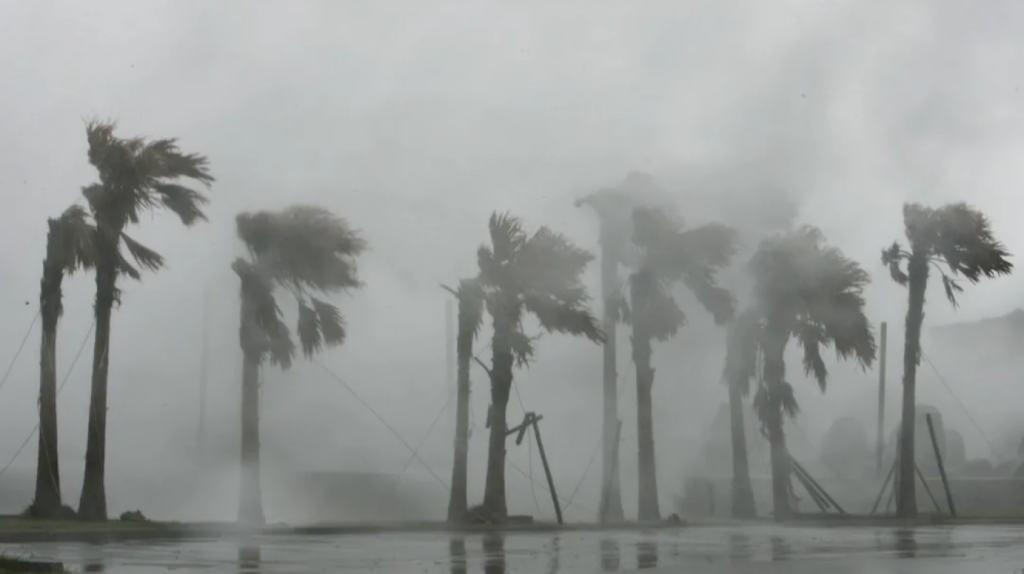
Vietnam announced on Sunday that it plans to evacuate more than 300,000 people and has cancelled over a dozen domestic flights as Typhoon Kajiki edges closer to the country’s eastern seaboard.
Authorities confirmed that 325,500 residents in five coastal provinces will be relocated to schools and public buildings temporarily converted into evacuation centres. Both Vietnam Airlines and VietJet announced widespread cancellations of scheduled flights.
The storm is expected to make landfall on Vietnam’s east coast on Monday.
Disaster management officials under the Ministry of Agriculture and Environment issued an urgent alert: “The situation is extremely dangerous and not safe for any vehicles or structures such as tourism or fishing vessels and aquaculture raising facilities.”
According to the Joint Typhoon Warning Center (JTWC), Typhoon Kajiki is currently moving slowly past China’s southern coast, with maximum sustained wind speeds of 90 knots (167 km/h). The system is expected to strengthen further as it approaches Vietnam.
| Region / Sector | Expected Impact |
| Ha Tinh & Nghe An provinces | Extreme downpours on Monday and Tuesday |
| Coastal regions | Storm surges, flooding, high winds |
| Fishing & Aquaculture | Severe risk to vessels, farms, and offshore structures |
| Energy & Transport | Potential damage to power facilities and disruption to transport services |
China’s Meteorological Administration has also warned of heavy rainfall, strong winds, and possible power disruptions across affected areas.
- China’s tropical island of Hainan raised its emergency response to the highest level on Sunday and evacuated 20,000 residents, state media reported.
- In Sanya, the island’s main city, tourist attractions were shut and businesses suspended operations.
Vietnam has already endured a devastating year of natural disasters:
| Period | Casualties | Economic Losses |
| Jan–Jul 2025 | Over 100 dead or missing | More than $21 million |
| Sep 2024 (Typhoon Yagi) | Hundreds of fatalities | Approx. $3.3 billion |
Typhoon Kajiki marks the fifth tropical storm to strike Vietnam in 2025 alone.
Scientists continue to emphasise that human-induced climate change is fuelling more intense and unpredictable weather systems. This trend heightens the likelihood of destructive storms and flooding, particularly in tropical regions such as Southeast Asia.