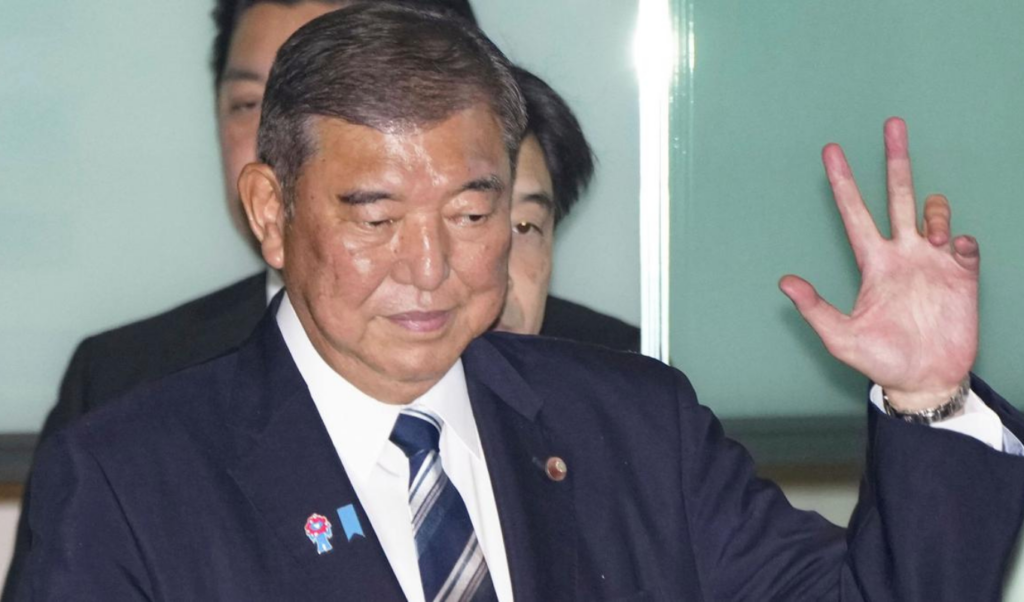
Japan’s Prime Minister Shigeru Ishiba announced on Sunday that he would resign after less than a year in office, having lost his majority in both houses of parliament. His departure plunges the world’s fourth-largest economy into fresh political uncertainty, at a time when the nation is grappling with rising food prices and the impact of U.S. tariffs on its vital auto sector.
Speaking at a press conference, Ishiba, 68, explained his decision: “Now that negotiations on U.S. tariff measures have reached a conclusion, I believe this is the appropriate moment. I have decided to step aside and make way for the next generation.”
The announcement came just days after U.S. President Donald Trump signed an order reducing tariffs on Japanese automobiles from 27.5% to 15%. While hailed as progress, the levy still poses serious challenges to Japan’s crucial auto industry.
Ishiba assumed leadership of the long-dominant Liberal Democratic Party (LDP) in September 2024, becoming the party’s 10th separate prime minister since 2000 – all of them men. He was regarded as a safe pair of hands, and his election followed repeated failed attempts to secure the party’s top role.
His term was originally set to end in September 2027, but mounting dissatisfaction within the LDP, coupled with election setbacks, forced his early exit.
Media reports indicated that Ishiba faced increasing pressure to resign:
- The farm minister and a former prime minister met Ishiba on Saturday night, urging him to step down voluntarily.
- Four senior LDP officials, including Hiroshi Moriyama, the party’s number two, offered their resignations last week.
- Prominent figures such as Taro Aso, the influential 84-year-old former prime minister, also supported his departure.
Public Sentiment and Leadership Contest
A recent Nikkei survey (August 2025) suggested that voters remain sceptical about the leadership race:
| Potential Successor | Profile | Public Perception |
| Sanae Takaichi | Hardline nationalist, former runner-up | Widely unpopular; seen as too hawkish |
| Shinjiro Koizumi | Farm Minister, younger leader | Considered a more moderate choice |
| Other Options | Various LDP figures | 52% of respondents said no contest was necessary |
Social media campaigns under hashtags like #IshibaDontQuit highlighted calls for the moderate leader to remain, though these were overshadowed by political manoeuvring inside the LDP.
The LDP, which has governed almost continuously since 1955, is facing declining voter support, with defections to fringe populist groups such as Sanseito. Discontent stems from:
- Soaring food prices, especially rice
- Falling living standards
- Corruption scandals within the ruling party
Ishiba, who had promised a “new Japan” during his leadership bid, leaves office at a time when the country’s political and economic challenges appear more acute than ever.