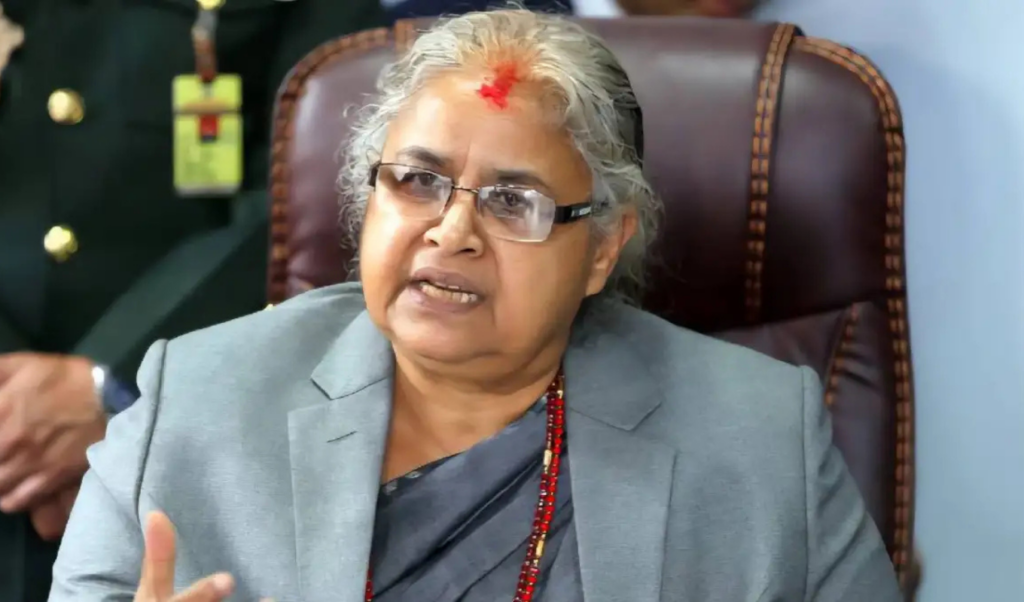
Nepal’s former chief justice, Sushila Karki, has emerged as the leading candidate to head an interim administration following nationwide protests that forced the resignation of the veteran prime minister. This was confirmed on Thursday by a representative of the “Gen Z” protesters, who played a central role in the demonstrations.
On Wednesday, Army Chief General Ashok Raj Sigdel held consultations with relevant stakeholders and met representatives of the Gen Z movement, a military spokesperson said. The army, which is tasked with restoring order in the Himalayan nation of 30 million people, provided no further details about the discussions.
The demonstrations marked the worst violence in two decades, culminating in the ousting of the prime minister and widespread damage to parliament buildings on Tuesday.
“Right now, Sushila Karki’s name is coming up to lead the interim government — we are now waiting for the president to make a move,” said Rakshya Bam, who attended the meeting with army officials.
“We discussed with the army chief about the future… the conversation was about how we can move forward, keeping the peace and security of the country.”
Karki, 73, Nepal’s first female Supreme Court chief justice and an academic, told AFP that:
- “Experts need to come together to figure out the way forward.”
- “The parliament still stands.”
Despite her candidacy, protesters are far from a unified bloc. Thousands participated in a virtual discussion on Discord, debating agendas and potential leaders.
Conflicting opinions and competing proposals were raised, reflecting the decentralised nature of the movement.
“There are divisions. It is natural in a decentralised movement like this that there are going to be competing interests and competing voices,” explained journalist Pranaya Rana.
| Aspect | Details |
| Candidate for interim leadership | Sushila Karki |
| Age | 73 |
| Background | Academic, first female Supreme Court chief justice of Nepal |
| Movement | “Gen Z” protesters, decentralised |
| Platform for discussion | Online Discord meeting, thousands attended |
| Division | Multiple competing proposals and voices |
Soldiers continued patrolling Kathmandu for a second consecutive day on Thursday. Multiple army checkpoints were set up along major streets, and the capital appeared calm.
The unrest began on Monday in Kathmandu, initially in response to the government’s ban on social media and widespread corruption allegations.
However, the protests quickly escalated nationwide, culminating in:
- Government buildings set on fire
- At least 19 people killed in a deadly crackdown
The army and political leaders are now seeking a path to stability, while protesters remain determined to influence the formation of an interim government.