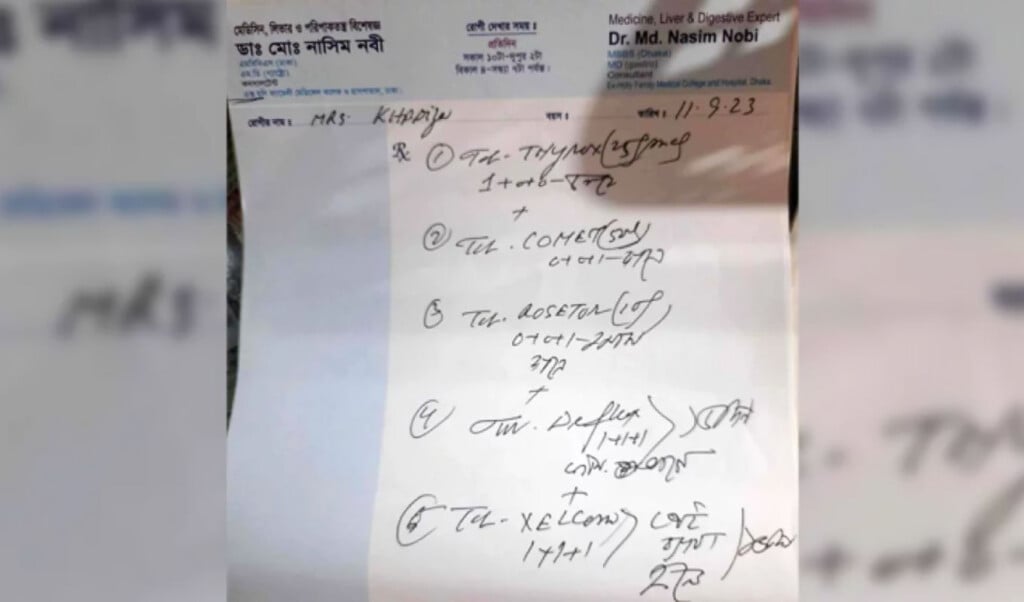
In a bid to uphold the professional dignity of government doctors and to curb undue influence of pharmaceutical companies inside hospitals, the Directorate General of Health Services (DGHS) has issued eight new directives. These instructions also emphasise the need for physicians to avoid direct involvement with private organisations and ensure impartial medical care for patients.
On 11 September, these directives were formally announced through a circular signed by Dr ABM Abu Hanif, Director (Administration), DGHS. The circular underscored that strict compliance is essential to maintain public confidence in government doctors, improve service quality, and ensure transparency within hospitals.
The circular highlights the following prohibitions and regulations:
| Directive | Description |
| No private or company-branded prescription pads | Doctors must not write prescriptions or test recommendations on letterheads branded with private diagnostic centres, clinics, or pharmaceutical companies. |
| Restriction on external referrals | Patients must not be asked to undergo tests or purchase medicines from outside sources if those services are available in government hospitals. |
| Seal restrictions | Use of non-government-approved or private seals is prohibited. Only seals with generic drug names, free of advertisement, may be used. |
| Prohibition on drug lists | Medicine lists provided by pharmaceutical companies cannot be displayed or kept on hospital desks. |
| Patient data protection | Company representatives are barred from collecting prescriptions, taking photographs, or gathering personal patient information. |
| Visiting hours for representatives | Company representatives may only meet doctors twice weekly—on Mondays and Thursdays between 12:00 pm and 2:30 pm. Outside these hours, their presence in hospitals will invite legal action. |
| Mandatory ID display | Representatives must visibly display company-issued ID cards during hospital visits. |
| Legal enforcement | Violation of these rules will result in strict legal measures against both the companies and the doctors involved. |
The DGHS believes that implementation of these measures will strengthen the image of government doctors and help restore public trust in medical services. Recent reports revealed that patients were increasingly burdened by unnecessary financial costs due to pressure from private diagnostic centres and pharmaceutical companies—an issue that urgently required regulation.
Health sector insiders stress that issuing instructions alone is not sufficient; effective enforcement is crucial. To achieve this, they recommend:
- Enhancing surveillance inside hospitals.
- Conducting regular monitoring of medical practices.
- Launching awareness programmes for patients to reduce susceptibility to external influence.
The DGHS has clearly stated that failure to comply with these instructions will invite stern legal action against pharmaceutical companies as well as disciplinary measures against doctors. The circular emphasised that such accountability is vital to ensure that public trust in government healthcare remains intact.