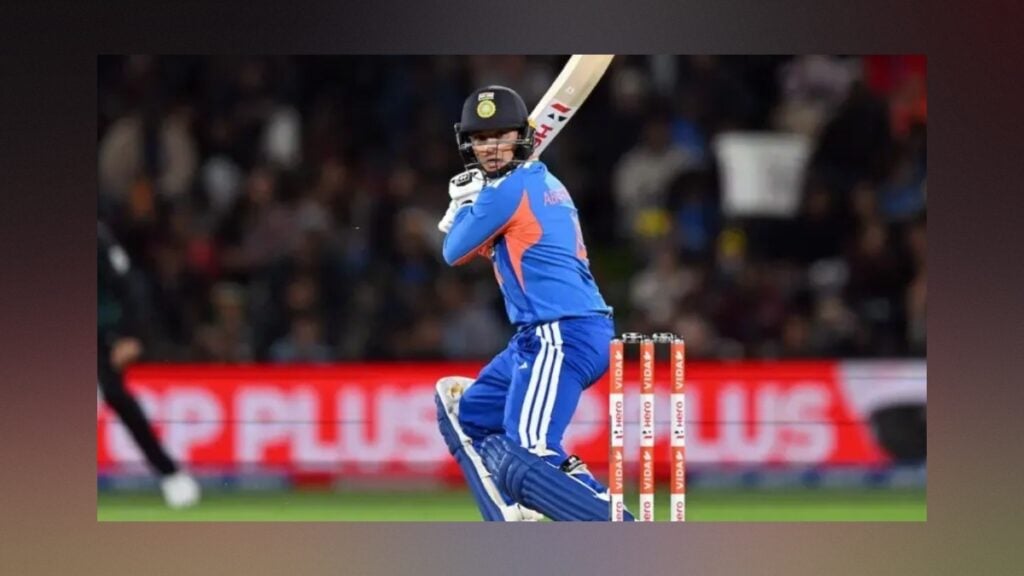
The left-handed batter achieved the milestone during the first match of India’s T20I series against New Zealand in Christchurch, where the visitors produced a remarkable batting performance to secure a six-wicket victory while chasing a challenging target of 226 runs.
Abhishek made his intentions clear from the very first delivery. Facing New Zealand fast bowler Matt Henry, he struck the opening ball over the cover region for six, giving India an aggressive start and adding another significant achievement to his international career.
The shot marked the seventh occasion on which Abhishek had cleared the boundary off the first ball of a T20 international innings. In doing so, he surpassed Afghanistan’s Shafiqullah Shinwari, who previously held the record with six such sixes.
India’s Suryakumar Yadav occupies the next position on the list, having struck five sixes off the opening delivery of an innings.
The achievement highlights Abhishek’s attacking approach to batting, particularly during the early stages of an innings. While many opening batters prefer to assess the pitch and bowling conditions before taking risks, Abhishek has demonstrated a willingness to attack immediately.
His aggressive style is especially valuable in T20 cricket, where maximising scoring opportunities during the six-over powerplay can significantly influence the outcome of a match.
Despite making a record-breaking start, Abhishek was unable to build a substantial individual innings against New Zealand.
He scored a rapid 29 runs from just 12 deliveries, striking two fours and three sixes before being caught off the bowling of Michael Bracewell.
Although his innings was brief, it provided India with valuable early momentum as they attempted to chase down New Zealand’s imposing total.
A target of 226 required India to maintain a scoring rate of more than 11 runs per over, placing considerable pressure on the batting line-up throughout the chase.
Following Abhishek’s dismissal, India’s other batters responded confidently, ensuring that the early setback did not disrupt their pursuit.
Sanju Samson played a particularly important role, contributing 67 runs to keep India firmly in contention. His innings provided the stability needed to maintain the chase while allowing the scoring rate to remain competitive.
Shreyas Iyer and Naman Dhir also delivered crucial performances, scoring 42 runs apiece. Their contributions strengthened India’s position and helped the visitors maintain momentum during the later stages of the innings.
With the match approaching its conclusion, India successfully reached the target with two deliveries remaining, completing an impressive six-wicket victory.
The result represented another significant milestone for Indian cricket, as the successful pursuit became the team’s highest run chase in men’s T20 internationals.
Chasing a target above 220 in the shortest international format demands consistent attacking intent, effective partnerships and the ability to manage pressure during the closing overs.
India’s performance demonstrated the importance of contributions across the batting order, with several players playing decisive roles in overcoming New Zealand’s substantial total.
For Abhishek, the match provided further evidence of his growing influence as an attacking opener. His ability to score boundaries from the outset has become a defining feature of his batting, making him a particularly dangerous opponent during the powerplay.
Although he could not convert his aggressive start into a major individual score, his record-breaking six ensured that he remained one of the central figures in the contest.
The Christchurch encounter ultimately produced two notable achievements: Abhishek’s unprecedented seventh six off the opening ball of a T20 international innings and India’s highest successful run chase in the format.
Together, the records highlighted both the individual brilliance of India’s young opener and the collective strength of a batting line-up capable of overcoming demanding targets under pressure.