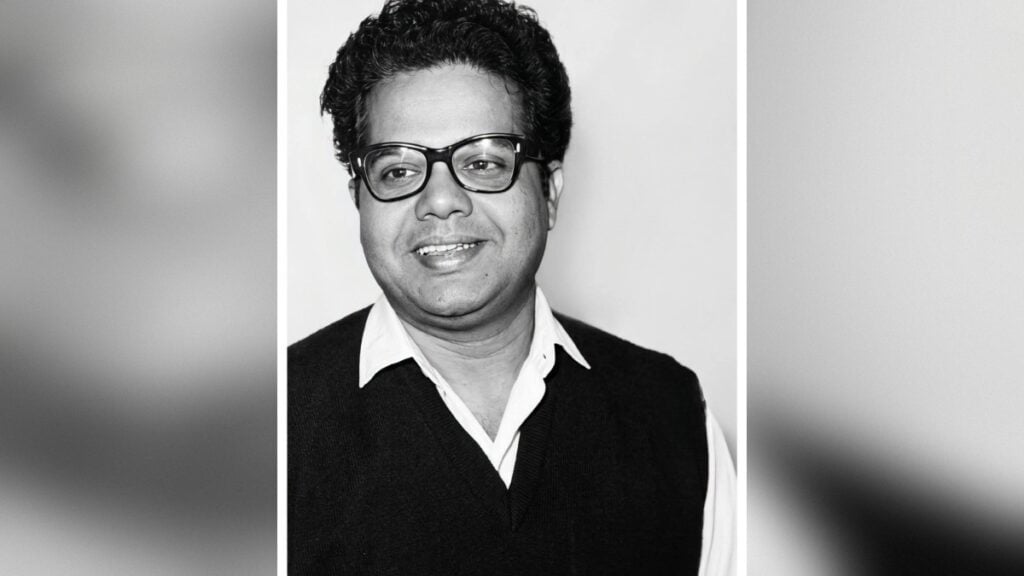
The year 1971 remains etched in the collective memory of South Asia as a period of profound upheaval, extraordinary sacrifice, and intense human resilience. As the Pakistani military launched a brutal crackdown across what was then East Pakistan, millions of innocent civilians were forced to flee across the border into India seeking refuge, whilst thousands of brave freedom fighters—the Mukti Bahini—took up arms to liberate their motherland. In those dark, turbulent months, the struggle for Bangladesh’s independence transcended a regional territorial conflict to become a global rally for human rights, justice, and liberty. Across India, writers, journalists, intellectuals, and artists stepped forward to support the cause. Amongst those prominent figures was the celebrated Bengali actor Tarun Kumar, whose deep ancestral ties to Bangladesh fueled an unwavering commitment to its people in their hour of greatest need.
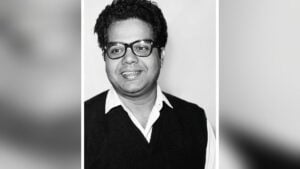
Born in Kolkata on 24 February 1931, Tarun Kumar—affectionately known by his nickname ‘Buro’—carried a heritage deeply intertwined with Bangladesh. His ancestral roots lay in the historic district of Yashore (now Chattogram/Jessore region), from where his forefathers had migrated first to Barasat in the 24 Parganas and eventually settled in Kolkata. Furthermore, his marital alliance anchored him to Rajbari district. Though he grew up in the cultural heart of Bengal, the ancestral land remained far more than a distant family memory. When the liberation war broke out in 1971, that spiritual connection manifested as a practical, life-saving humanitarian crusade.
Tarun Kumar refused to remain a passive observer reading news reports from afar. Harnessing his influence, resources, and personal networks, he threw himself into relief work. He routinely made arduous journeys to border transit points, including the Darshana border, to personally deliver vital medical supplies and essential medicines to injured freedom fighters. Recognising the sheer scale of the crisis in overstretched refugee camps, he mobilised medical professionals, accompanying teams of doctors to treat wounded soldiers and refugees suffering from malnutrition and disease. For the actor, art was never confined to the silver screen; true artistic fulfillment lay in empathising with human suffering and acting upon it.
Even in his later years, memories of the 1971 struggle burned brightly in his mind. He maintained deep, enduring bonds with Bangladesh’s cultural and cinematic stalwarts, including Zahir Raihan, Kalim Shafi, Subhash Dutta, Baby Islam, Anwar Hossain, and Alamgir Kabir. Their shared experiences during those hazardous days forged an unbreakable bond of solidarity that outlasted the war itself.
A Distinctive Legacy Beyond the Shadow of a Superstar
In the history of Bengali cinema, Tarun Kumar occupies a uniquely revered position. As the younger brother of the legendary matinee idol Uttam Kumar, he faced the formidable challenge of carving out his own identity alongside a titan of Indian cinema. Yet, he achieved this with remarkable grace, relying on his natural acting style, effortless dialogue delivery, and an extraordinary capacity for emotional range.
When the two brothers shared the screen, their onscreen chemistry was electric, providing audiences with memorable cinematic moments. Despite Uttam Kumar’s immense stardom, Tarun Kumar never faded into the background. His talent was acknowledged early in his career when he won a prestigious National Film Award for his compelling performance in Dadathakur, achieved even before Uttam Kumar had firmly secured his status as the undisputed ‘Mahanayak’ (Great Hero).
Off screen, the brothers maintained a relationship built on warmth, mutual respect, and absolute candour. Tarun Kumar was never an uncritical admirer. If he found his brother’s performance exceptional, he expressed deep reverence; equally, if he felt a portrayal fell short, he voiced his honest critique without hesitation. A famous testament to his integrity occurred following the screening of Amanush, where he offered constructive criticism directly to Uttam Kumar. It was a relationship defined by affection devoid of blind adulation, anchored always by a shared commitment to their craft.
Over Six Hundred Films and an Enduring Legacy
Throughout a prolific career spanning several decades, Tarun Kumar appeared in more than 600 films, effortlessly navigating roles that ranged from lighthearted comedy to intense dramatic realism. His vast filmography reflects the rich tapestry of golden-era Bengali cinema, featuring acclaimed titles such as:
-
Deya Neya, Daya-Daayitva, Moner Moto Mon, and Ronokhetra
-
Jiban Sandhan, Damu, Sangharsha, and Prithibir Shesh Station
-
Pennam Kolkata, Pati Param Guru, Abhagini, and Nilimoy Neel
-
Nawab, Rakta Rin, Mahapith Tarapith, and Aghatan Aajo Ghathe
-
Tumi Kato Sundar, Kidnap, Abir, Swarnamoyir Thikana, and Rajpurush
-
Nishibasor, Doctor Bou, Swarga Sukh, and Til Theke Taal
-
Baikunther Will, Shorgol, Surya Trishna, and Pratidan
-
Rajeswari, Sagar Balaka, Samsarer Itikatha, and Khelar Putul
-
Pahari Phool, Bandhan, Paka Dekha, Pangkhiraj, and Sandhi
His greatest strength as a performer was an innate authenticity that rendered every character instantly believable to the audience, earning him a permanent, cherished place in the hearts of filmgoers.
Tarun Kumar passed away on 27 October 2003, bringing to a close a magnificent life dedicated to art and humanity. While decades have passed and the landscape of cinema has evolved, an actor’s true measure extends beyond the sheer volume of his film credits. It lives on through his creative contributions, the affection of his audience, and his moral courage during moments of historic crisis. In remembering Tarun Kumar, one honors not only a brilliant actor of Bengali cinema but also a compassionate ally of Bangladesh’s Liberation War—a man who honored his roots by standing steadfastly alongside a nation fighting for its freedom.