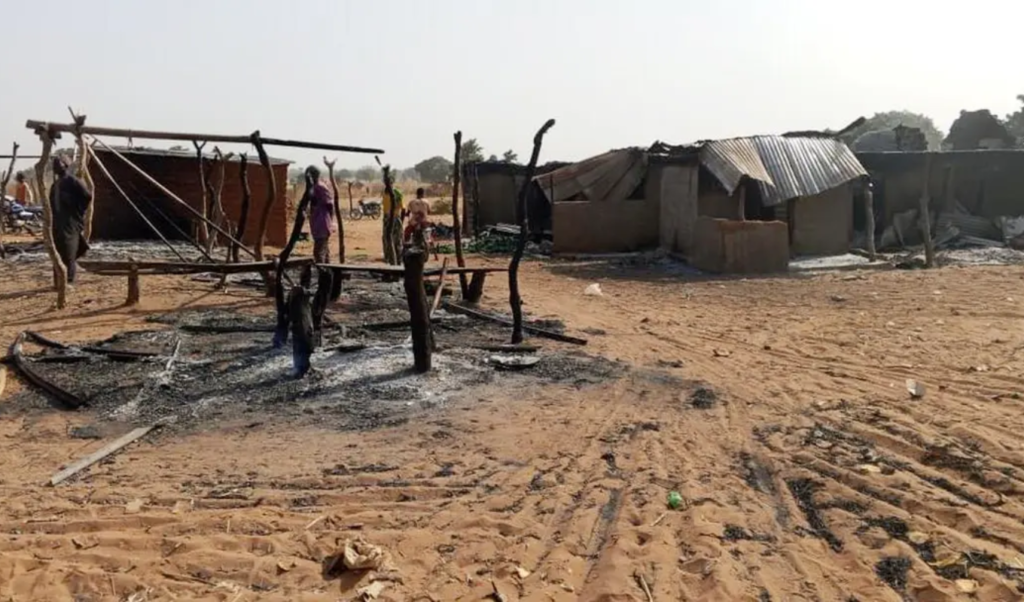
At least thirty people, including eight children, have been slaughtered following a brutal pre-dawn assault by heavily armed gunmen on a village in Nigeria’s north-western Kaduna State. The attackers stormed the remote community in the early hours of Monday, opening fire indiscriminately on sleeping residents and setting scores of homes ablaze before fleeing the scene undetected.
Local eyewitnesses and community leaders in the Kauru local government area described scenes of utter horror. According to Dogon Rana, secretary to the village chief, the bandits descended upon Naridon village under the cover of darkness. Armed with automatic weapons, the assailants opened fire without warning, burning residential structures to the ground as terrified families attempted to escape. At least four other individuals sustained severe injuries during the onslaught and remain in critical condition.
Ishaya Dawa, a local youth leader, recounted that the mid-night raid descended into sheer butchery, with several victims shot at close range and others brutally slaughtered with bladed weapons. The fatalities include women, young children, and the elderly. Emergency volunteers and surviving villagers spent the morning gathering bodies from the smoking ruins, transferring several corpses to a nearby mortuary. Security forces and police personnel arrived at the devastated settlement hours after the gunmen had already departed.
Spokesman for the Kaduna State Police Command, Mansur Hassan, acknowledged the tragedy, stating that law enforcement officials have launched an investigation into the massacre and that further details will be released as security units secure the area. As of Monday, no group has claimed responsibility for the atrocity.
North-western and central Nigeria have long been plagued by rampant violence driven by loose networks of armed bandits and criminal syndicates. These groups regularly operate from vast, unpoliced forest reserves, orchestrating deadly raids on agrarian villages, looting livestock, burning farmland, and carrying out mass kidnappings for ransom. While north-eastern Nigeria continues to suffer from a long-running jihadist insurgency led by Boko Haram and the Islamic State West Africa Province (ISWAP), the bloodshed in Kaduna is largely attributed to well-armed criminal gangs taking advantage of security vacuums in rural belts.
The repeated failure to curb rural banditry has created a severe humanitarian crisis across Kaduna State and neighbouring regions. Farming communities have been forced off their land, compounding local food insecurity and deepening mistrust in state protection. Despite frequent military operations and aerial bombardments targeted at bandit hideouts, local populations remain extremely vulnerable to swift, retaliatory strikes by criminal cartels. Worshippers, farmers, and remote villagers continue to bear the heaviest burden of Nigeria’s protracted security challenges.