Khaborwala Online Desk
Published: 25 Mar 2026, 12:28 pm

The insurance sector is confronting a profound transformation as automation and digital technologies begin to reshape traditional operational models.
A new report by Aon, titled Three Roles to Build Insurance’s Next-Generation Workforce, estimates that by 2030, 43% of insurance tasks could be replaced by automation, while 97% of insurers are accelerating adoption of automated solutions. The findings highlight an urgent need for companies to rethink workforce strategies and cultivate talent capable of thriving in an AI-driven and digitally enhanced environment.
“Talent strategy is now inseparable from business strategy,” the report states. Insurers are competing for specialised expertise in data analytics, cybersecurity, climate risk, and digital innovation. Beyond technical skill, organisational culture and employee value proposition (EVP) are critical: the study finds that 65% of prospective candidates withdraw from recruitment due to unappealing EVP or workplace culture.
To address these challenges, Aon identifies three emerging talent profiles crucial for future competitiveness:
| Talent Profile | Primary Focus | Core Skills | Strategic Role |
|---|---|---|---|
| Reimagined Insurance Practitioners | Traditional roles enhanced with technology | AI, digital tools, ESG or cyber knowledge | Optimise decision-making and efficiency |
| Industry Futurists | Translating complex risks into actionable insights | Climate risk, cyber risk, predictive analytics | Drive innovation in products and business planning |
| Change Orchestrators | Leading organisation-wide transformation | Workforce development, process redesign, change management | Embed new ways of working and support talent mobility |
The demand for climate and ESG expertise is growing rapidly, yet professionals combining environmental and insurance expertise remain scarce. Insurers that proactively develop these hybrid capabilities are better positioned to manage evolving regulatory, environmental, and technological challenges.
Aon advises that companies align talent strategies with business objectives, implement data-driven workforce planning, and invest in reskilling programmes to prepare employees for automation-driven change. By embracing these approaches, insurers can leverage automation not as a threat, but as an opportunity to enhance productivity, improve risk management, and attract top talent.
With automation transforming nearly half of all insurance tasks, the sector stands at a critical crossroads: organisations that integrate technology with strategic workforce development will lead the industry, while those that fail to adapt risk lagging behind in a rapidly evolving market.

> Mbappé: A World Cup Without Neymar is Unthinkable
> Bangladesh Foreign Exchange Rates Update
> Warfaze Lead Independence Concert
> Nachiketa Sings Bhalobasho Composition
> Bangladesh and Five Other Nations’ Ships Safe in Hormuz: Iran Announces
> Four Dead, 41 Missing After Bus Sinks at Daulatdia Ferry Terminal
> Road Deaths Spike During Eid Holiday: Discrepancies Highlighted
> Nabin Fashion Branches Remain Open Amid Controversy
> Fuel Card Rule Enforced for Motorcyclists
> Shepherd Secures $42M to Transform Commercial Insurance
> Flights Suspended Amid Regional Tensions


As the footballing world turns its eyes to Foxborough, Massachusetts, a titanic clash awaits at the...

Foreign trade between Bangladesh and the global market continues to expand steadily, driving a growi...

Iran’s Islamic Revolutionary Guard Corps (IRGC) has claimed that it successfully targeted and downed...

Amid escalating tensions in the Middle East, Iran has announced that it will allow “friendly nations...

A sustained downturn in global gold prices appears increasingly likely as geopolitical tensions in t...
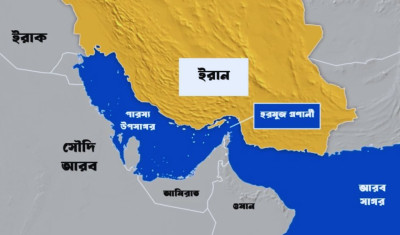
A leading international relations scholar has argued that the United States has long underestimated...

Following disappointment at the 1954 World Cup, Italy appointed Alfredo Foni, a manager who had alre...
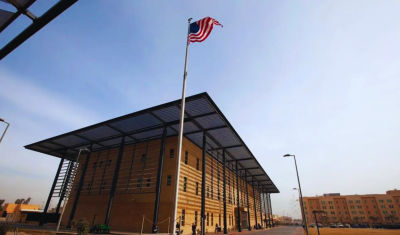
The United States diplomatic mission in Iraq has issued an urgent directive advising all American ci...

As part of their build-up to the 2026 FIFA World Cup, Argentina are set to play two international fr...

Pakistan has extended warm felicitations to Bangladesh on the occasion of its Independence Day, reaf...
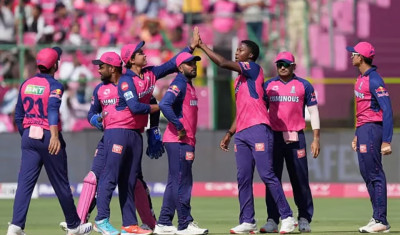
A consortium of high-profile American investors has emerged as the leading bidder to acquire the Raj...

In a message marking the occasion of Bangladesh’s Independence Day, United States Secretary of State...


Availabe for iphone & ipads

Available in google play
 বাংলা
বাংলা