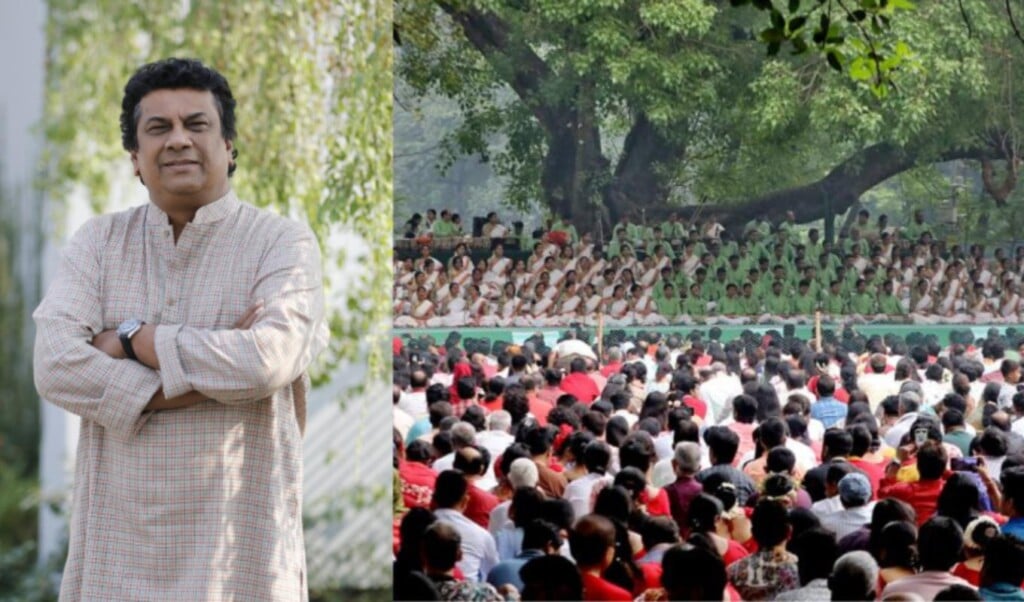
For Khairul Anam Shakil, a distinguished exponent of Nazrul Sangeet and vice president of Chhayanaut, Pahela Baishakh transcends the notion of a mere calendar event. Instead, it stands as a profound and enduring manifestation of Bangali cultural identity, reflecting centuries of artistic, linguistic, and communal heritage.
Each year, the celebrations begin at Ramna Batamul with the tranquil strains of classical morning ragas. Over decades, Shakil has observed generations of Bangalis gathering at this iconic venue, united in their shared appreciation of music, language, and tradition. The event, organised by Chhayanaut, has become synonymous with the cultural spirit of the nation.
“Pahela Baishakh is not merely about marking the first day of the year,” Shakil remarks. “It is a declaration of identity—an affirmation of who we are as Bangalis and our pride in our cultural inheritance.”
Since the mid-1960s, the Ramna Batamul অনুষ্ঠান has remained central to his life, with rare interruptions during the Bangladesh Liberation War and the global COVID-19 pandemic. Over time, what began as a modest gathering of a few hundred participants has evolved into a grand cultural congregation attended by hundreds of thousands.
The programme traditionally opens with classical ragas such as Bhairav, Bhairavi, and Todi, performed through both vocal and instrumental arrangements featuring sitar, sarod, and flute. This is followed by timeless compositions from luminaries like Rabindranath Tagore and Kazi Nazrul Islam, alongside works by other regional composers that emphasise harmony, humanity, and peace.
Key Features of Ramna Batamul Celebrations
| Aspect | Description |
|---|---|
| Opening Performances | Classical morning ragas (Bhairav, Bhairavi, Todi) |
| Musical Heritage | Songs by Tagore, Nazrul, and local composers |
| Instruments Used | Sitar, sarod, flute, and vocal renditions |
| Audience Scale | Hundreds of thousands in attendance annually |
| Cultural Activities | Fairs, artisan stalls, traditional crafts |
| Global Reach | Celebrated in countries including Australia, the US, and Japan |
Shakil’s personal journey with Chhayanaut mirrors the evolution of the অনুষ্ঠান itself. Beginning with ensemble performances, he later progressed to solo renditions, each stage marked by rigorous preparation and artistic discipline. He recalls that students and performers alike were deeply motivated to uphold the programme’s high standards, fostering a sense of pride and collective accomplishment.
Beyond music, Pahela Baishakh transforms the Ramna area into a vibrant cultural fairground. Artisan stalls, handicrafts, and traditional displays enrich the festive atmosphere, making it one of the largest and most inclusive celebrations for Bangalis. Notably, people from diverse religious and social backgrounds participate, reinforcing the festival’s unifying character.
Shakil underscores the importance of transmitting this cultural consciousness to younger generations. He believes that parents, alongside educational institutions, bear a responsibility to instil pride in Bangali heritage through participation in cultural events, book fairs, and artistic activities.
While acknowledging the pervasive influence of globalisation and digital media, he stresses the necessity of preserving core cultural values. Citing Gurusaday Dutta, Shakil affirms that genuine global citizenship begins with a deep respect for one’s own culture—a principle that Pahela Baishakh continues to embody with enduring relevance.