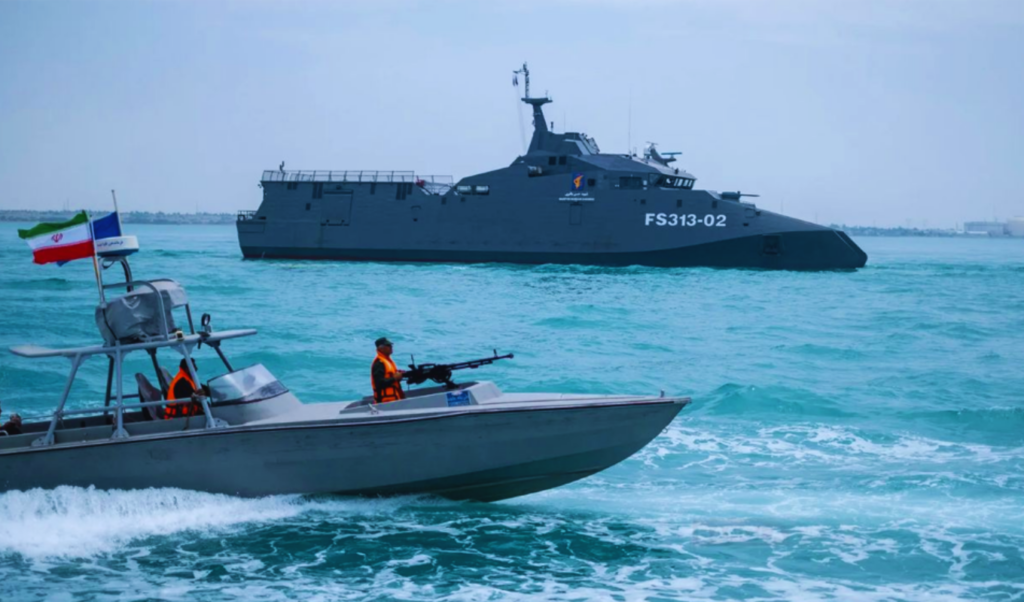
Amid escalating tensions in the Middle East, Iran has announced that it will allow “friendly nations”, including Bangladesh, to continue safe maritime passage through the strategically vital Strait of Hormuz. The declaration comes at a time of heightened regional instability, raising global concerns over energy security and freedom of navigation in one of the world’s most critical shipping corridors.
Iran’s Foreign Minister, Abbas Araghchi, stated in a televised interview that contrary to Western media reports, the Strait of Hormuz has not been fully closed. Instead, maritime movement is being regulated in coordination with select countries and shipping operators. He emphasised that vessels belonging to nations considered friendly—or those granted special permission—are being provided secure passage under protection arrangements facilitated by Iranian armed forces.
According to remarks attributed to Reuters reporting, the list of countries benefiting from this arrangement includes China, Russia, Pakistan, Iraq, India, and Bangladesh. Araghchi noted that several of these countries have already coordinated with Tehran to ensure uninterrupted transit. He further indicated that such arrangements are not temporary and may continue even beyond the current conflict period.
However, the Iranian foreign minister made it clear that access is not universal. He stressed that vessels linked to “hostile states” will be denied passage. This includes ships associated with the United States, Israel, and certain Gulf countries involved in ongoing regional confrontations. “We are in a wartime situation; the region has effectively become an active conflict zone,” he said, adding that there is no justification for allowing adversarial shipping through the strait.
Tensions have already resulted in direct maritime disruptions. Earlier this week, Iranian authorities reportedly prevented a Pakistan-bound container vessel from transiting the strait. The ship, named SELEN, travelling from Sharjah in the United Arab Emirates to Karachi, was ordered to turn back due to lack of clearance, according to the Islamic Revolutionary Guard Corps.
The Strait of Hormuz remains one of the most strategically sensitive waterways in the world, with nearly one-fifth of global crude oil and liquefied natural gas passing through it. Any disruption in this route has immediate implications for international energy markets, shipping costs, and global supply chains.
Recent data highlights the severity of the disruption. Shipping analytics indicate that vessel movement through the strait has dropped dramatically since the escalation of conflict. Normally, around 120 vessels transit the strait daily. However, between 1 and 25 March, only 155 ships reportedly passed through in total—representing an estimated decline of around 95 per cent compared with typical traffic levels.
A breakdown of recent maritime activity is presented below:
| Category | Details |
|---|---|
| Normal daily traffic | ~120 vessels |
| Total vessels (1–25 March) | ~155 vessels |
| Estimated decline | ~95% reduction |
| Oil & gas tankers included | 99 vessels |
| Westbound transit (25 March) | 2 vessels only |
Most of the oil and gas carriers observed during this period were heading eastwards, reflecting shifting trade flows and heightened caution among shipping operators. Analysts warn that prolonged disruption in the Strait of Hormuz could intensify global energy volatility, further increasing freight costs and placing additional pressure on already fragile supply chains.