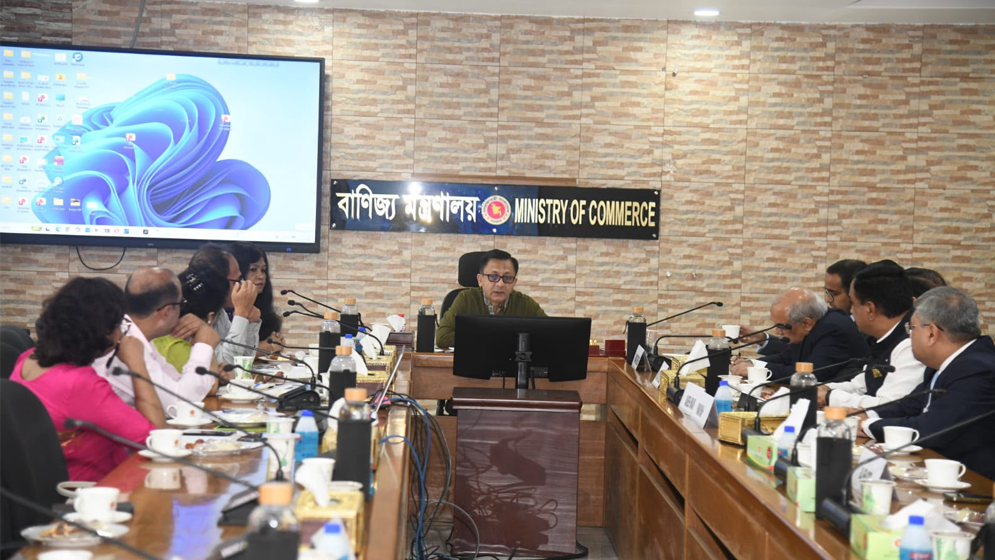
Bangladesh and India are stepping up efforts to transform geographical proximity into tangible economic advantages. Trade, investment, and industrial cooperation took centre stage during recent high-level discussions in Dhaka, where policymakers and business leaders explored ways to deepen bilateral ties.
Khondakar Abdul Muktadir, the Commerce Minister, met with a delegation from the Confederation of Indian Industry (CII) at the Secretariat. Led by CII Director General Chandrajit Banerjee, the delegation engaged in substantive talks concerning trade expansion, the removal of existing barriers, and the harmonisation of regional supply chains.
Mukatdir emphasised that despite disparities in population and economic scale, the shared border offers immense potential for mutual growth. Strengthening economic connectivity remains essential, particularly given the strategic location of Bangladesh relative to India’s northeastern states. Enhanced transport links and trade corridors can significantly accelerate industrialisation, boost regional investment, and generate employment across both nations.
A central theme of the dialogue was the restoration of normal trade flows following recent regulatory restrictions. Both sides expressed optimism that ongoing consultations would yield positive outcomes within the coming months, clearing the path for smoother cross-border commerce.
Mobility and visa complexities for business professionals and patients also drew focused attention. The current system, which frequently requires repeated applications for regular travellers, presents practical hurdles. Officials highlighted the necessity of introducing long-term multiple-entry visas to facilitate seamless travel for business and medical purposes.
During the session, the CII put forward concrete proposals to establish two joint task forces. One group would focus on driving private investment and public-private partnerships in infrastructure development, while the other would spearhead collaboration in frontier industries such as semiconductors, green hydrogen, battery storage, and data centres. Highlighting India’s recent infrastructural outlays—which saw significant private sector participation—the delegation noted that Bangladesh possesses substantial scope to attract similar institutional capital.
Discussions further underscored the importance of bolstering local manufacturing capabilities. Industry representatives observed that numerous domestic enterprises face operational headwinds despite holding proven production capacity. Strengthening local output would reduce reliance on imports and expedite project delivery. For instance, logistical bottlenecks at land ports, where shipments can face delays of up to six weeks, could be mitigated by bolstering domestic supply networks.
The CII also signalled strong interest in expanding fast-moving consumer goods manufacturing. Plans were discussed for an integrated facility near Dhaka dedicated to household care products and fragrances, alongside calls for more robust regulatory frameworks to manage uncertified goods. Additionally, the delegation proposed tariff adjustments to encourage energy-efficient industrial technologies, noting that modern steam systems could reduce gas consumption in the textile and food sectors by up to 35 percent.
Other collaborative proposals included internship programmes for Bangladeshi youth within Indian firms and administrative support to ease visa constraints for Bangladeshi engineers undertaking assignments in third countries. Both delegations reaffirmed their commitment to moving beyond formal dialogue, aiming instead for practical, private-sector-led initiatives to forge a resilient and enduring economic partnership.