Seven more people have lost their lives to dengue fever in Bangladesh over the past 24 hours, all recorded within the Dhaka South City Corporation area. The latest figures released by the Directorate General of Health Services (DGHS) on Wednesday underscore the relentless pressure the mosquito-borne disease continues to exert on the country’s healthcare system.
Alongside the fatalities, hospitals across the nation admitted 1,373 new dengue patients in a single day. This rapid influx of cases highlights the ongoing struggle of medical facilities to cope with the steady stream of admissions as the vector-borne infection spreads unabated through densely populated urban centres.
With the latest figures included, the nationwide death toll from dengue has climbed to 364 since the beginning of January. Official statistics from the health authorities show that total hospitalisations for the year have now reached 1,16,990, reflecting one of the most severe outbreaks in recent years.
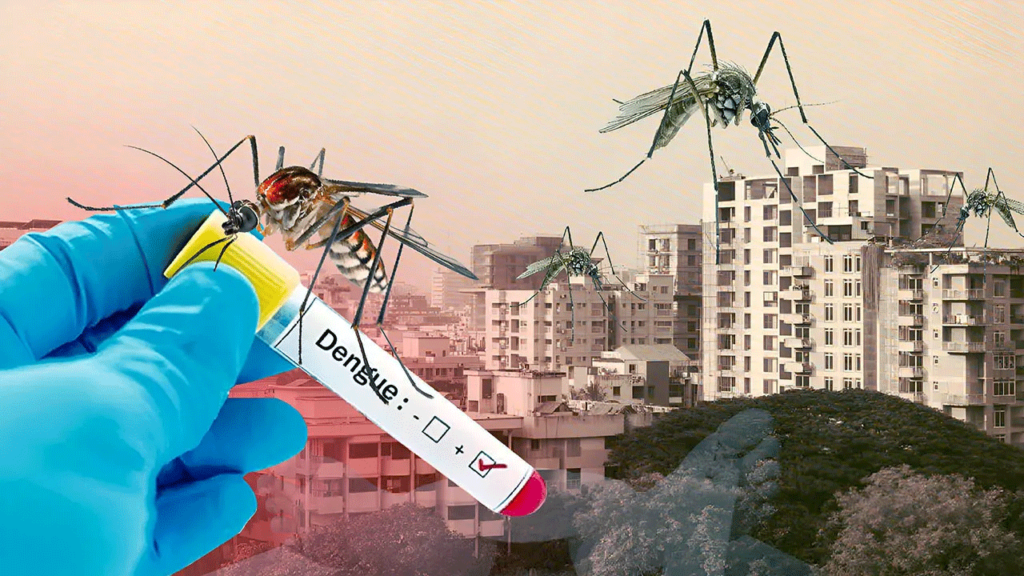
Dengue, an infection transmitted primarily by the Aedes aegypti mosquito, remains an annual public health crisis in Bangladesh. Peak transmission typically coincides with the monsoon season, when stagnant rainwater creates ideal breeding grounds for mosquitoes. However, public health experts point out that erratic weather patterns, delayed monsoon rain, and prolonged warm temperatures have extended the breeding season well into the post-monsoon period.
Dhaka remains the epicenter of the crisis. Densely packed neighborhoods, high-rise construction sites, and inadequate drainage systems provide ample opportunities for mosquito larvae to thrive. Despite repeated vector-control drives by local municipal authorities—including larviciding and fogging operations—controlling the insect population has proved challenging.
Hospitals, particularly public institutions in Dhaka, are operating near capacity. Doctors report an increase in severe dengue cases, where patients present with rapid drops in blood platelet counts, fluid accumulation, and hemorrhagic manifestations. Health officials continue to urge citizens to eliminate potential water reservoirs around their homes and to seek immediate medical attention at the first sign of high fever.