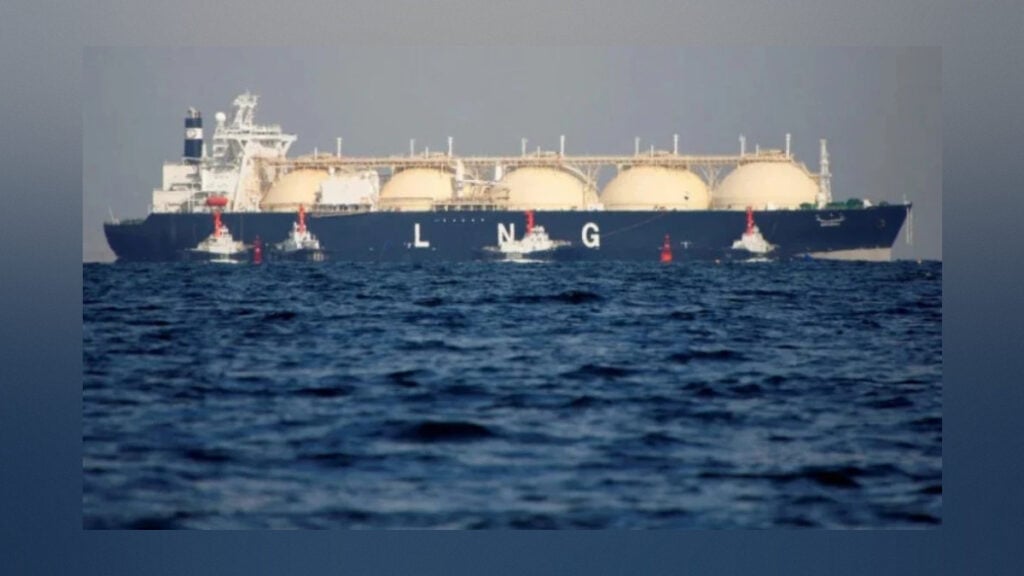
Bangladesh is being forced to purchase liquefied natural gas (LNG) from the spot market at prices significantly higher than international benchmark rates, increasing pressure on the country’s energy import bill. Petrobangla recently purchased three LNG cargoes through spot tenders for nearly Tk 34 billion, with the deals reportedly costing at least Tk 3 billion more than the corresponding Japan-Korea Marker (JKM) benchmark.
The purchases have raised concern within the government as Bangladesh seeks to secure sufficient LNG supplies through December while global energy markets remain volatile. Petrobangla and the Energy Division are now attempting to obtain at least 20 cargoes through short- and long-term arrangements, reducing reliance on spot-market purchases wherever possible.
An official familiar with the matter said the international LNG supply business had become a multibillion-dollar market and that the government suspected efforts by a group of traders to influence the market. Authorities therefore want to approach a wider range of international suppliers and secure LNG through contractual arrangements. Spot purchases would be considered only when cargoes could not be obtained through such agreements.
Petrobangla’s chairman could not be reached for comment despite repeated attempts, according to the original report.
The supply situation has become more complicated because of the prolonged conflict in the Middle East, which began on 28 February. The disruption has affected LNG deliveries under existing long-term arrangements. Suppliers from Qatar and Oman, as well as US-based Excelerate Energy, have suspended deliveries that Bangladesh had been expecting under contractual commitments.
As a result, the country has had to turn increasingly to the spot market to meet immediate demand. The Energy Division estimates that Bangladesh could require between 25 and 30 LNG cargoes from October to December to maintain supplies. Nine cargoes have already been arranged for September.
For October, Petrobangla expects four cargoes to be secured under long- and short-term arrangements. Two of those cargoes have been sought from US-based Gunvor. Under Bangladesh’s existing agreement with the company, LNG is priced against the JKM benchmark, with an additional charge of eight cents per unit, and the arrangement remains in force until 2028.
Government seeks alternatives to spot purchases
The high cost of spot-market LNG has prompted concern at the highest levels of government. Following instructions to reduce the additional expenditure, Energy Secretary Md Ziaul Haque held several meetings last Friday.
Officials have since contacted a number of major international energy companies, including Japan’s JERA, South Korea’s POSCO, Indonesia’s Pertamina and Saudi Aramco. They have been asked whether they could supply LNG under short-term agreements at prices below the JKM benchmark.
The government has also indicated that suppliers offering favourable prices could receive facilities such as faster payment arrangements. However, according to several sources, no company had yet agreed to supply LNG to Bangladesh over the following three months under a short-term arrangement.
One recent purchase demonstrates the potential advantage of securing supplies outside the spot market. The Cabinet Committee on Government Purchase approved the procurement of one LNG cargo from Saudi Aramco for delivery on 10-11 September. The agreed price was $23.98 per unit, while the JKM price at the time stood at $24.076. Bangladesh therefore secured the cargo at a slightly lower price than the prevailing benchmark.
The situation was markedly different in the latest spot tenders.
For a cargo scheduled for delivery on 25-26 September, Aramco Trading Singapore emerged as the lowest bidder, quoting $27.54 per unit. The JKM price at the time was as high as $24.09. The difference meant that the government had to spend more than $9 million above the benchmark for that cargo alone.
For another cargo, BP Singapore submitted the lowest bid at $28.03 per unit, while the JKM price was around $25. The additional cost for that cargo was approximately $9 million.
For delivery on 5-6 October, Vitol Ishaya Limited was the lowest bidder, offering $26.6688 per unit. The corresponding JKM price was around $25, again leaving Bangladesh to pay several million dollars above the benchmark.
The cost difference becomes even clearer when the wider market range is considered. According to the Rupantarita Prakritik Gas Company, when the three spot-market tenders were floated last week, Platts and JKM prices ranged between $22.82 and $24.61 per unit. The prices accepted through the tenders were therefore substantially higher than the prevailing benchmark levels.
Why is Bangladesh paying more?
Petrobangla and the Rupantarita Prakritik Gas Company have given the Energy Division several explanations for the higher prices.
The first is the instability in the global LNG market caused by the Middle East conflict. According to the explanation submitted to the Energy Division, LNG that previously traded at around $9-10 per unit is now being sold for more than $20 in international markets. Such market volatility has made emergency procurement considerably more expensive.
The second issue is Bangladesh’s technical requirements for imported LNG. Imported gas must be blended with domestically produced natural gas before being supplied through the national gas grid. This means the imported LNG must meet specific heating-value and composition requirements.
International LNG generally has an average gross heating value of between 1,090 and 1,118 British thermal units per standard cubic foot, according to the explanation provided by the relevant agencies. Bangladesh, however, needs to maintain the blended gas within a lower range of roughly 1,010 to 1,100 British thermal units per standard cubic foot. The methane content must also remain above 91 per cent in the blended supply.
These requirements can limit the number of suppliers capable or willing to offer suitable cargoes to Bangladesh. Fewer eligible suppliers mean less competition during procurement, potentially pushing up prices.
The third factor is the short lead time associated with spot-market tenders. Bangladesh often seeks cargoes that must be delivered within a relatively narrow window. Suppliers need sufficient time to secure LNG, arrange shipping and meet the required specifications. The limited timeframe can therefore prevent some companies, including potential US suppliers, from participating even when they might otherwise be interested.
The government is consequently attempting to shift a greater portion of LNG procurement towards longer and shorter-term contractual arrangements. Such agreements could provide greater certainty over supply and reduce exposure to sudden price increases in the spot market.
For Bangladesh, however, the immediate challenge remains balancing two competing needs: securing enough LNG to meet domestic energy demand and avoiding unnecessarily high procurement costs at a time when international energy markets are already under considerable pressure.