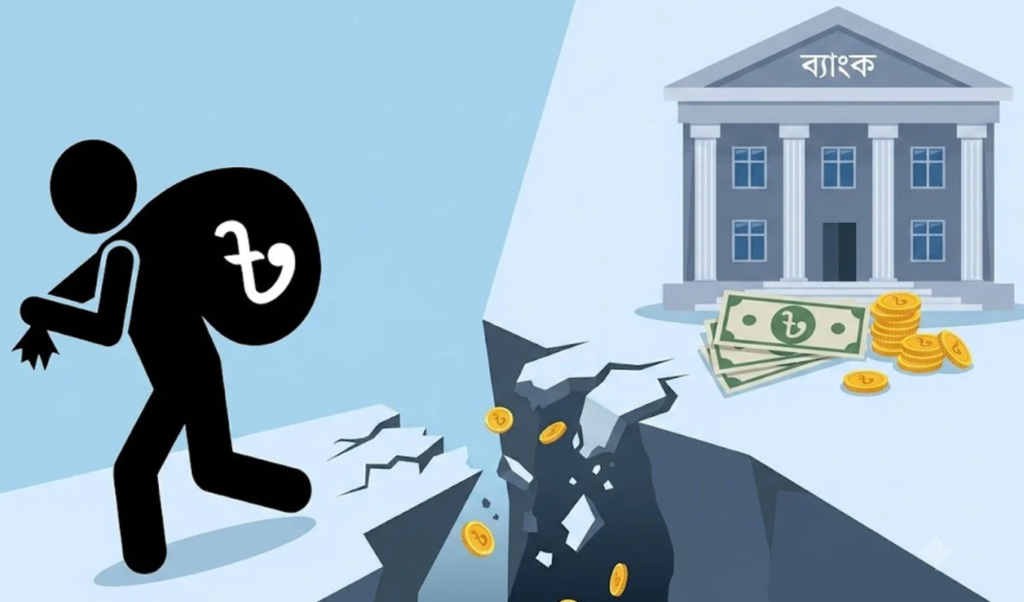
Bangladesh has been identified as the country with the second-highest ratio of non-performing loans (NPLs) in the world, positioned closely behind war-torn Ukraine. Defaulted loans now constitute nearly one-third of the total banking sector credit in the country. This alarming trajectory also places Bangladesh at the absolute peak within the South Asian Association for Regional Cooperation (SAARC) region, where its default rate outpaces neighbouring nations by a staggering factor of six to fifteen times.
These sobering statistics were revealed during a high-level briefing session organised at the Ministry of Finance, which focused on mitigating default loans within state-owned commercial banks. Chaired by the Finance Secretary, the meeting saw direct participation from the managing directors of various state banks who gathered to address the systematic structural vulnerabilities plaguing the country’s financial architecture.
Global and regional comparisons
On the global stage, Ukraine currently tops the international list with an NPL ratio of 37.35 per cent, a direct consequence of the catastrophic economic devastation wrought by its ongoing conflict with Russia. Bangladesh sits directly beneath Ukraine with a default loan rate of 32.26 per cent. African nations Chad and Guinea follow closely behind in third and fourth positions, registering NPL rates of 31.51 per cent and 31.15 per cent respectively.
A closer look at the SAARC region highlights the severity of the crisis in Dhaka. While Bangladesh struggles with a default rate exceeding 32 per cent, India has successfully managed its banking health, bringing its NPL ratio down to a mere 2.2 per cent. Other regional peers demonstrate significantly more stable credit environments compared to Bangladesh, as illustrated in the following data.
| Country | Non-Performing Loan (NPL) Rate (%) |
| Ukraine | 37.35 |
| Bangladesh | 32.26 |
| Chad | 31.51 |
| Guinea | 31.15 |
| Sri Lanka | 6.50 |
| Pakistan | 5.80 |
| Nepal | 5.00 |
| Maldives | 5.50 |
| Bhutan | 4.50 |
| India | 2.20 |
Record escalation in the first quarter
According to the latest quarterly report released by the Bangladesh Bank, default loans escalated by more than 31,000 crore taka during the first three months of the current financial year (January–March). This unprecedented surge pushed the aggregate volume of non-performing loans to a historic high of 5.89 lakh crore taka by the end of March. This astronomical sum represents 32.26 per cent of the total disbursed loans across the entire banking sector.
Financial analysts and veteran bankers point out that these figures underscore a deep-rooted decay in credit discipline and macroeconomic governance. Industry experts attribute this chronic accumulation of bad debts to protracted political interference in loan approval processes, the illicit issuance of anonymous or insider loans to related parties, and persistent regulatory leniency from the central bank. Furthermore, a prolonged failure to enforce stringent legal penalties against habitual, wilful defaulters has institutionalised a culture of impunity, severely undermining the liquidity and global credibility of the Bangladeshi financial sector.