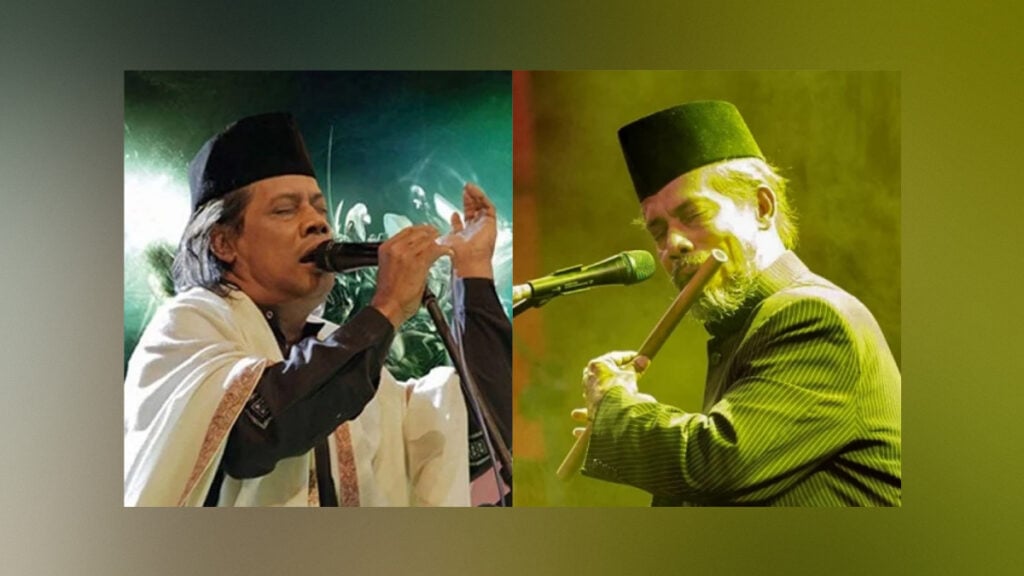
Bari Siddiqui, one of Bangladesh’s most celebrated folk musicians and a gifted flautist, is being remembered on his 72nd birth anniversary today, 15 November. Renowned for his haunting flute melodies and deeply expressive singing, Siddiqui left an enduring mark on the country’s musical landscape. Born Abdul Bari Siddiqui on 15 November 1954 into a family of musicians in Netrokona, he won the affection of countless listeners through his distinctive interpretation of folk and spiritual music.
Music was an integral part of Siddiqui’s childhood. Growing up in a family with a strong musical background, he developed an early interest in the art and began formal training at the age of 12 under the guidance of Ustad Gopal Dutta, a respected musician from Netrokona. He subsequently studied classical music under several accomplished maestros, including Ustad Aminur Rahman, Dabir Khan and Pannalal Ghosh. Their guidance and his dedication to regular practice helped shape the foundations of his musical career.
Although he later became widely recognised as a vocalist, the flute remained central to his artistic identity. During the 1980s, he developed a deeper interest in the instrument and travelled to Pune, India, to receive advanced training from Pandit V. G. Karnad. His commitment to the flute gradually established him as an accomplished instrumentalist, earning him opportunities to represent Bangladesh at various musical events at home and abroad.
A major milestone in his career came in 1999, when he attended the World Flute Conference in Geneva, Switzerland. Siddiqui was the only representative from the Indian subcontinent at the event, an achievement that brought him considerable recognition. His participation also highlighted the contribution of Bangladeshi musicians to the wider world of instrumental music.
Despite his reputation as a flautist, Siddiqui eventually found an even wider audience through singing. Encouraged by renowned Bangladeshi writer and filmmaker Humayun Ahmed, he began performing publicly as a vocalist in the mid-1990s. His first public singing appearance came in 1995 on Ahmed’s magazine programme, ‘Ronger Baroi’. The performance marked an important turning point, introducing audiences to a voice that would soon become familiar across the country.
His breakthrough as a singer came with Humayun Ahmed’s film ‘Srabon Megher Din’, released in 1999. The songs he performed for the film quickly gained widespread popularity, bringing him national recognition. His voice, characterised by emotional intensity and an unmistakable folk sensibility, struck a chord with listeners. The film also helped introduce his music to audiences who had previously known him mainly as a flautist.
Siddiqui’s repertoire included traditional compositions by legendary folk songwriter Ukil Munshi, as well as songs written by the artist himself. Among his best-known performances are ‘Shua Chan Pakhi’, ‘Amar Gaye Joto Dukkho Soy’, ‘Sare Tin Haat Kobor’, ‘Pubali Batase’, ‘Rajani Hois Na Oboshan’ and ‘Manush Dhoro Manush Bhojo’. These songs explore themes of love, separation, suffering, spirituality and the complexities of human existence.
What made Siddiqui’s singing distinctive was his ability to convey powerful emotions through an unadorned, natural style. Rather than relying on elaborate musical arrangements, he allowed the lyrics and melodies to carry their own emotional weight. His performances reflected the philosophical depth of Bengali folk traditions, particularly the spiritual ideas and everyday experiences associated with rural life.
His contribution to music extended beyond singing and instrumental performances. Keen to encourage the practice and preservation of folk music, he established an ashram called ‘Baul Bari’ in Karli village, approximately five kilometres from Netrokona town. The initiative reflected his attachment to the cultural traditions of his birthplace and his commitment to creating a space associated with folk music and spiritual practice.
Siddiqui’s life was cut short in November 2017. On 17 November, he suffered a heart attack and was admitted to Square Hospital in Dhaka. After remaining under medical care for seven days, he died on 24 November at the age of 63.
Nearly a decade after his death, Bari Siddiqui’s music continues to hold a special place in the hearts of listeners. His ability to bring together classical musical training, traditional folk melodies and spiritual expression made him a distinctive figure in Bangladesh’s cultural history. His flute performances remain memorable, while his songs continue to reach new generations of music lovers.
On his 72nd birth anniversary, Siddiqui is remembered not simply as a gifted musician, but as an artist who gave Bengali folk music a deeply personal voice. His melodies and heartfelt performances remain an enduring part of Bangladesh’s musical heritage.