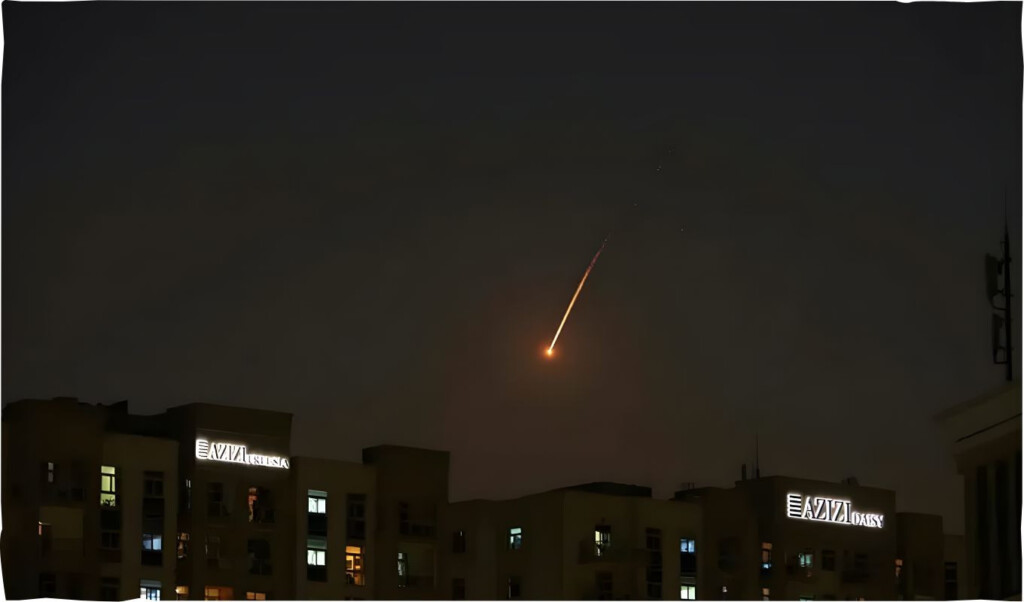
A series of powerful explosions reverberated across the Qatari capital on Saturday night, following what officials and regional media described as an Iranian retaliatory strike linked to escalating hostilities involving Israel and the United States. Residents in several districts of Doha reported hearing at least three loud detonations, prompting the authorities to issue urgent safety advisories and heighten security across the city.
According to Al Jazeera, fresh explosions were heard in multiple neighbourhoods, triggering widespread alarm among residents. Although the full extent of the damage and any potential casualties has not yet been confirmed, the Ministry of Interior swiftly urged the public to remain indoors until further notice.
In a statement circulated on social media, Qatar’s Ministry of Interior advised citizens and expatriates alike to avoid leaving their homes unless absolutely necessary. Residents were instructed to stay away from windows and open spaces, measures typically recommended in the event of missile or aerial threats. Security forces have since intensified patrols and activated emergency response protocols in sensitive areas of the capital.
Diplomatic Contacts Intensify
Amid mounting regional tension, Qatar’s Emir, Sheikh Tamim bin Hamad Al Thani, held a telephone conversation with King Abdullah II of Jordan. According to an official Qatari statement, the two leaders discussed the rapidly deteriorating regional situation and its implications for peace and stability across the Middle East.
Both leaders reportedly emphasised the urgent need to de-escalate tensions and reopen channels of dialogue to prevent further destabilisation. They also condemned Iran’s ballistic missile strikes targeting Qatar, Jordan, and other Arab states, reaffirming their commitment to safeguarding national sovereignty and strengthening bilateral coordination on security matters.
Escalation Across the Region
Earlier on Saturday, the United States and Israel launched coordinated military operations targeting sites in Iran, including areas in and around Tehran. Iranian state media reported multiple explosions in several cities. In response, Iran initiated what it described as defensive drone and missile strikes against what it termed “hostile forces”.
Explosions have since been reported in northern Israel and in parts of several Gulf Arab countries, underscoring the widening scope of the confrontation.
The following table summarises the key developments:
| ঘটনা | বিবরণ |
|---|---|
| প্রাথমিক হামলা | যুক্তরাষ্ট্র ও ইসরায়েলের যৌথ আঘাত ইরানে |
| ইরানের প্রতিক্রিয়া | ড্রোন ও ব্যালিস্টিক ক্ষেপণাস্ত্র হামলা |
| কাতারে প্রভাব | দোহায় অন্তত তিনটি বিস্ফোরণ |
| সরকারি নির্দেশনা | নাগরিকদের ঘরে থাকার আহ্বান |
| কূটনৈতিক উদ্যোগ | কাতার ও জর্ডানের নেতাদের আলোচনা |
Heightened Uncertainty
While Qatari authorities have not publicly detailed the precise nature of the explosions in Doha, analysts suggest they may be linked either to incoming projectiles or to defensive interception systems activated in response to aerial threats. Airspace restrictions and enhanced monitoring measures are believed to be under consideration.
The unfolding crisis marks one of the most serious regional escalations in recent years. Observers warn that without swift diplomatic intervention, the cycle of retaliation could further destabilise an already fragile geopolitical landscape in the Gulf and beyond.