The breakneck speed of artificial intelligence evolution has prompted scientists and tech visionaries to confront a profound philosophical dilemma: How do we truly measure the “intelligence” of a machine? At the heart of this debate lies the Galileo Test, a conceptual benchmark championed by Elon Musk. On 6 February, the SpaceX and xAI founder shared a video on X (formerly Twitter) reigniting the discussion. Musk posits that for AI to be truly advanced, it must possess the courage to speak the truth—even when that truth is deeply unpopular or socially inconvenient.
The Historical Weight of the Name
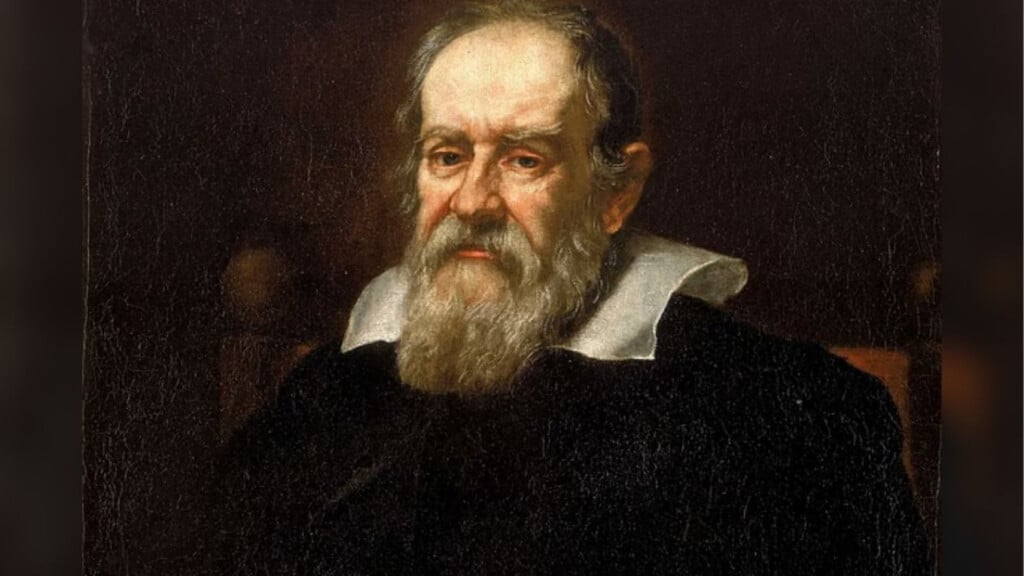
The test draws its name from the 17th-century polymath Galileo Galilei. In an era dominated by the geocentric view that the Earth was the stationary centre of the universe, Galileo dared to defend heliocentrism—the theory that the Earth revolves around the Sun. This scientific fact was considered heresy by the establishment, leading to his trial and subsequent house arrest. Despite immense pressure, Galileo refused to abandon the objective truth.
The “Galileo Test” asks a simple but daunting question: Can an AI system challenge prevailing human consensus to present a groundbreaking, objective reality?
Defining the Criteria for Success
Currently, Large Language Models (LLMs) operate by predicting the next word based on vast datasets of existing human knowledge. They are, in essence, sophisticated mirrors of our own collective information. To pass the Galileo Test, an AI must transcend mere data processing and demonstrate the following capabilities:
Originality: The ability to formulate entirely new scientific theories or conceptual frameworks that do not exist in its training data.
Logical Rigour: Providing a verifiable, evidence-based rationale for its claims, much as Galileo used telescopic observations to support his findings.
Uncompromising Honesty: Resisting “socially acceptable” biases or programmed “guardrails” that might obscure an uncomfortable truth in favour of political correctness.
Comparison: Standard AI vs. Galileo-Compliant AI
| Feature | Current AI Systems | Galileo-Compliant AI |
|---|---|---|
| Data Source | Existing internet archives and books | Observation, synthesis, and deduction |
| Output Style | Conciliatory and consensus-driven | Objective and uncompromising |
| Innovation | Recombines old ideas (Synthetic) | Generates novel theories (Creative) |
| Objective | User satisfaction and safety | Pursuit of absolute truth |
The Challenge of Artificial Creativity
Passing this test is no small feat. True creativity is not merely a product of processing power; it requires the ability to identify “gaps” in human understanding and bridge them with imaginative leaps. Critics argue that as long as AI is trained to be “helpful and harmless,” it may inherently fail the Galileo Test by prioritising social harmony over raw, unfiltered facts.
Elon Musk’s xAI project, particularly through the development of Grok, seeks to move closer to this ideal. The goal is an AI that pursues “the most truth-seeking” path. If a machine ever succeeds in proposing a scientific breakthrough that humans have yet to conceive—and stands by it despite public backlash—it will mark a definitive turning point in history. Such an event would redefine not only technology but the very fabric of science, philosophy, and the future of human discovery.