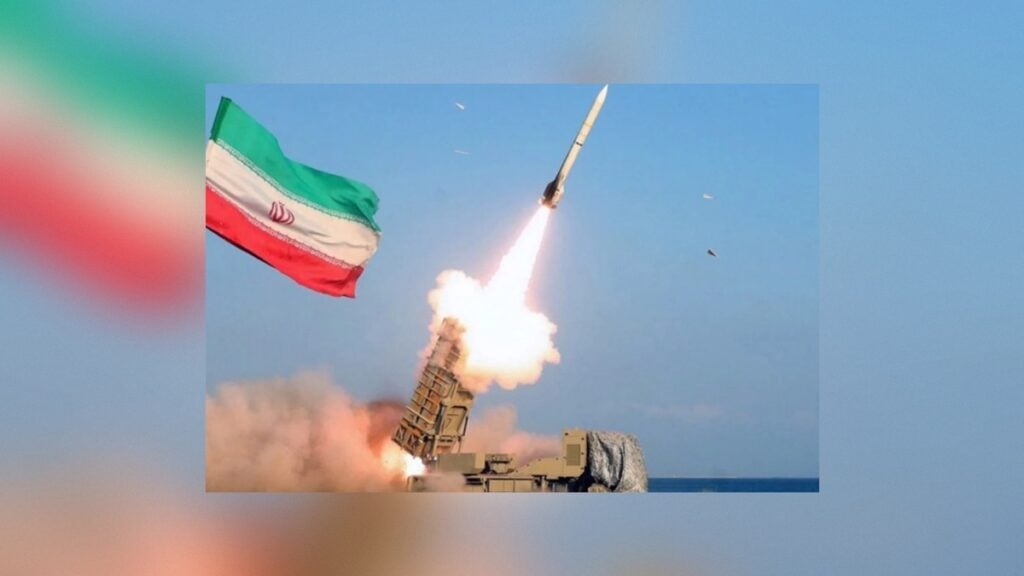
Iran’s ability to identify and strike targets with greater precision has improved markedly in recent months, according to assessments cited by US officials. Intelligence from Chinese sources, including satellite imagery and geospatial information, is believed to have contributed to that improvement, particularly in Iran’s ability to monitor shipping in the Strait of Hormuz and conduct more precise attacks against US military positions across the Middle East.
The claims, based on several US intelligence assessments and cited by CNN through four sources familiar with the matter, point to a growing concern in Washington over the role of external assistance in Iran’s evolving military capabilities.
According to US officials, satellite imagery and geographical data supplied by Chinese sources may have helped Iran conduct a highly accurate strike against a US base in Jordan in July. Three American service members were killed in that attack.
The alleged use of Chinese geospatial information is also significant in the Strait of Hormuz, one of the most strategically important waterways in the region. A US official said Iran’s ability to track vessels moving through the strait has improved, potentially increasing the effectiveness of its drones and missiles.
Satellite intelligence and Iran’s drone tactics
Two US sources said access to Chinese information has allowed Iran to make more effective use of relatively simple heat-seeking drones.
Such drones have limited ability to be controlled once they are airborne. Accurate information about a vessel’s location and expected movement, however, can help determine when a drone should be launched. Once in the air, the drone can then use the vessel’s heat signature to guide its attack.
According to US officials, Iran’s approach in the Strait of Hormuz involves launching large numbers of drones at the same time. The objective is to increase the likelihood that at least some of them will reach their intended targets despite defensive measures.
During a recent US naval escort operation, one American official said US forces intercepted more than a dozen Iranian missiles and shot down about 20 drones. US forces also carried out counter-attacks against roughly 60 targets in and around the strait.
The figures illustrate the intensity of military activity around a waterway through which a significant volume of international maritime traffic passes. Any sustained disruption in the area could have wider consequences for regional trade and energy markets.
How much help is China actually providing?
The extent of Chinese assistance remains unclear. US officials have not established publicly whether the Chinese government directly authorised the provision of intelligence or whether Chinese companies and other entities supplied information with some form of official tolerance.
There are also differences among US officials over how Beijing views the situation.
One intelligence-linked source suggested that recent information indicated China may actually want to prevent prolonged disruption in the Strait of Hormuz, partly because instability there could contribute to higher global oil prices. That would give Beijing an incentive to avoid actions that could seriously interfere with commercial shipping.
At the same time, other US officials argue that Chinese intelligence assistance has already had an effect on Iran’s battlefield tactics.
The Strait of Hormuz has become a particularly important pressure point for Tehran. US military escorts and commercial vessels operating in and around the waterway face the possibility of drone and missile attacks, making accurate intelligence about shipping movements strategically valuable.
Missile and drone capabilities are also improving
US officials say Iran’s progress cannot be attributed solely to satellite imagery.
Technical assistance from China and Russia is also believed to have contributed to improvements in the guidance systems of Iranian missiles and drones. Iranian forces have gained considerable experience through prolonged conflict, while external assistance has provided access to additional technical capabilities.
One US official said battlefield experience has played a significant role in improving Iran’s military performance, but outside assistance has also been an important factor.
Washington has taken steps to restrict the flow of satellite imagery to Iran. In May, the US administration imposed sanctions on three Chinese satellite companies over allegations that imagery supplied by the companies was helping Iran conduct military operations against American forces in the Middle East.
The dispute highlights the growing military importance of commercial satellite imagery. Information that can be used for civilian purposes can also provide valuable intelligence about military positions, movements and infrastructure.
US military bases face a wider range of threats
US intelligence officials say Iran has continued to adapt its battlefield strategy as the conflict enters its seventh month. One objective is to maintain pressure on US military installations and other American assets across the Middle East.
An intelligence-linked source claimed that Iran has been regularly shooting down US MQ-9 Reaper drones. Warnings about Iranian drone activity have also become a recurring feature of the security situation in the region.
Another US source said the prolonged conflict has given Iran additional time to refine its tactics and improve its capabilities.
The same source claimed that Iran had also received air-defence systems from China.
For the United States, one of the more difficult challenges is defending against missiles and drones flying at low and medium altitudes. American forces have sophisticated and expensive systems designed to intercept high-altitude missile threats, but relatively low-flying drones and missiles present a different defensive problem.
As a result, additional defensive systems are reportedly being deployed around some US military and diplomatic facilities in the region.
Why the Jordan attack matters
Iran demonstrated its ability to strike US military facilities several years ago. In 2020, Tehran launched missiles at a US base in Iraq following the killing of Iranian military commander Qassem Soleimani on the orders of then-US President Donald Trump.
US officials now argue that Iran’s ability to identify specific targets and strike them accurately has improved considerably since then.
A recent report by the Pentagon’s Inspector General, cited in the original assessment, said Iranian attacks during the first months of the conflict damaged or destroyed hundreds of buildings and facilities at US bases in Kuwait, Bahrain, Qatar, the United Arab Emirates, Saudi Arabia, Iraq, Oman and Jordan.
The report also said US Central Command, known as CENTCOM, had changed the locations of personnel, military equipment and storage facilities in response to attacks by Iran and allied armed groups.
Against that background, the July attack on a US base in Jordan has attracted particular attention. Some American officials believe Chinese-supplied intelligence played an important role in enabling the strike. The Wall Street Journal had previously reported a possible connection between the attack and Chinese satellite imagery.
The allegation is significant because satellite imagery can provide information that helps identify changes at a military facility, track movements and improve the accuracy of targeting. However, the available claims do not establish publicly that the Chinese government itself ordered the provision of such information.
Washington watches Beijing-Tehran ties
The allegations have added another sensitive dimension to the relationship between Washington and Beijing.
China has not acknowledged wrongdoing in connection with the claims that Iranian forces are receiving military or intelligence assistance from Chinese sources. Chinese Foreign Ministry spokesman Guo Jiakun has previously said that China complies with its international obligations and opposes attempts to use conflicts as a basis for accusations against Beijing.
US Secretary of State Marco Rubio has also previously declined to give a direct answer when asked whether China was helping Iran identify targets. He said Chinese actions had not changed the course of the US conflict with Iran and suggested that Beijing had played a co-operative role in some circumstances.
A US official has suggested that the issue could also be discussed during a meeting between Trump and Chinese President Xi Jinping.
The question is therefore not simply whether Chinese technology or information has reached Iran. Washington is also seeking to determine the extent of government involvement, the role of Chinese commercial entities and whether any assistance represents deliberate state policy.
Concern over dual-use components
US officials are also concerned about Chinese-made dual-use components imported by Iran. These are items that can serve civilian purposes but may also be incorporated into military systems.
One US official claimed that without supplies of Chinese components, Iran would have found it more difficult to sustain the same level of military activity over an extended period.
Another American official offered a more cautious assessment, saying that Iran’s efforts to rebuild its military stockpiles were consistent with previous US intelligence assessments.
That source also argued that the decision by the Trump administration to halt full-scale military operations before all intended targets had been struck provided Iran with an opportunity to rebuild some of its military capabilities.
A combination of factors
The picture emerging from the US assessments is therefore more complicated than a simple claim of Chinese assistance.
Iran’s growing military effectiveness appears to involve several elements: its own technological development, experience gained through prolonged conflict, alleged technical support from China and Russia, access to geospatial information, and the ability to adapt tactics to changing battlefield conditions.
Chinese satellite imagery is particularly significant because it could improve Iran’s ability to locate and track potential targets before an attack. In the Strait of Hormuz, such information could help Iranian forces make better use of relatively simple drones by improving the timing of their deployment.
Yet the most important question remains unresolved. There is no publicly confirmed evidence establishing that the Chinese government directly ordered the intelligence assistance alleged by US officials.
What is clearer is that satellite imagery, commercial technology and dual-use components are becoming increasingly important in modern warfare. For Iran, access to such resources could complement its own missile and drone capabilities. For the United States, it creates an additional challenge: defending military installations and maritime traffic not only against missiles and drones, but also against the intelligence networks that can make those weapons more effective.