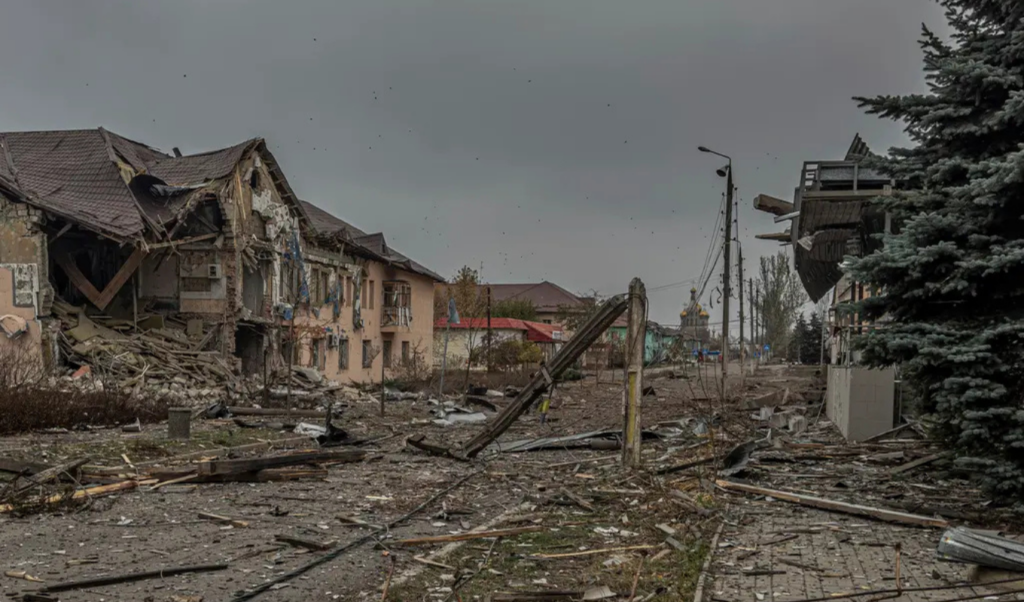
Cluster munitions have killed or injured more than 1,200 civilians in Ukraine since Russia launched its full-scale invasion in February 2022, according to the Cluster Munition Coalition (CMC). The coalition’s annual report on Monday described the situation as a “troubling setback” for global efforts to eradicate these widely-banned weapons.
Casualty Overview
| Year | Cluster Munition Casualties in Ukraine | Global Cluster Munition Casualties |
| 2022 | Majority of 1,200+ | – |
| 2024 | 193 | 314 |
| Total | 1,200+ | – |
The CMC noted that these figures are likely underestimates, as about 40 attacks in 2024 reported no casualty numbers.
Use and Impact
- Deployment: Cluster munitions can be dropped from aircraft or fired from artillery, scattering bomblets over wide areas.
- Persistent Danger: Many submunitions fail to explode on impact, acting as landmines that can detonate years later.
- Actors: Russia has used cluster munitions extensively from the outset. Ukraine has also been accused of deploying them inside Russian territory.
This year, submunitions with Korean language markings were found in Ukrainian-controlled areas, though it remains unclear if they were used by North Korean forces allied with Russia or acquired by Russia for its own use.
Global Context
- Convention on Cluster Munitions (2008): Neither Russia nor Ukraine are parties to the treaty, which bans the use, production, transfer, and storage of cluster bombs.
- Other countries where cluster munitions were used in 2024 include Myanmar and Syria, neither of which are signatories.
- The United States, also not a party, transferred cluster munitions to Ukraine in at least seven shipments since 2023, sparking international outcry.
Threats to International Norms
The CMC warned of “troubling setbacks” for international efforts to stigmatising cluster munition use:
- Lithuania became the first country to withdraw from the treaty in March 2025, citing regional security concerns.
- Following Lithuania’s lead, Poland, Latvia, Estonia, and Finland announced plans to leave a separate treaty banning anti-personnel landmines, also citing Russian aggression.
Tamar Gabelnick, head of the CMC, criticised these moves:
“Lithuania’s departure undermines the norm created by the convention, with catastrophic implications for the rule of international law protecting civilians. We have already seen its impact on the Mine Ban Treaty, and states should be extremely wary of a wider domino effect.”