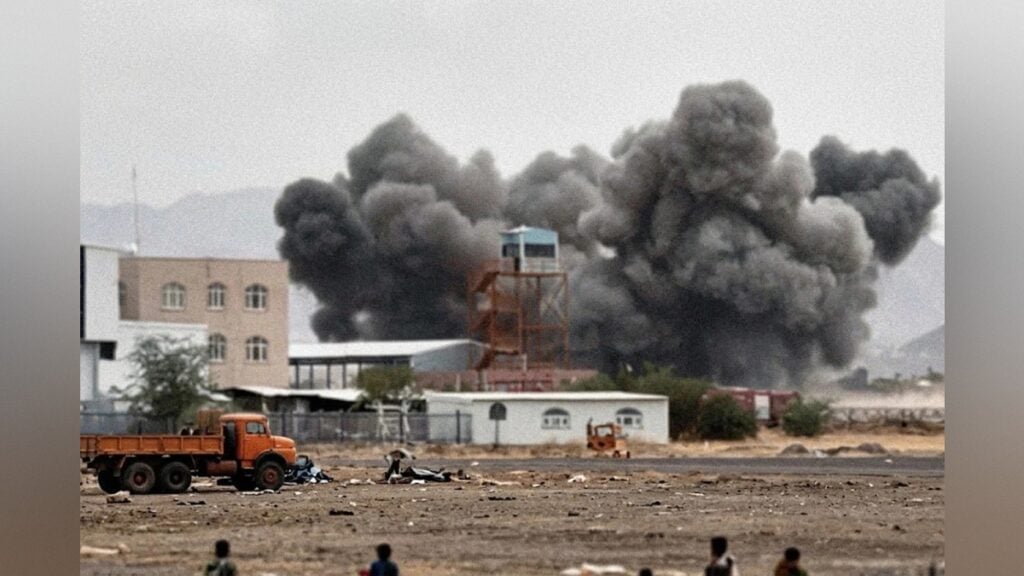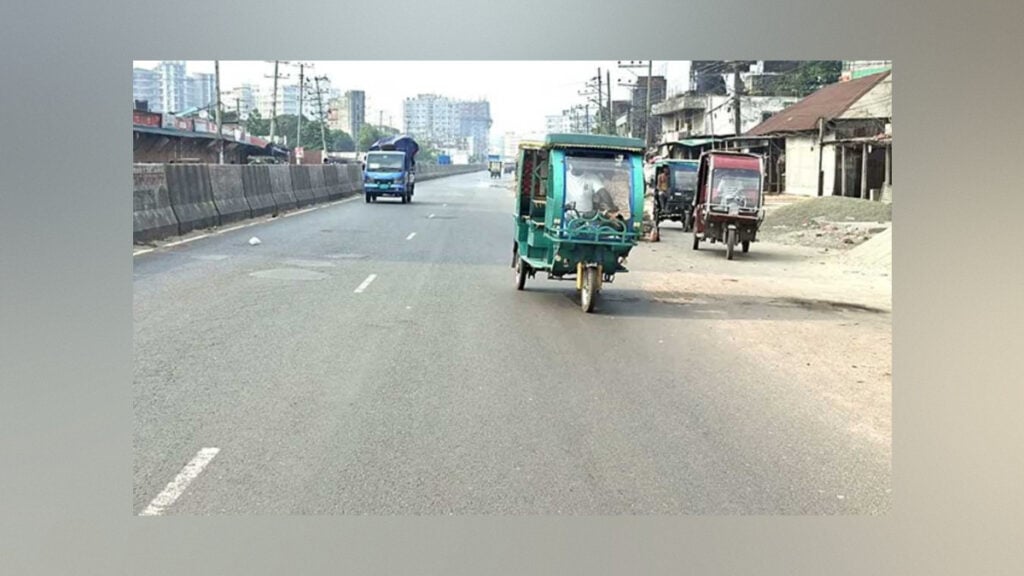
Traffic on the Dhaka–Tangail Highway returned to normal at around noon on Monday after security forces cleared a road blockade staged by workers demanding a minimum monthly wage of Tk 30,000 in the Palli Bidyut area of Kaliakair, Gazipur.
The workers began their demonstration at around 8am on 2 November, bringing traffic to a standstill along a section of the busy highway. The blockade also spread to several nearby locations, further disrupting movement in the surrounding areas.
According to local residents, groups of workers took up positions at different points along the Dhaka–Tangail Highway from the early hours of the morning. During the protest, they gathered discarded garment fabric, bamboo and pieces of wood and set them alight on the road, effectively preventing vehicles from passing.
The disruption caused significant inconvenience to commuters and transport operators using the highway, which is an important route connecting Dhaka with Tangail and other parts of northern Bangladesh. With the main road blocked at several points, vehicles were unable to move through the affected stretch.
Industrial Police, Gazipur District Police and members of the Border Guard Bangladesh (BGB) were deployed to the area to bring the situation under control and restore traffic movement.
Gazipur Industrial Police Superintendent Mohammad Amzad Hossain said a group of workers had occupied the Palli Bidyut section of the highway at around 8am, bringing traffic to a halt.
He said members of the Industrial Police and other law enforcement agencies had begun working to manage the situation, maintain order and facilitate the resumption of normal traffic.
According to Amzad Hossain, the authorities eventually moved to clear the highway using tear gas and sound grenades. At around noon, security personnel dispersed the protesting workers and removed them from the road, allowing vehicles to resume movement.
The blockade therefore lasted approximately four hours, from 8am until noon.
The workers’ principal demand was a minimum monthly wage of Tk 30,000. Their demonstration brought an important transport route to a standstill and required the intervention of several law enforcement agencies before normal traffic could resume.
The incident once again highlighted the potential for wage-related disputes in Bangladesh’s industrial areas to disrupt transport and daily activities. For workers, minimum wages remain a significant concern, particularly in the garment and manufacturing sectors, where income levels and living costs are closely linked.
However, no further details were immediately available regarding the workers’ next course of action or whether discussions would take place with the relevant authorities over their wage demand. The immediate disruption ended after the security operation, but the underlying issue behind the protest remained unresolved.