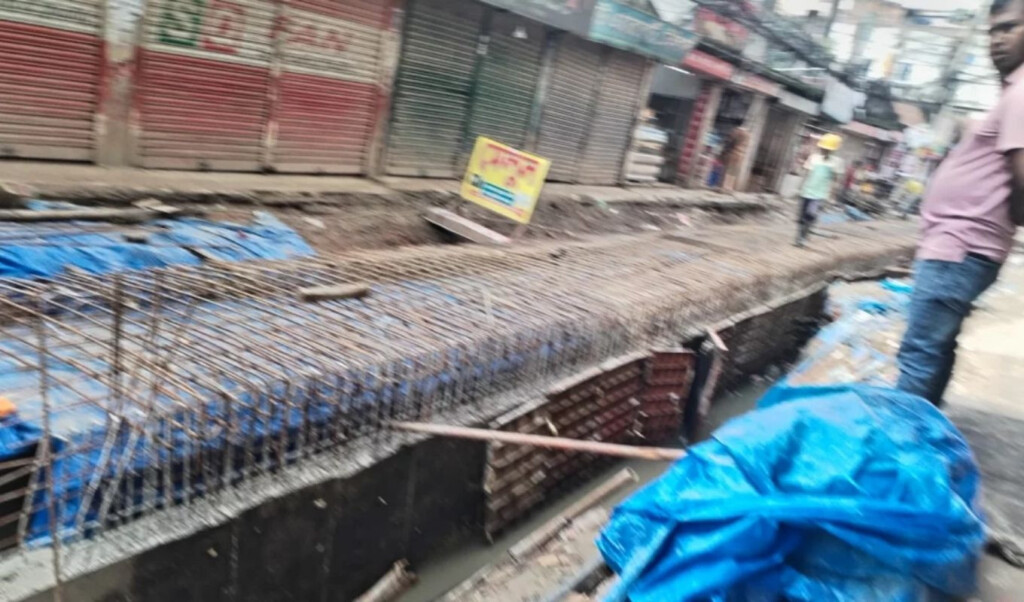
Waterlogging, scattered garbage, unplanned building construction, frequent road digging, broken streets, mosquito infestations, reckless battery-powered rickshaws, chaos in public transport, traffic congestion, air pollution, and noise pollution—together these have turned Dhaka, once a vibrant capital, into a city of suffering.
Residents complain that the city is no longer functioning as a capital should. The problems that began during the previous government’s tenure have worsened since its fall. Old crises remain unresolved, while new ones continue to emerge every day.
Particularly alarming is the uncontrolled movement of battery-run rickshaws across main roads and narrow alleys alike, posing a constant threat to both commuters and pedestrians. Traffic congestion has multiplied several times over, worsened by poor road management and an unregulated transport system.
Many city dwellers, frustrated by endless urban woes, are losing the desire to live in Dhaka. Yet, out of economic necessity, people continue to flock to the capital. Despite claims of various initiatives by city corporations, WASA, DSCC, DNCC, and other service agencies, little visible improvement can be seen on the ground.
Sources report that issues such as the domination of battery-powered rickshaws, chronic traffic jams, waterlogging, poor roads, mosquito infestation, garbage piles, and the lack of usable footpaths remain unresolved. Moreover, the city’s four major entry points are clogged with long tailbacks daily, forcing commuters to spend hours on the road just to reach their workplaces or educational institutions.
Urban experts warn that without swift implementation of proper city planning and effective coordination among service agencies, Dhaka could soon become an immobile city. They stress that unless urgent measures are taken, the capital may soon become uninhabitable.
Urban planner and environmentalist Iqbal Habib said that over 54 organisations under 11 ministries are working in the city without proper coordination. Due to the lack of mutual understanding and systematic planning, major projects taken without adequate feasibility studies are worsening public health, mobility, and essential services.
He added that despite having laws and directives, reluctance and disregard in their implementation are at the root of this crisis. “Without accountability and enforcement, there’s no way out of this situation,” he said. “We must ensure responsible, well-planned project execution, minimise public suffering during implementation, and, above all, break free from the prevailing culture of impunity in urban management.”
Md Anisur Rahman, Joint Commissioner (Traffic – Admin, Planning & Research) of Dhaka Metropolitan Police (DMP), said:
“Our stance on the movement of autorickshaws is absolutely clear. Under no circumstances will autorickshaws be allowed to enter main roads. Our police personnel and volunteers are working regularly to enforce this.”
“As the Motor Vehicle Act does not allow filing cases against autorickshaws, we conduct dumping operations instead. Any autorickshaw found on a main road is immediately impounded.”
“A special drive will begin on 2 November, during which there will be zero tolerance for autorickshaws on main roads,” he added.
He further stated that legal action is also being taken against passenger buses that stop outside designated bays. “No obstruction on the road will be tolerated,” he warned.
“To make this operation successful, public cooperation is crucial—and that is exactly what we expect,” said the DMP official.
Khaborwala/MAZ