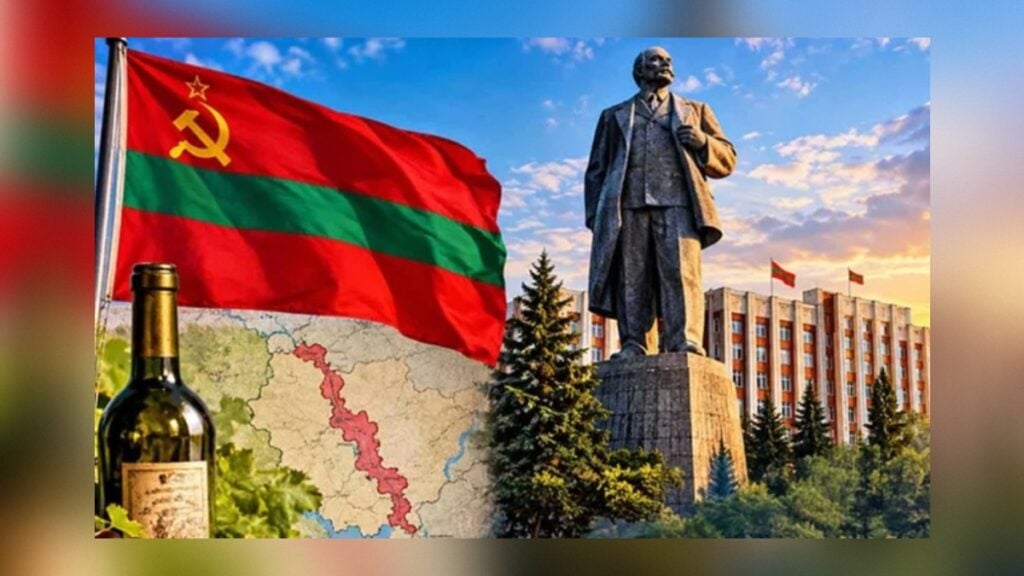
Transnistria is a place that can look remarkably like a country while remaining outside the international community of recognised states. It has its own flag, currency, government institutions, security forces, border controls and postage stamps. Yet internationally, the territory is regarded as part of Moldova.
This unusual contradiction has made Transnistria a curiosity for travellers interested in Soviet history, disputed territories and Europe’s unresolved political borders.
Officially called the Pridnestrovian Moldavian Republic, Transnistria lies along the eastern bank of the Dniester River, between Moldova and Ukraine. The territory declared independence from Moldova in 1990, shortly before the collapse of the Soviet Union. Fighting between Transnistrian separatist forces and Moldovan authorities broke out in 1992. A ceasefire ended the conflict, but a permanent political settlement has never been reached.
For more than three decades, the territory has operated largely as a separate entity. Moldova, however, continues to regard it as part of its sovereign territory, while no United Nations member state formally recognises Transnistria as an independent country.
That unresolved status is one of the main reasons the region attracts attention from foreign visitors.
Tiraspol, the capital, offers some of the clearest reminders of Transnistria’s Soviet heritage. Large statues of Vladimir Lenin, Soviet-era architecture and communist symbols remain visible in parts of the city. Government buildings and monuments preserve an aesthetic that disappeared from much of eastern Europe after the fall of the Soviet Union.
For some travellers, the experience can feel like stepping back several decades. The territory is often described by visitors and travel writers as a ‘living time capsule’ because of the way Soviet-era imagery remains part of everyday public life.
The journey there is also unlike a conventional European city break. Transnistria does not have an international airport. Travellers commonly reach the territory overland from Chisinau, the capital of Moldova, using buses or local minibuses. At the administrative boundary, foreign visitors are subject to document checks and local entry procedures.
Transnistria has its own currency, the Transnistrian ruble, which is used for everyday transactions. Local authorities also operate their own administrative and security structures. The territory issues its own postage stamps and maintains institutions that function separately from those of the Moldovan government.
The political arrangement, however, should not be mistaken for international recognition. Transnistria’s de facto institutions have existed for decades, but its claimed independence has not been accepted by the international community.
The region’s appeal has grown through travel blogs and social media. Visitors interested in unusual destinations have shared photographs and videos of Tiraspol’s monuments, streets, markets and Soviet symbolism. For backpackers seeking an experience far removed from the established tourist routes of western Europe, the territory offers a distinctive combination of history, politics and relatively inexpensive travel.
Local food and wine are also part of the attraction. The wider Moldova region has a long-established wine-making tradition, and visitors can encounter locally produced wines and grape-based spirits alongside regional cuisine. Accommodation and everyday expenses can be comparatively modest when measured against many European tourist destinations, although costs and services vary.
Transnistria’s reputation, however, cannot be separated from its complicated security and geopolitical environment.
Russia has maintained a significant political and military role in the territory for decades. Russian troops have remained there under the framework associated with the post-1992 security arrangement, while Moscow has provided substantial political and economic support to the region. Moldova has repeatedly called for the withdrawal of Russian forces and has sought a peaceful settlement of the Transnistrian dispute.
The territory’s strategic importance has become more pronounced since Russia launched its full-scale invasion of Ukraine in February 2022. Transnistria borders Ukraine and lies relatively close to Moldova’s capital, making developments there a matter of concern for both Chisinau and Kyiv.
At the same time, the region’s political identity remains closely tied to its Soviet past. The continued presence of Soviet symbols is not merely a tourist attraction; it is also part of the political and cultural identity promoted by the local authorities.
For visitors, that creates a destination unlike almost anywhere else in Europe. A traveller can cross into a territory with its own currency, flag and administrative institutions, yet still be standing in a place that the international community considers part of another country.
That paradox is at the heart of Transnistria’s appeal.
It is not a country that has simply disappeared from the map. Rather, it is a self-governing territory with institutions that function as those of a state, while its international status remains disputed and unresolved. Its Soviet-era monuments, distinctive political identity, relatively low-cost travel and proximity to one of Europe’s most sensitive geopolitical fault lines have turned Transnistria into an unusual destination for adventurous travellers.
For anyone fascinated by forgotten corners of European history, few places offer such a striking encounter with the past while remaining firmly connected to the political tensions of the present.