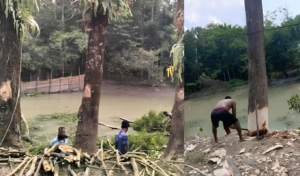
In the Chittagong Hill Tracts (CHT), armed regional insurgent groups have established a pervasive extortion network that touches virtually every aspect of daily economic life. From local shopkeepers and large businesses to farmers transporting bananas, ginger, turmeric, or timber to market, no sector escapes these forced levies. Extortion is imposed on residential construction, livestock trading, and the launch of new commercial ventures. Operating entirely outside state administrative oversight, this systematic collection creates an unbearable financial burden for local residents, while the vast sums generated—estimated locally at over 1,000 crore BDT annually—are channelled into purchasing sophisticated weaponry and maintaining insurgent cadre strength.
Beyond routine extortion, abduction for ransom has emerged as a major revenue stream, instilling deep panic among residents, tourists, infrastructure contractors, and public officials. These kidnappings serve a dual purpose: asserting political dominance through terror and extracting substantial ransom payments. The practice has severely disrupted local development projects, deterred private investment, and dealt a heavy blow to the region’s tourism sector.
Major General (retd) Dr Md. Mostafizur Rahman, an adjunct professor at MIST and AIBA Savar, highlighted that the primary concern in the CHT remains the continued operation and organisational resurgence of armed regional factions. Although the landmark 1997 Peace Accord was signed to end armed conflict, armed violence, extortion, and abductions persist. Rahman noted that the withdrawal of military camps reduced state presence in remote terrains, facilitating insurgent recruitment, regrouping, and the movement of arms and supplies. He emphasised that geopolitical realities along the border and alleged cross-border sanctuaries require an objective, intelligence-led evaluation focused on national security, law enforcement, and effective disarmament.
Reflecting on the security climate, a senior police official urged armed groups to abandon violence and surrender their weapons. He stressed that internal rivalries among insurgent factions often stem from disputes over controlling extortion territory. The official warned that purchasing advanced weaponry would never enable insurgent groups to match state forces, urging them to embrace peaceful avenues to strengthen the regional economy.
Security experts stress that curbing armed insurgency requires dismantling the financial networks sustaining it. Policy proposals advocate for intelligence representation on bodies such as the Land Dispute Resolution Commission, Chittagong Hill Tracts Regional Council, and NGO monitoring committees to enhance surveillance in remote areas. Identifying extortion channels, illegal money transfers, and arms brokers remains vital to neutralising insurgent capabilities.
Commenting on the situation, Daud Alam, a prominent social worker and former Dhaka University student leader, noted that armed factions led by Prasit Khisa and Santu Larma remain active in the hills, with top leaders and their families residing in border towns of a neighbouring country. Alam argued that the withdrawal of military camps under the 1997 accord undermined national sovereignty. He called for re-establishing military outposts, reviewing the 1997 accord, and deploying modern surveillance drones, armoured convoys, and radar systems along the border to safeguard state sovereignty.