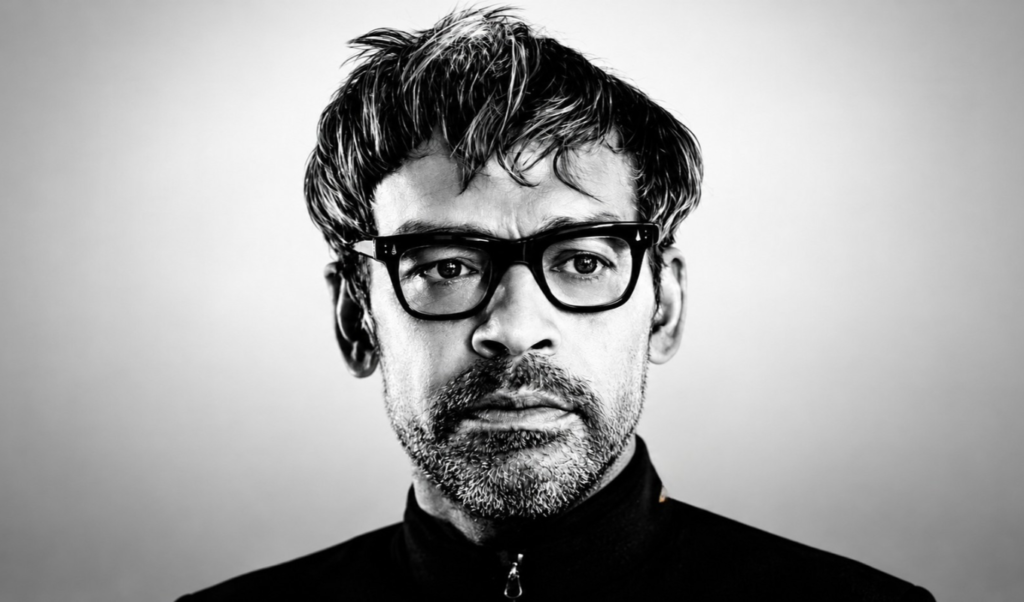
With a leaf bidi between his lips, a bottle of country liquor in hand, and unkempt hair framing a face shadowed by stubble, Ritwik Ghatak presented an intentionally irreverent persona. Dressed in a dusty pyjama-kurta with a traditional Santiniketan satchel slung over his shoulder, his dark-rimmed spectacles concealed an acute, rebellious gaze. When once asked to describe himself, he candidly replied that he was merely a “broken intellectual.”
This self-deprecating description reflected the soul of a deeply conflicted artistic genius. Alongside Satyajit Ray and Mrinal Sen, Ghatak forged a distinct cinematic language that elevated Indian cinema on the global stage. Unlike many of his contemporaries, Ghatak viewed cinema not merely as narrative art, but as a visceral medium to chronicle historical trauma, displacement, class struggle, and the enduring agony of partition.
Born on 4 November 1925 in Dhaka, Ghatak spent a formative portion of his early life in Rajshahi, where his father, Suresh Chandra Ghatak, served as a district magistrate alongside writing poetry and plays. His mother, Indubala Devi, nurtured a culturally vibrant household. The family’s ancestral home in Rajshahi’s Miyapara—which later housed acclaimed author Mahasweta Devi—left an indelible mark on his artistic sensibility. Following his schooling at Rajshahi Collegiate School and studies at Rajshahi College, the 1947 Partition forced his family to relocate to Kolkata. Although geographically severed from East Bengal, the psychological scar of uprooting became the central motif of his life’s work.
Ghatak’s creative journey began in theatre with the Indian People’s Theatre Association (IPTA), where he worked as a playwright, actor, director, and organiser. His association with the IPTA instilled a rigorous political consciousness that permeated his cinematic vision. He entered filmmaking as an actor and assistant director in Nimai Ghosh’s landmark 1950 film Chinnamul (The Uprooted). In 1952, Ghatak directed his debut feature, Nagarik (The Citizen), though the film remained unreleased during his lifetime, eventually seeing the light of day in 1977, a year after his death.
The crowning achievement of Ghatak’s filmography is his celebrated Partition Trilogy: Meghe Dhaka Tara (The Cloud-Capped Star, 1960), Komal Gandhar (E-Flat, 1961), and Subarnarekha (The Golden Thread, 1962). Through these works, Ghatak immortalised the existential anguish of refugees. In Meghe Dhaka Tara, the tragic sacrifice of Nita—underscored by her desperate cry, “Brother, I wanted to live”—remains one of Indian cinema’s most poignant moments. Komal Gandhar explored the fractured cultural landscape and dreams of unity across two Bengals, whilst Subarnarekha depicted the moral and economic decay following displacement.
Ghatak’s broader filmography includes Ajantrik (1958), a pioneering narrative exploring the emotional bond between a taxi driver and his vintage car, and Bari Theke Paliye (1958), which captured childhood innocence against an intimidating urban backdrop. In 1973, he directed Titash Ekti Nadir Naam (A River Called Titash) in Bangladesh, adapting Advaita Malla Burman’s novel to construct an epic chronicle of the Malo fishing community. His final feature, Jukti Takko Aar Gappo (Reason, Debate and a Story, 1974), saw Ghatak portray the protagonist Nilkantha Bagchi, serving as a deeply personal and political critique of societal disillusionment during the Naxalite era.
Beyond directing, Ghatak was a formidable theorist, actor, and educator. During his tenure as vice-principal at the Film and Television Institute of India (FTII) in Pune in the 1960s, he mentored a generation of auteur filmmakers, including Mani Kaul, John Abraham, Saeed Mirza, and Adoor Gopalakrishnan.
His artistic contributions received national and international acclaim. The Government of India conferred the Padma Shri upon him in 1970, and he won the National Film Award (Rajat Kamal) for Best Story for Jukti Takko Aar Gappo in 1974. He was also honoured with the Bangladesh Film Journalists’ Association (BACHSAS) Award for Best Director for Titash Ekti Nadir Naam.
Ghatak’s personal life was fraught with adversity, financial hardship, and severe health struggles stemming from chronic alcoholism. He passed away in Kolkata on 6 February 1976 at the age of 50. Though commercial success evaded him in life, history has canonised Ritwik Ghatak as an uncompromising visionary whose films continue to illuminate the wounds of history and the resilience of the human spirit.