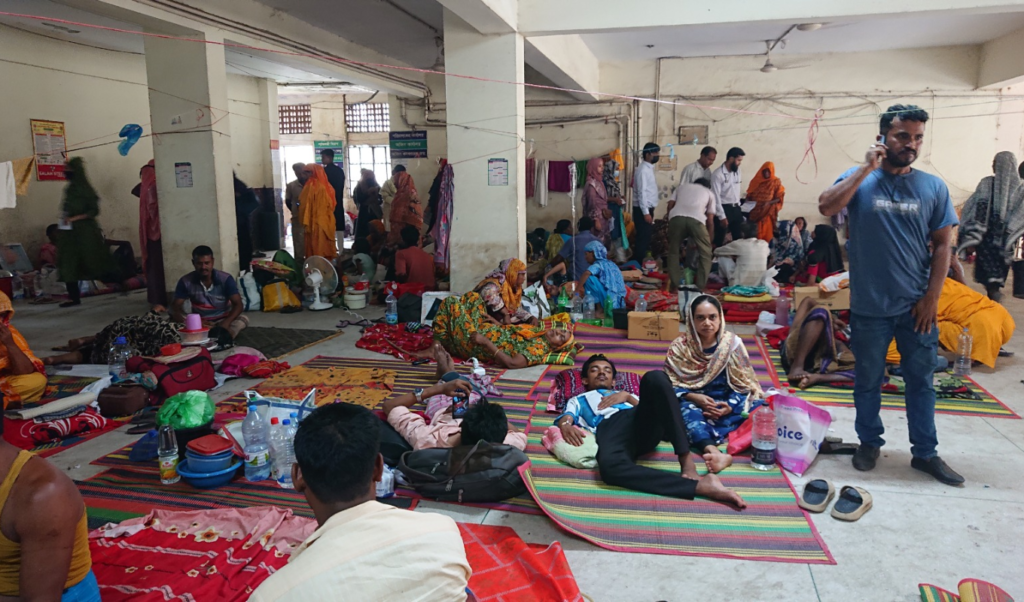
Dengue fever has taken a severe hold across Khulna city, claiming the lives of five patients at Khulna Medical College Hospital (KMCH) within a single week. In response to the escalating crisis, Khulna City Corporation (KCC) has designated four municipal wards as high-risk ‘Red Zones’ and intensified clean-up and vector control operations. Meanwhile, public healthcare facilities are straining under an overwhelming influx of casualties, forcing numerous patients to lay beds and hang mosquito nets along hospital corridors due to a shortage of ward space.
Regional Casualties and Healthcare Strain
According to divisional health authorities, a 24-hour monitoring period ending Wednesday morning recorded one additional casualty at KMCH. This latest fatality brought the hospital’s weekly death toll to five and pushed total dengue-related deaths across the Khulna division this year to 15. The geographic concentration of fatalities remains heavily skewed toward Khulna district, which accounts for 14 of these deaths, while neighboring Bagerhat district recorded one casualty.
Data provided by the Directorate General of Health Services (DGHS) divisional office indicates that 133 new dengue patients were admitted to hospitals across the division within 24 hours. Of these admissions, 103 were registered in Khulna district alone, including 35 at KMCH. Currently, 123 patients are undergoing treatment in KMCH’s specialized dengue ward, while the total number of hospitalized patients across the district stands at 344.
Dr Sheikh Md Mosharaf Hossain, Divisional Health Director for Khulna, revealed that 3,823 patients have been admitted to divisional hospitals since 1 January. Whilst 3,267 individuals recovered and were discharged following treatment, 502 patients remain hospitalized across the region, and 39 critical cases have been transferred to specialized facilities elsewhere. KMCH Superintendent Md Akhtaruzzaman confirmed that admissions are rising daily, severely testing hospital capacity.
Risk Zoning and Vector Control Measures
Recent statistical mapping conducted by KCC highlights a sharp rise in infection rates across the municipality’s 31 wards. Wards 30, 29, 28, and 22 have been categorized as ‘Red Zones’, having collectively recorded 288 cases this season. Ward 30 leads the city in infection numbers with 111 confirmed cases, followed by Ward 29 with 100 cases, Ward 28 with 80 cases, and Ward 22 with 77 cases.
Additionally, Wards 17, 18, 23, 24, and 27 have been designated as moderate-risk ‘Orange Zones’, reporting a combined total of 268 cases. Lower-risk ‘Yellow Zones’—comprising Wards 15, 20, 25, and 31—have recorded 117 cases to date.
KCC Chief Health Officer Sharif Shammiul Islam explained that daily diagnostic data compiled from KMCH, Khulna General Hospital, and local diagnostic centers forms the basis for these ward-by-ward risk categorizations. To combat the vector population, KCC has deployed ten fogging machines and hand sprayers per ward, alongside wheelbarrow fogger units for open drains and fields. Mobile courts are actively inspecting private and commercial premises to destroy stagnant water reservoirs and mosquito breeding sites.
KCC Administrator Nazrul Islam Manju noted that the World Health Organisation had previously warned of a severe dengue outbreak in Khulna this year, adding that elevated transmission levels could persist for another two to three months. To maintain civil readiness, leave for all KCC officers and staff has been cancelled, public awareness campaigns have been rolled out, and dedicated monitoring cells have been set up across local hospitals.