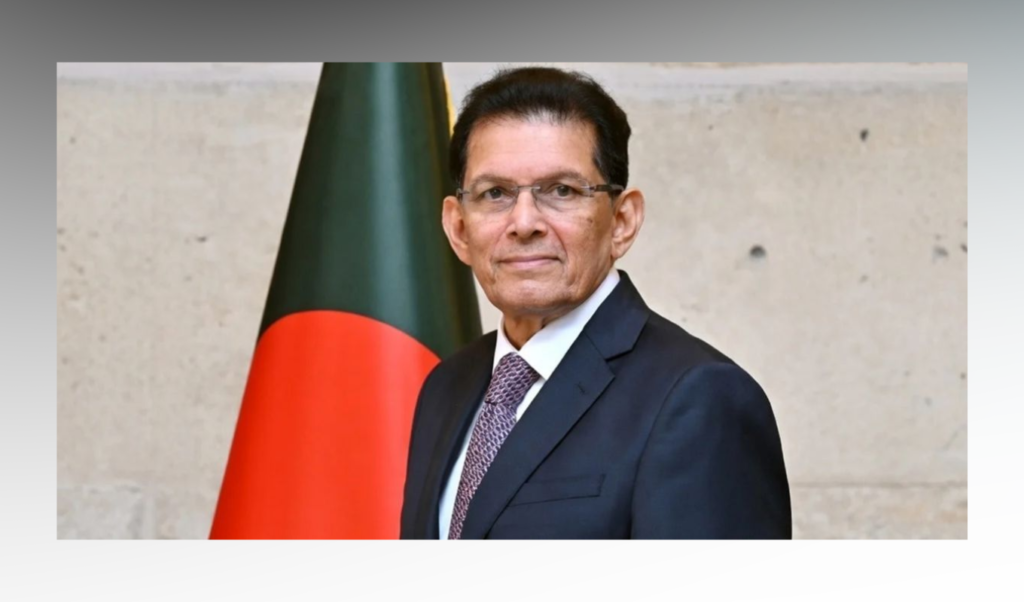
Bangladesh Foreign Minister Dr Khalilur Rahman departed Dhaka in the early hours of Tuesday, 18 August, leading a high-level government delegation on a two-day official visit to Qatar aimed primarily at securing stable liquefied natural gas (LNG) supplies.
According to a press release issued by the Ministry of Foreign Affairs, the delegation includes key policymakers overseeing the nation’s financial and diplomatic strategies. Among those accompanying the foreign minister are the Prime Minister’s Adviser on Finance and Planning, the Prime Minister’s Foreign Affairs Adviser, and the State Minister for Power, Energy and Mineral Resources.
During the diplomatic mission, the Bangladeshi delegation will hold a series of bilateral meetings with Qatari ministers, state energy executives, and commercial organizations. High-level talks are scheduled to focus on long-term energy security, trade expansion, and broader bilateral cooperation, with the primary objective centered on stabilizing Qatar’s supply of LNG to Bangladesh. The foreign minister and his entourage are expected to conclude their official engagements and return to Dhaka on Thursday night.
The high-stakes diplomatic visit comes at a crucial juncture for Bangladesh, as the domestic market grapples with expanding energy demands and recurring supply shortfalls across its industrial, manufacturing, and power-generation sectors. To offset declining domestic natural gas reserves, Bangladesh relies heavily on imported LNG to feed its national grid. Qatar stands as one of Bangladesh’s premier long-term energy partners, delivering steady shipments under long-term bilateral purchase agreements.
Fluctuations in global energy markets and supply chain constraints have periodically tested import stability, prompting the government to pursue proactive diplomatic engagement. By dispatching a delegation comprising senior advisers on finance, foreign policy, and energy, Dhaka underscores the strategic weight attached to securing uninterrupted fuel imports. Uninterrupted natural gas flow remains essential to powering export-oriented garment factories, fertilizer production, and domestic power generation.
Political analysts and energy market observers note that establishing firm commitment on shipment timelines, potential volume increases, and favorable financial terms will be central to the talks in Doha. The visit reflects Bangladesh’s broader energy strategy, which seeks to balance long-term supply security with economic sustainability amid evolving global market conditions.