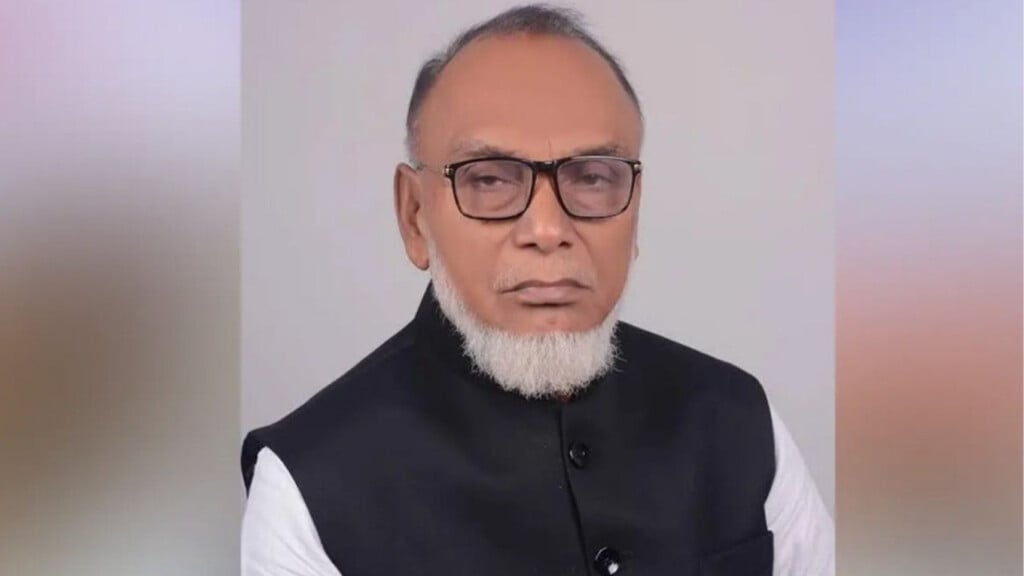
Mohiuddin Ahmed, the former Member of Parliament for the Munshiganj-1 constituency (Sirajdikhan-Sreenagar) and a veteran figure in regional politics, has passed away. He breathed his last at approximately 6:30 pm on Tuesday, 10 March, while undergoing treatment at a private medical facility in the capital.
According to family sources, the 77-year-old politician had been battling a severe bout of pneumonia. His condition reportedly deteriorated over the last few days, leading to his admission to the intensive care unit where he eventually succumbed to the respiratory infection.
A Legacy of Grassroots Governance
A stalwart of the Bangladesh Awami League, Mohiuddin Ahmed’s political career was defined by an extraordinary tenure in local government, spanning several decades. He was a rare political figure who successfully transitioned from union-level leadership to the national stage. Before his ascent to Parliament, he served the people of Malkhanagar Union as Chairman for five consecutive terms. His influence further solidified during his three terms as the Chairman of the Sirajdikhan Upazila Parishad.
His career culminated in the 12th National Parliamentary Election, where he was elected to represent the Munshiganj-1 seat. Beyond his administrative roles, he was a pivotal organiser during the 1971 Liberation War, providing essential leadership in the Munshiganj district during the nation’s struggle for independence. Until his final days, he remained the President of the Sirajdikhan Upazila Awami League.
Career Milestones: Mohiuddin Ahmed (1949–2026)
| Position / Role | Tenure / Scale | Notes |
|---|---|---|
| Union Parishad Chairman | 5 Terms | Represented Malkhanagar Union |
| Upazila Parishad Chairman | 3 Terms | Served Sirajdikhan Upazila |
| Member of Parliament | 12th Parliament | Represented Munshiganj-1 |
| Party Leadership | Long-term | President, Sirajdikhan Awami League |
| War Contribution | 1971 | Key Organiser in Munshiganj District |
Final Years and Post-Revolution Turmoil
Despite his long-standing service, Mr Ahmed’s final months were marked by significant political upheaval. Following the student-led mass uprising in 2024, which resulted in the collapse of the Awami League administration, he retreated from public life and remained in hiding. During this period of transition, several legal cases were initiated against him, reflecting the turbulent shift in the country’s political landscape.
Preparations are currently underway for his final rites. His family has confirmed that he will be laid to rest in his ancestral village of Kazirbagh, located within the Malkhanagar Union of Sirajdikhan Upazila, following a traditional funeral service tomorrow. He leaves behind a complex legacy as a dedicated grassroots mobiliser and a seasoned parliamentarian.