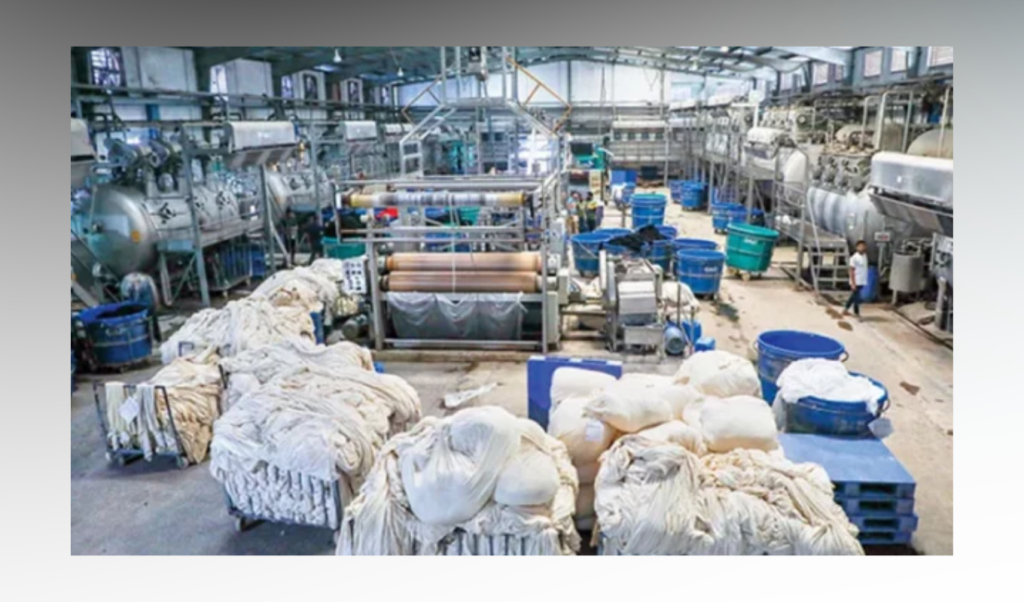
A severe national gas crisis has forced major industrial conglomerates in Bangladesh to shut down essential food processing operations, threatening widespread market disruptions and potential price spikes for daily commodities.
In Narayanganj, the Meghna Group of Industries (MGI)—which processes edible oil, flour, sugar, and crushed soybean seeds—was compelled to halt operations across 12 processing plants on Wednesday as gas pressure dropped to unviable levels. MGI alone processes approximately 9,000 tonnes of basic food commodities daily, representing 33 lakh tonnes annually. According to National Board of Revenue (NBR) figures, MGI accounted for 22 per cent of total imports across seven major essential raw materials in the previous financial year.
The crisis is not confined to a single business entity. A survey of six major industrial conglomerates, which collectively control 61 per cent of Bangladesh’s imported essential commodity raw materials, reveals widespread operational stoppages across major industrial hubs.
Technical Disruptions Drive Deficit to 177 Crore Cubic Feet
The acute shortage stems primarily from technical failures at key offshore infrastructure. Daily national gas demand stands at roughly 380 crore cubic feet, whereas typical supply averages around 270 crore cubic feet, supported by 100 crore cubic feet of imported Liquefied Natural Gas (LNG).
On 21 July, one of two Floating Storage and Regasification Units (FSRUs) situated in Maheshkhali, Cox’s Bazar—operated by US-based Excelerate Energy—was knocked offline following a fire and subsequent technical complications. The outage immediately erased 45 crore cubic feet of daily supply from the national grid.
Although the terminal partially resumed operations on 6 August after more than two weeks of repairs, it continued to operate at nearly half capacity through 12 August. By Wednesday, total national gas supply plummeted to 203 crore cubic feet, leaving an unprecedented daily deficit of nearly 177 crore cubic feet against a daily requirement of 385 crore cubic feet.
The impact extends far beyond the food sector, severely crippling boiler-dependent industries such as steel, glass, and textiles, while causing long queues of compressed natural gas (CNG) auto-rickshaws, private vehicles, and ambulances at filling stations across Dhaka.
Major Conglomerates Scale Down or Cease Operations
Top industrial conglomerates have been forced to either suspend factory operations entirely or rely on costly alternative energy sources, reducing output well below installed capacity.
| Conglomerate / Firm Name | Operational Status | Key Affected Products | Annual Raw Import Share / Impact |
| Meghna Group of Industries (MGI) | 12 processing plants completely shut | Sugar, wheat, soybean seed, refined edible oil | 22% of national major essential imports |
| TK Group | 20 of 28 processing plants closed; 4 operating partially | Edible oils, wheat, lentils | Second-largest importer (~10 lakh tonnes) |
| Smile Food Products | 3 major plants closed; 1 small mill operating | Sugar, crushed soybean, palm oil, flour | Imports ~9 lakh tonnes annually |
| Seacom Group (Delta Agro Food) | 3 processing factories suspended | Soybean crushing, edible oil processing | Raw materials in stock but unprocessable |
| City Group | Hoshendi Economic Zone factories inactive | Sugar, flour, packaged food commodities | Operations disrupted across multiple sites |
| Nabil Group | ~20 facilities operating at 40–50% capacity | Processed grains, consumer food products | Transitioned to electric power; costs surged |
TK Group Director Muhammad Mustafa Haider confirmed that only four of the group’s 28 processing units remain partially functional, with the vast majority of closed units dedicated to essential consumer foods.
Similarly, Nabil Group Managing Director Aminul Islam noted that while his firm shifted to electric power to keep lines running, overall capacity utilization remains capped below 50 per cent, driving production costs sharply upward.
Depleting Warehouses and Market Risks
During the previous fiscal year, Bangladesh imported roughly 1.54 crore tonnes of seven key essential commodities and raw materials—averaging over 42,000 tonnes daily. Because raw imports must be refined and processed domestically before reaching store shelves, prolonged factory closures threaten to disrupt retail supply chains even where raw stockpiles exist.
Industry executives noted that market stability currently relies entirely on pre-existing warehouse inventories. While stored reserves can absorb short-term disruptions lasting a few days, prolonged industrial paralysis will exhaust warehouse stocks.
Mustafizur Rahman, Distinguished Fellow at the Centre for Policy Dialogue (CPD), urged the government to prioritize energy allocations for essential food processing and maintain rigorous market oversight. He stressed that transparent communication regarding recovery timelines is crucial to prevent speculative market manipulation and safeguard public supply.