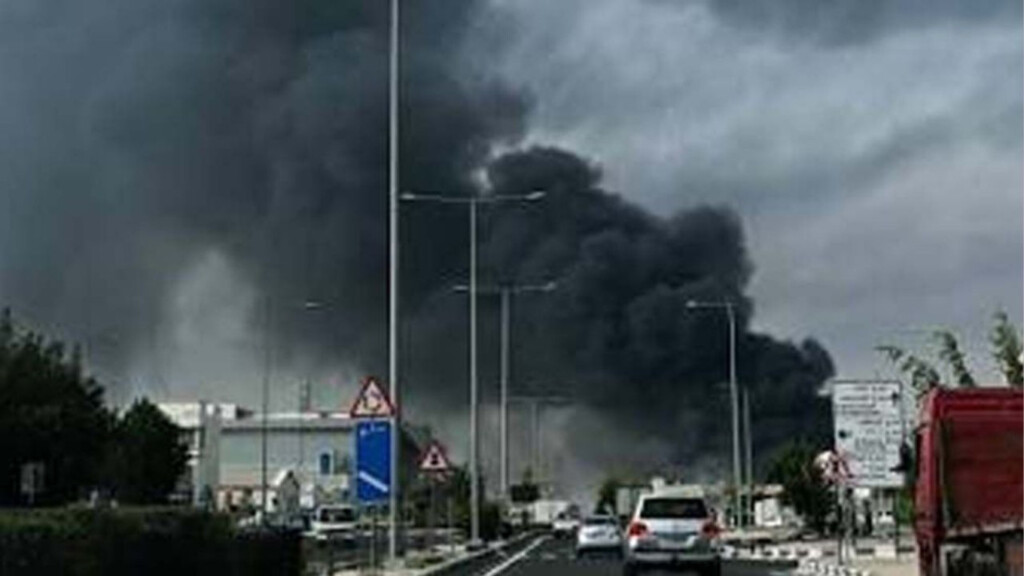
The global energy market has been plunged into a state of acute instability following the joint US-Israeli military strikes on Iran and the subsequent closure of the Strait of Hormuz. As Tehran executes its threat to block this vital maritime artery, the world’s most critical energy supply route has ground to a functional standstill. In immediate response, crude oil prices have surged by approximately 10%, climbing toward the $80 per barrel threshold, with analysts warning of a triple-digit peak in the coming days.
The Strategic Chokepoint Under Siege
The Strait of Hormuz is the world’s most important oil transit point, a narrow waterway through which approximately 15 million barrels of crude oil flowed daily into the global market. With Iran officially declaring the Strait closed, the supply chain for a significant portion of the world’s energy needs has been severed.
Ajay Parmar, Director of Energy and Refining at ICIS, noted that while military escalations typically trigger price volatility, the physical blockade of the Strait is the primary catalyst for the current crisis. “We anticipate prices gravitating toward the $100 mark by the weekend,” Parmar cautioned, suggesting that a prolonged closure could push valuations into uncharted territory.
Market Projections and Economic Fallout
Data from Rystad Energy indicates that as markets opened on Monday, 2 March, the immediate deficit led to a projected price hike of at least $20 per barrel. Despite attempts to divert supply through alternative Middle Eastern infrastructure, a net shortfall of 8 to 10 million barrels per day remains inevitable.
Table: Projected Global Impact of the Hormuz Blockade
| Metric | Pre-Conflict Baseline | Current Status (Post-Blockade) | Net Impact / Change |
|---|---|---|---|
| Crude Oil Price | $72.00 / barrel | $80.00+ / barrel | +11.1% (Rising) |
| Daily Flow (Hormuz) | 15 Million bpd | 0 Million bpd | -100% |
| Global Supply Gap | Balanced | 8–10 Million bpd Deficit | Acute Shortage |
| Market Forecast | Stable | Volatile / Bullish | Potential $100+ Peak |
The Inflationary Domino Effect
The implications of this energy shock extend far beyond the fuel pump. A $20 increase in the cost of a barrel of oil triggers a rapid escalation in global transport costs, which in turn inflates the price of essential commodities. Economists fear that this “energy tax” will ignite a new wave of global inflation, devaluing currencies and increasing the cost of living for billions.
As the “Axis of Resistance” continues its defiance and the US-Israeli alliance maintains its kinetic posture, the global economy faces its most significant energy threat since the 1970s. The world now watches to see if diplomatic channels can reopen the Strait or if the global market must brace for a sustained $100-plus oil environment.