A recent mass detention of participants attending a political meeting hosted by a small left-wing party represents the latest manifestation of an ongoing crackdown on civil and political rights by Bangladeshi authorities, according to a statement released by Human Rights Watch (HRW).
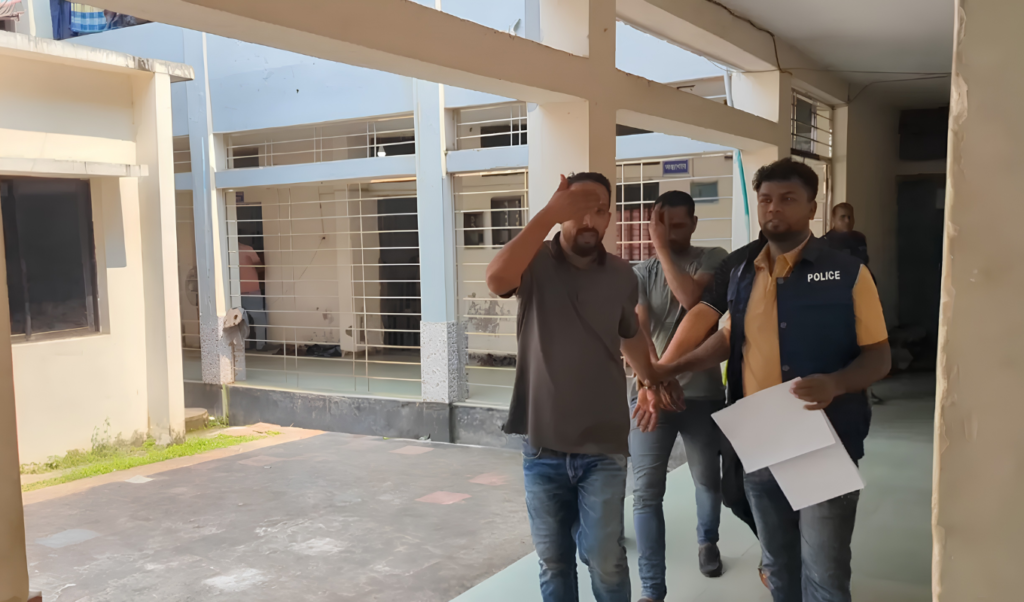
The international rights organisation reported that law enforcement officers took approximately 290 supporters of the Jatiya Samajtantrik Dal (JSD) into police custody. Members of Jubo Dal, the youth wing of the ruling Bangladesh Nationalist Party (BNP), had alleged that the gathering served as a ‘secret meeting’ for the now-banned Awami League, previously led by former Prime Minister Sheikh Hasina. Following the detentions, a court placed 27 arrestees on police remand on charges of chanting ‘Joy Bangla’—a slogan closely affiliated with the Awami League.
JSD previously formed part of the Awami League-led 14-party alliance that governed Bangladesh from 2009 until August 2024, when the administration collapsed under a student-led mass uprising. Security forces killed hundreds of demonstrators during the crackdown on those protests.
In its statement issued on Monday, Human Rights Watch acknowledged that the BNP itself suffered severe persecution during Sheikh Hasina’s authoritarian rule. However, Elaine Pearson, Asia Director at Human Rights Watch, noted that since assuming office in February, the party has engaged in the arbitrary detention of potential political opponents. Hundreds of Awami League members remain imprisoned, the majority without formal charges being pressed against them.
Police have repeatedly raided alleged gatherings of Awami League supporters across the country. On 26 September—the same day as the JSD meeting—authorities detained 12 Awami League activists in Barishal, accusing them of holding a secret meeting to plan acts of sabotage. Two days later, 15 individuals were arrested in Dhaka under the Anti-Terrorism Act on similar allegations. In both instances, those detained maintained they had gathered peacefully to mark Sheikh Hasina’s birthday.
Highlighting the systemic nature of these abuses, HRW observed that Sheikh Hasina’s regime was characterised by widespread human rights violations, including extrajudicial killings, enforced disappearances, torture, and arbitrary detentions. Although the BNP assumed power pledging to restore human rights and the rule of law, the current government has instead systematically detained political rivals while dismantling or softening human rights safeguards proposed by the interim administration.
International human rights law guarantees freedom of expression and peaceful assembly for all citizens. Human Rights Watch stressed that past rights violations committed by the Awami League cannot serve as a justification for similar abuses under the current BNP government, warning that Bangladesh’s history offers ample evidence of the dangerous instability such political repression ultimately produces.