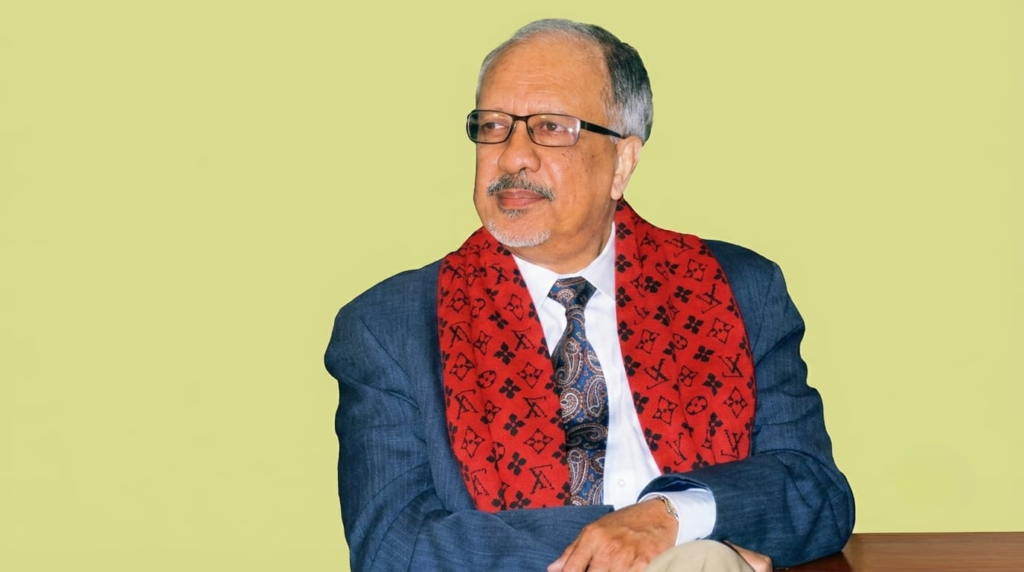
Today, 15 July, marks the death anniversary of freedom fighter, former student leader, organiser and social activist Rezaual Haque Chowdhury Mushtaq, the man widely recognised as the originator of the honorific title ‘Bangabandhu’ for Sheikh Mujibur Rahman. His contribution to Bangladesh’s political history extends beyond a single word. Through his vision and commitment, he helped shape one of the most enduring symbols associated with the country’s struggle for self-determination.
Certain individuals leave an imprint on history that transcends their public roles. Mushtaq was one such figure. Although he held important positions in student politics and later dedicated himself to social and cultural development, his name remains inseparably linked with the title that came to define Sheikh Mujibur Rahman in the hearts of millions of Bengalis.
The word Bangabandhu, meaning “Friend of Bengal”, carries profound historical significance. It reflects the aspirations, sacrifices and collective identity of a nation striving for freedom. Today, the title is inseparable from Sheikh Mujibur Rahman’s legacy, and its widespread acceptance owes much to Mushtaq’s initiative during a pivotal period in Bangladesh’s political movement.
Rezaual Haque Chowdhury Mushtaq was born on 11 August 1950 in the traditional Mia Bari of Bhingrol village in Anwara Upazila of Chattogram. He was the son of the late Nurul Haque Chowdhury and the late Muslim Ara. Although born in the village, he spent much of his childhood and adolescence in the Patharghata area of Chattogram city, where a family environment that valued education and patriotism helped shape his outlook.
He began his education at J. M. Sen School before completing his Secondary School Certificate from Muslim High School in 1967. He later earned his Higher Secondary Certificate from Dhaka College in 1969. Continuing his academic journey at the University of Dhaka, he graduated with an honours degree in Political Science in 1973 and completed his master’s degree in the same discipline in 1975.
Mushtaq became actively involved in politics during his student years and was deeply inspired by the ideals of Sheikh Mujibur Rahman. In 1968, while the Agartala Conspiracy Case was under trial, he took the considerable risk of entering Dhaka Cantonment to meet Sheikh Mujibur Rahman. The entry pass from that historic visit was carefully preserved by him for many years before being donated to the Bangabandhu Sheikh Mujibur Rahman Memorial Trust, where it remains an important historical document.
That same year, Mushtaq introduced the word Bangabandhu in student league leaflets and campaign materials. The title gradually gained prominence through political meetings and public discourse. In 1970, he authored Ei Deshete Janma Amar (“My Birth in This Country”), regarded as the first biographical booklet dedicated to Sheikh Mujibur Rahman, adding another significant contribution to the country’s political literature.
The title achieved formal national recognition on 23 February 1969, following the historic Mass Uprising, when Dhaka University Central Students’ Union Vice-President Tofail Ahmed, on behalf of the student community, officially conferred the title Bangabandhu upon Sheikh Mujibur Rahman at the Racecourse Maidan in Dhaka. Mushtaq was the architect of the title and the wording that accompanied its presentation. From that moment onwards, Sheikh Mujibur Rahman came to be known across the nation as Bangabandhu.
Throughout his political career, Mushtaq served in several important organisational roles. He was General Secretary of Dhaka Metropolitan Chhatra League, Assistant Office Secretary of the Central Chhatra League, and later Central Office Secretary of Bangladesh Chhatra League after independence. He was also a member of the Swadhin Bangla Chhatra Sangram Parishad and actively participated in the Liberation War of 1971. In 1974, he was elected Vice-President of the Political Science Department Students’ Union at the University of Dhaka.
After stepping back from frontline politics, Mushtaq devoted himself to social welfare, cultural activities and organisational development. His leadership played a major role in transforming the Chattogram Association, Dhaka into a vibrant institution promoting education, literature, culture and community welfare. He contributed significantly to the establishment of Chattogram Bhaban, often described as “a piece of Chattogram in Dhaka”, and supported centenary celebrations, publications, recognition of talented students and initiatives that showcased Chattogram’s heritage on a national stage.
His life demonstrated that even a single word can alter the course of history when it is born of conviction, patriotism and unwavering belief in a national cause.
On his death anniversary, Rezaual Haque Chowdhury Mushtaq is remembered with deep respect as a freedom fighter, organiser and a significant contributor to Bangladesh’s political heritage. His legacy continues to occupy an enduring place in the country’s historical narrative and in the collective memory of the Bengali people.